Estancamiento linfático profundo: aceites azules vibrantes

Los ganglios linfáticos son pequeñas estructuras ovaladas o con forma de riñón que filtran y drenan los desechos del líquido linfático como parte de su sistema inmunológico.

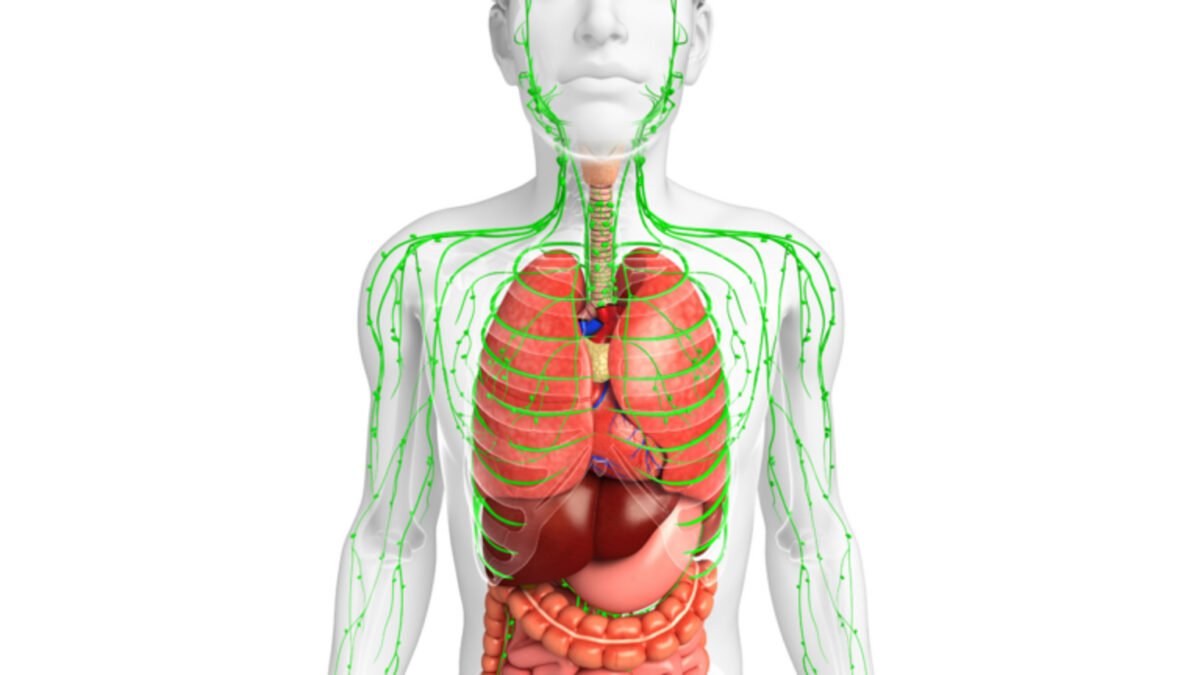
Además de más de 600 ganglios linfáticos superficiales ubicados justo debajo de la piel en todo el cuerpo (concentrados principalmente en el cuello, las axilas y la ingle), tiene una red de vasos linfáticos profundos que transportan la linfa desde los órganos internos.

Los ganglios linfáticos profundos desempeñan una función importante al ayudar a filtrar y drenar los desechos para evitar la acumulación de líquido linfático. Por ejemplo, los ganglios linfáticos cervicales profundos filtran toda la linfa de la cabeza y el cuello, ya sea directa o indirectamente a través de los ganglios linfáticos superficiales.

A diferencia de los vasos linfáticos superficiales, los vasos linfáticos profundos están organizados en una cadena vertical, ubicada muy cerca de las arterias, como la vena yugular interna en la vaina carotídea, que se apoyan en las paredes de los vasos linfáticos profundos, ejerciendo presión sobre ellos. para ayudar al movimiento del líquido linfático.

El estancamiento linfático profundo puede provocar una acumulación de líquido linfático, impidiendo el drenaje linfático superficial de la cabeza, el cuero cabelludo, la cara, las manos y los pies.

Los vasos linfáticos conectan todos los ganglios linfáticos y drenan un líquido claro llamado linfa de las células. Los vasos linfáticos profundos están ubicados en lo profundo de su cuerpo y ayudan a drenar el líquido linfático de los ganglios linfáticos superficiales. Cada nodo filtra el líquido de los vasos que conducen a él.

Los ganglios linfáticos profundos están ubicados en el abdomen y el pecho y drenan la linfa de los pulmones y los órganos digestivos. Los ganglios linfáticos profundos también se denominan:

  • mesentérico: Estos son ganglios linfáticos en el mesenterio, la membrana que conecta el intestinos a pared de tejido alrededor de su abdomen.
  • Retroperitoneal: Estos son los ganglios linfáticos alrededor del tuyo. riñones y los principales vasos sanguíneos que conectan la parte inferior del cuerpo con corazón.
  • Mediastínico: Estos son los ganglios linfáticos alrededor del tuyo. tráquea (tráquea), esófago, corazón, mongs y los grandes vasos sanguíneos que van al corazón.
  • Cervical: Los vasos linfáticos profundos de la cabeza y el cuello se unen para formar los troncos linfáticos yugulares izquierdo y derecho:
    • Tronco linfático yugular izquierdo – se une al conducto torácico en la base del cuello. Fluye hacia el sistema venoso a través de la vena subclavia izquierda.
    • Tronco linfático yugular derecho – forma el canal linfático derecho en la raíz del cuello. Fluye hacia el sistema venoso a través de la vena subclavia derecha.

La linfa profunda está entrelazada con la fascia porque la linfa depende del movimiento de los músculos y la fascia para apretar los vasos linfáticos y empujar la linfa a través del sistema como una manguera de baja presión.

Cuando la fascia está sana, hidratada y sin restricciones, la linfa puede moverse más fácilmente a través de ella hasta el cuello para su eliminación. Sin embargo, si la fascia está limitada y restringida, puede crear obstrucciones al drenaje linfático profundo. Cuando la fascia está restringida, el drenaje linfático se ralentiza.

La presión de los vasos linfáticos bloqueados puede manifestarse de diferentes formas. Aquí hay algunos signos de estasis linfática profunda:

  • hinchazón
  • Hinchazón de los dedos o anillos, ajuste más apretado
  • Hoyuelos en la piel
  • niebla del cerebro
  • Problemas digestivos
  • parásitos
  • depresión
  • Infecciones de los senos
  • Problemas de piel/piel seca y/o con picazón
  • Articulaciones hinchadas (rodillas, codos, tobillos, muñecas)

El flujo de líquido estancado puede contribuir a la inflamación, que bloquea el flujo sanguíneo y la conducción nerviosa, lo que contribuye a los síntomas de dolor.

CEM: Los fluidos corporales son conductores de electricidad y las frecuencias eléctricas, como los campos electromagnéticos, pueden interferir con las señales eléctricas de la linfa, lo que contribuye a la congestión linfática. Algunos campos electromagnéticos inhiben las células inmunitarias, parte del líquido linfático y lo que constituye la masa de tejido linfoide, como los que se pueden sentir en el cuello. Cuando pierden su capacidad de desintoxicar y filtrar el líquido linfático, se produce estancamiento y síntomas. La linfa depende de la frecuencia y, cuando la frecuencia cambia o aumenta, puede obstruir la linfa profunda.

Estenosis fasciales: La linfa profunda está entrelazada con la fascia. Las adherencias y estenosis faciales impiden el flujo linfático saludable. Cuando la fascia está sana, hidratada, flexible, elástica y sin restricciones, los tejidos pueden moverse libremente y ayudar a que la linfa se mueva más fácilmente a través de los vasos linfáticos hasta el cuello para su eliminación.

MÁS AQUÍ: Fascia y sistema linfático.

Tejido conectivo: Las cicatrices o cicatrices pueden crear barreras que dificultan el paso de la linfa. Específicamente, las cicatrices pueden obstruir las vías de drenaje linfático, bloqueando literalmente el flujo de líquido a los ganglios linfáticos, lo que puede obstruir el tejido linfático profundo.

MÁS AQUÍ: Aceites esenciales para campos de interferencia.

Los aceites esenciales pueden ayudar a abrir y mejorar el flujo de líquidos (incluida la circulación sanguínea y linfática) y la señalización nerviosa, lo que favorece la regeneración de los tejidos.

Estrés: en respuesta al estrés, su cuerpo libera cortisol, la hormona que combate el estrés. La naturaleza ácida del cortisol puede provocar que el tejido linfoide se descomponga e impida el flujo linfático.

Mi amiga, la Dra. Stephanie Canestraro de The Vagus Nerve Clinic, tuvo la amabilidad de compartir algunos videos sobre cómo masajear manualmente más fascia para liberar los ganglios linfáticos profundos y mover el estancamiento linfático profundo.

El Dr. Canestraro combina aceite de ricino con mezclas de aceites esenciales en el kit del nervio vago para ayudar a romper las adherencias en los músculos y la fascia que pueden restringir el flujo linfático. El aceite de ricino se absorbe profundamente en el tejido y las hierbas contenidas en las mezclas del kit del nervio vago pueden ser muy beneficiosas para el sistema linfático.

Liberación de fascia™ Ayuda a apoyar el drenaje linfático al ayudar a estimular el sistema linfático, liberar adherencias y restricciones fasciales, aumentar la circulación y reducir la hinchazón de los tejidos. Al apoyar la dinámica de fluidos del sistema fascial, esta mezcla puede ayudar a aliviar un sistema linfático sobrecargado y reducir la hinchazón.

Como sabes, la fascia se encuentra justo debajo de la piel, por lo que la aplicación tópica de aceites esenciales sobre la piel permite un acceso fácil e inmediato a la fascia. La piel es el órgano más grande y es relativamente permeable a sustancias liposolubles como los aceites esenciales.

Los suplementos tópicos desempeñan un papel importante en el mantenimiento de la salud fascial y la recuperación de la inflamación. Por ejemplo, los aceites esenciales penetran fácilmente las capas de la fascia restringida, creando calor para eliminar la congestión, aumentando la circulación, el drenaje linfático y movilizando el tejido atascado.

Los aceites esenciales suavizan el tejido miofascial, permitiendo que el tejido profundo y restringido se estire y se mueva como debe funcionar. También tienen efecto analgésico, relajan los músculos y reducen el dolor.

Los aceites esenciales se pueden utilizar para revitalizar y desestresar la fascia y los músculos, actuando rápidamente para descomponer el tejido fibroso inflamado y eliminar las toxinas del área dolorida.

Los aceites esenciales ayudan con la producción de colágeno, reduciendo el daño de los radicales libres. Las propiedades antioxidantes de los aceites esenciales también pueden promover el crecimiento de colágeno al reducir los radicales libres y aumentar el crecimiento y la formación de células de colágeno.

Los aceites esenciales con propiedades desintoxicantes ayudan a reducir la inflamación que puede debilitar las fibras de colágeno.

Los aceites esenciales en Liberación de fascia™ Las mezclas están formuladas exclusivamente para revelar tensiones, constricciones y bloqueos de energía profundamente arraigados en los tejidos para reducir el dolor, mejorar la circulación sanguínea y linfática y liberar el miedo, las emociones reprimidas y la tensión retenida en el cuerpo (órganos, músculos, tendones, huesos y articulaciones). o la mente.

El nervio vago comienza en la base del cerebro y viaja por el cuello a ambos lados del cuerpo muy cerca de los ganglios linfáticos ubicados en el cuello y la cabeza, que drenan hacia los ganglios linfáticos cervicales profundos. En concreto, hay ganglios linfáticos situados cerca del nervio vago del hueso mastoideo, conocidos como ganglios linfáticos posauriculares, que recogen la linfa de la parte posterior del cuello, la parte superior de la oreja y la parte posterior del conducto auditivo externo (oído). canal). Aplicación local de Parasimpático® La mezcla en el nervio vago detrás del cuello puede ayudar a eliminar la congestión para un drenaje óptimo del cerebro.

LEA ESTO A CONTINUACIÓN: Cómo estimular tu nervio vago con aceites esenciales

Los aceites en Linfa™ puede ayudar a que el líquido se mueva a través de los vasos y reducir la hinchazón. Su sistema linfático trabaja en conjunto con su fascia junto con su nervio vago. Si hay congestión en el sistema linfático del cuello o del cuerpo, afectará la fascia y el nervio vago. Si piensa en el cuerpo como un sistema hidráulico donde el tejido congestionado aguas abajo impide un flujo óptimo aguas arriba, los vasos linfáticos congestionados en el cuello impedirán el drenaje de toxinas del cerebro.

Desafortunadamente, el sistema linfático no tiene bomba y el líquido linfático puede acumularse y estancarse (obtenga más información sobre el sistema linfático aquí). Esta congestión puede deberse a una sobrecarga ácida, proteínas animales, gluten, infecciones, toxinas o adherencias del tejido conectivo, como las cicatrices. Para mejorar el flujo y drenaje linfático, aplicar generosamente. Linfa™ alrededor de los lados del cuello para aliviar la congestión, mejorar el drenaje y reducir la inflamación cerebral.

LEA ESTO A CONTINUACIÓN: La razón número uno por la que falla la desintoxicación cerebral

Circulación™ Su sistema linfático corre a través de las venas de su cuello. Su sistema circulatorio también controla el flujo de sangre hacia y desde el cerebro. El flujo sanguíneo lento o bloqueado a través de las venas o arterias puede dificultar la capacidad de drenaje de las toxinas.

Si las venas y arterias son estrechas, flácidas, con cicatrices o deformes, o las células sanguíneas pueden ser demasiado grandes, se restringe el flujo sanguíneo efectivo, lo que genera presión e impide que las toxinas drene del cerebro.

Circulación™ La mezcla, combinada con el movimiento manual de la sangre y la linfa en las extremidades, puede ayudar a aumentar la circulación de líquidos, reducir la hinchazón y promover la angiogénesis linfática o la creación de nuevos vasos linfáticos para aumentar la capacidad de flujo.

Aceites esenciales como Circulación™, puede ayudar a mejorar la circulación relajando los vasos sanguíneos y mejorando la salud de los vasos sanguíneos. Esto ayuda a que circule más sangre a través de ellos, mejorando la circulación en el proceso. Los aceites esenciales también se pueden utilizar para ayudar a contraer las venas y estimular el flujo sanguíneo.

Aplicar 2-3 gotas de Circulación™ en el costado o la parte posterior del cuello, encima de la clavícula izquierda, para ayudar a la circulación. Cuando el flujo de sangre al cerebro se vuelve lento, puede afectar sus capacidades físicas y mentales, incluida su capacidad para concentrarse. La mala circulación en el cerebro también puede contribuir a la fatiga, los mareos, el aturdimiento, la pérdida de memoria y los dolores de cabeza frecuentes e inexplicables.

Circulación™ funciona especialmente bien en combinación con Linfa™ para ayudar a eliminar toxinas y reducir la inflamación de los vasos sanguíneos, lo que mejora aún más el flujo sanguíneo en el cuerpo.

LEER MÁS SOBRE: Circulación


Aceites esenciales para introvertidos – Vibrant Blue Oils

Soy muy introvertido, lo que significa que las conferencias y los eventos en persona a menudo resultan abrumadores y agotadores.

Al mismo tiempo, siempre aprendo mucho sobre nuevos tratamientos y tengo la oportunidad de conocer y aprender de personas fascinantes y de buen corazón.

Cuando una de mis empresas favoritas me ofreció la oportunidad, sólo por invitación, de ser expositor en su conferencia, realmente luché con sentimientos encontrados.

Por un lado, fue un honor para mí ser invitado y sabía que me brindaría la oportunidad de conectarme con personas realmente increíbles.

Por otro lado, estaba preocupada por mi propia energía y salud. Recientemente descubrí moho en mi casa y definitivamente he estado sufriendo de energía y resistencia mental más bajas de lo habitual.

Al final, decidí que esta podría ser una poderosa oportunidad de aprendizaje y acepté asistir y presentar.

Cuando llegué, la intensidad de la energía de los dispositivos de frecuencia de la competencia y el moho del hotel me hicieron sentir tan mal que temí haber tomado la decisión equivocada. Justo cuando dudaba, un colega de confianza apareció en mi stand quejándose de síntomas sorprendentemente similares: dolor de cabeza, fatiga aplastante, náuseas leves.

Sin pensarlo, comencé a crear un protocolo para ella que me apliqué a mí mismo y, antes de darme cuenta, comencé a sentirme mejor.

La introversión se trata de cómo recolectas energía.

Mientras que los extrovertidos obtienen energía de la interacción social, los introvertidos tienden a gastar energía y sentirse agotados, agotados o agotados después de interacciones sociales prolongadas, como eventos y conferencias en persona.

Como muchos introvertidos, a menudo necesito «recargarme» pasando tiempo solo o en la naturaleza. Es interesante observar que hablar de trauma y cierre vagal dorsal sugiere que los introvertidos pueden estar en modo de inmovilización y ser incapaces de acceder al estado vagal ventral necesario para la conexión social.

Los introvertidos no son necesariamente tímidos o antisociales. Por el contrario, a muchos introvertidos (incluido yo mismo) les gusta socializar, pero pueden notar que:

Las multitudes agotan tu energía: Es posible que se sienta agotado después de pasar tiempo socializando con otras personas o que necesite retirarse a un lugar tranquilo para recargar energías. Se cree que los introvertidos deberían gastar energía en situaciones sociales, a diferencia de los extrovertidos que ganancia energía de tales interacciones.

Disfruta de la soledad: Es posible que necesite períodos de soledad para recargar energías. Por ejemplo, puede que disfrutes pasar un tiempo a solas, como salir a caminar solo o con un amigo, leer un libro o disfrutar de un pasatiempo, ver un programa o pasar una noche tranquila en casa para sentirte recargado y recargado de energía.

Prefieres trabajar solo: Puede que le resulte más fácil concentrarse cuando trabaja solo o elige pasatiempos o pasatiempos solitarios, como correr, hacer yoga o esquiar, donde tiene tiempo para estar en su propia cabeza. Trabajar a su propio ritmo puede permitirle ser creativo y productivo y evitar la ansiedad de navegar por la dinámica de grupo.

Elija un grupo pequeño vs. grandes multitudes: Quizás prefiera conectarse con un pequeño grupo de amigos cercanos o comunicarse uno a uno a través de conversaciones profundas y significativas en lugar de grandes reuniones con interacciones superficiales.

Sensibilidad a los estímulos: Un entorno acelerado u ocupado puede hacer que se sienta abrumado, ansioso o con dificultad para concentrarse. Los investigadores han descubierto que los introvertidos tienden a distraerse más fácilmente que los extrovertidos, lo cual es parte de la razón por la que los introvertidos prefieren ambientes más tranquilos y menos estresantes.

Fuerte autoconciencia: Su naturaleza introvertida puede ayudarle a ser muy consciente de sí mismo, y a menudo dedica mucho tiempo a explorar y comprender sus propias experiencias, motivaciones, observaciones y sentimientos internos. También puede disfrutar comprendiendo cómo y por qué gravita hacia ciertos entornos y evita otros.

Disociar: Puedes definirte como una habilidad de afrontamiento para gestionar el agobio y ayudarte a escapar de situaciones desagradables o estresantes. Dejar que su mente divague o se desvíe hacia algo más relajante puede ser un mecanismo de supervivencia útil.

LEA ESTO A CONTINUACIÓN: Aceites esenciales para la disociación.

Los aceites esenciales, especialmente aquellos derivados de plantas como los árboles, que están internamente arraigados a través de su estructura de raíces en la Tierra, pueden ayudar a conectarte y centrarte para que la estimulación externa te afecte menos.

En el contexto de este gran evento, pude confiar en mezclas de aceites esenciales para ayudarme a lidiar con mi sobrecarga introvertida.

Los aromas naturales, como los aceites esenciales extraídos de las plantas, también transmiten una vibración, y el olor de los aceites esenciales te obliga a entrenar tu energía con la planta y te ayuda a conectarte con la naturaleza y a conectarte, permitiendo espacio para la reflexión y evitando la sobreestimulación.

Los aceites esenciales elaborados a partir de la corteza, raíces, pastos, agujas y resina de las plantas también te ayudan a atraer tus centros de energía a la Tierra.

Las plantas que crecen bajo tierra son atraídas por las energías de la tierra. Por lo tanto, las piedras, tubérculos o aceites esenciales de raíces de plantas que comparten espacio con la Tierra coinciden con la frecuencia de la Tierra y pueden usarse para conectarse a tierra. Las rocas, los cristales y los minerales, en particular, pueden contener una vibración sólida, por lo que cuando sostienes uno en tu mano o lo colocas cerca de tu cuerpo, debes cambiar tu frecuencia para que coincida con la de la roca o mineral. Ésta es una de las razones por las que los cristales son tan populares para la conexión a tierra.

Las grandes multitudes pueden agotar la energía física y mental de un introvertido.

Para mantener mi energía para todos los asistentes que pasaron por nuestro stand, apliqué generosamente Circulation™ en la parte posterior de mi cuello para ayudar a que la sangre fluyera al cerebro.

Aceites esenciales como Circulación™ayudan a mejorar la circulación relajando los vasos sanguíneos, lo que ayuda a que circule más sangre a través de ellos, aumentando el flujo de oxígeno al cerebro.

Circulación™ la mezcla favorece una circulación saludable para llevar sangre rica en oxígeno y nutrientes al cuerpo y al cerebro mientras transporta toxinas y desechos a los riñones y el hígado para su eliminación. Circulación™ Está formulado con varios aceites que se sabe que tienen un alto contenido de sesquiterpenos, incluidos pimienta, jengibre e incienso, que transportan oxígeno a las células. Aplicar 2-3 gotas de Circulación™ en el costado o la parte posterior del cuello, encima de la clavícula izquierda, en las muñecas o los tobillos para apoyar la energía, la resistencia cerebral y el calor en las extremidades distales, como los dedos de las manos y los pies.

LEA ESTO A CONTINUACIÓN: Mejora la circulación cerebral con aceites esenciales

Parasympathetic® calma tu sistema nervioso y te ayuda a estar presente en el momento, tanto para tu propio cuerpo como para tus necesidades mentales, emocionales y físicas.

Esta mezcla de aceites esenciales de clavo y lima ayuda a energizar el cuerpo físico y la capacidad mental, ayudando al cerebro a calmar la ansiedad y el agobio que los introvertidos suelen experimentar durante los grandes eventos.

Su estado comprensivo de “lucha o huida” se activa cuando la supervivencia y la seguridad se ven amenazadas. Cuando estás atrapado en un ciclo de dominancia simpática (y no activas el sistema nervioso parasimpático), el mecanismo de alerta de supervivencia de tu cuerpo permanece alto y puedes quedar atrapado en la percepción de que no estás seguro, lo que establece el escenario para el pesimismo y el pensamiento negativo.

El sistema parasimpático restaura una sensación de seguridad y equilibrio que calma el cerebro y el cuerpo activando su sistema nervioso parasimpático para ayudarlo a identificar y satisfacer sus propias necesidades. La investigación encontró que, cuando se estimula, el nervio vago libera sustancias químicas ansiolíticas que lo ayudan a concentrarse en las emociones positivas, reducir el estrés mental y mejorar el bienestar mental.

Aplicar Parasimpático® sobre el nervio vago (detrás de la aurícula del hueso mastoideo) para activar el nervio vago. Esto ayuda a liberar energía y pasar del estado congelado a la curación parasimpática.

LEA ESTO A CONTINUACIÓN: Parasimpático para la ansiedad

Uno de los mayores desafíos para mí como introvertido y empático es no absorber la energía de otras personas en eventos llenos de gente. Soporte para el intestino delgado™ Me ayuda a mantener límites físicos y energéticos saludables.

A nivel físico, el intestino delgado desempeña un papel fundamental en el proceso digestivo, absorbiendo y asimilando nutrientes clave al tiempo que evita que patógenos y toxinas dañinos entren al cuerpo.

A nivel emocional, el intestino delgado desempeña un papel igualmente revelador con las emociones, ayudando a dar sentido a las experiencias y definir relaciones y límites saludables y apropiados.

Aceites Azules Vibrantes Equilibrio emocional Soporte para el intestino delgado™ la mezcla apoya el funcionamiento saludable del intestino delgado ya que clasifica y transforma los alimentos, los sentimientos y las ideas en ingredientes beneficiosos para el cuerpo y la mente. También ayuda a corregir desequilibrios cuando se está demasiado de acuerdo con las críticas, sentimientos u opiniones de los demás a costa de las propias.

Soporte para el intestino delgado™ se puede oler o aplicar alrededor de las orejas. Puede comenzar en la parte inferior de la oreja desde el pabellón auricular y masajear suavemente la parte exterior de la oreja, alcanzando muchos de los principales puntos de reflexología. Este artículo y gráfico muestran puntos de oído específicos para problemas específicos.

LEA ESTO A CONTINUACIÓN: Mantener límites personales con aceites esenciales

La conexión a tierra te ayuda a cambiar tu enfoque y conciencia hacia tu entorno inmediato y a eliminarlos de cualquier estado mental que haya causado la desconexión para que puedas permanecer en el momento presente y conectarte mejor con tus sentimientos y comportamientos para que puedas confiar menos en ellos. disociación.

Atención™ la mezcla está diseñada para ayudar a los niños con ADD/ADHD y funciona porque ayuda a estos niños a conectarse a sus cuerpos y, cuando están conectados, están menos distraídos, son menos impulsivos y más concentrados. Atención™ contiene vetiver, una hierba perenne con raíces muy profundas que ayudan a conectarla a la Tierra. El aceite esencial de vetiver se extrae de estas raíces profundas y se sabe que te conecta mental, física y emocionalmente, ayudándote a menudo a explorar la raíz de tus problemas emocionales. Atención™ también contiene Incienso™ – una resina extraída de árboles que crecen en el clima desafiante del noreste de África y la Península Arábiga. Estos climas desafiantes hacen Incienso™ excepcionalmente resistente y de apoyo para ayudar en la conexión a tierra. Aplicar 2-3 gotas de Atención™ en la parte inferior de las piernas y la parte posterior del cuello para ayudar con la conexión a tierra.

LEA ESTO A CONTINUACIÓN: 5 aceites esenciales de puesta a tierra


Aceites esenciales para el ombligo.

Su ombligo (u ombligo) está ubicado en un punto central de su cuerpo, conectado al

toda su fascia y el flujo principal de sangre, linfa y nervios.

Se sabe que la aplicación tópica de aceites esenciales en esta área ayuda a estimular el flujo sanguíneo y linfático, reduce las adherencias fasciales y la tensión en el área abdominal y el cuerpo, promueve la curación, alivia el dolor y aumenta la inmunidad.

Su ombligo tiene cicatrices como resultado de la separación del cordón umbilical después del nacimiento.

In vitro, su cordón umbilical lo conecta con el oxígeno y los nutrientes que sustentan la vida, provenientes del cuerpo de su madre a través de la placenta. Por lo tanto, tiene sentido que tu ombligo esté conectado a arterias y venas que se extienden a varios órganos del cuerpo, para que el oxígeno y los nutrientes proporcionados por tu madre puedan transportarse fácilmente a tu cuerpo. El ombligo está conectado a todos los órganos del cuerpo a través de 72.000 venas, que te ayudan a absorber y distribuir nutrientes y minerales por todo el cuerpo.

Además, la fascia del cuerpo se conecta a un punto central en el ombligo y se ramifica como una estrella por todo el cuerpo. La opresión y la tensión en el ombligo pueden afectar el flujo sanguíneo, linfático y nervioso en el abdomen, afectando los brazos y las piernas.

La tradición ayurvédica de aplicar tópicamente aceites esenciales en el ombligo o cerca de él se conoce como «método Pechoti». Se cree que los aceites esenciales se absorben a través del ombligo y se conectan a la «glándula de Pechoti», una pequeña glándula ubicada detrás del ombligo que se cree que es un punto central para los nervios y venas conectados a los sistemas digestivo, respiratorio y reproductivo, así como a el sistema nervioso. Se cree que la glándula Pechoti le permite absorber sustancias curativas en su cuerpo y equilibrar, curar o corregir sus sistemas nervioso, circulatorio y linfático.

Según Ayurveda, tu ombligo representa el origen de la vida, actuando como un centro que permite la transferencia de nutrientes de madre a hijo durante los nueve meses de embarazo. Por lo tanto, el primer lugar para comer se considera un poderoso centro de energía. Se cree que sigue siendo un centro energético de equilibrio hasta bien entrada la edad adulta, como depósito de energía vital y como centro de almacenamiento de energía emocional.

Una vez que se corta el cordón umbilical, se cree que se cierra la conexión física con las venas y arterias. Se cree que la aplicación tópica de aceites esenciales en el ombligo estimula la glándula mamaria y reactiva las vías físicas y energéticas desde el ombligo hasta el cuerpo y restablece el flujo sanguíneo saludable, el flujo linfático, la comunicación fascial y las señales del sistema nervioso activando el nexo linfático vital. sangre, fascia y nervios detrás del ombligo.

Los aceites esenciales pueden absorberse a través de la piel y entrar al torrente sanguíneo, lo que permite que los ingredientes activos de las sustancias medicinales lleguen a través de la piel.

MÁS AQUÍ: El beneficio de la aplicación tópica.

Dado que todos los vasos principales (el ligamento venoso y el flujo arterial) están ubicados inmediatamente detrás del ombligo, se cree que este punto de aplicación local ayuda a mejorar la circulación y el flujo linfático, libera adherencias fasciales y mejora la señalización nerviosa.

Se cree que estimular el ombligo con aceites esenciales aumenta la circulación de la energía sanguínea en los vasos, ayudando al corazón a distribuir mejor el oxígeno y los nutrientes por todo el cuerpo, lo que puede ayudar a:

  • Reduce el estrés y la ansiedad: Tu ombligo está conectado a tu nervio vago, que regula el sistema nervioso parasimpático, responsable de controlar la relajación y la calma.
  • Alivio del dolor abdominal: Masajear el aceite esencial cerca del ombligo puede ayudar a mejorar la digestión y aliviar el dolor abdominal, como hinchazón, indigestión, calambres menstruales y estreñimiento.
  • Fortalecimiento de la inmunidad: El ombligo alberga varias venas y arterias importantes, y masajear esta área con aceites puede ayudar a mejorar la circulación y estimular el sistema inmunológico.
  • Mejorar la digestión: Aplicar un aceite esencial cerca del centro del cuerpo sobre el ombligo puede ayudar a estimular el sistema digestivo, reducir la hinchazón y aliviar el estreñimiento.
  • Mejora energética: Estimular el ombligo con aceites esenciales puede ayudar a armonizar los canales de energía sutiles de su cuerpo, promoviendo un flujo de energía equilibrado y sin obstáculos en todo el cuerpo.
  • Alivio de los calambres menstruales: Su ombligo está conectado al útero por el cordón umbilical. Masajear el ombligo con aceites esenciales puede ayudar a aumentar el flujo sanguíneo al útero y reducir el dolor y las molestias menstruales.
  • Aumenta la fertilidad: Masajear el ombligo con aceites también puede ayudar a mejorar la fertilidad, ya que el ombligo está conectado a los órganos reproductivos a través del cordón umbilical, y los aceites esenciales aplicados tópicamente en el ombligo pueden ayudar a aumentar el flujo sanguíneo a los órganos reproductivos, lo que mejora la fertilidad.
  • Alivia el insomnio: Masajear el ombligo estimula la producción de hormonas que favorecen la relajación y mejoran el sueño.
  • Soportes Salud respiratoria: El ombligo está conectado a los pulmones y masajear con aceite en esta zona ayuda a promover la liberación de moco y reduce la inflamación en el sistema respiratorio.
  • Alivio del dolor articular: Aplicar aceite cerca del ombligo puede ayudar a mejorar la circulación sanguínea y reducir el dolor y la inflamación de las articulaciones, ya que el ombligo está conectado a varias venas y arterias importantes que suministran sangre a las articulaciones.

Las siguientes mezclas de aceites esenciales se pueden aplicar en el ombligo para promover el bienestar físico y mental.

Se cree que la aplicación de aceites esenciales en el ombligo estimula la glándula mamaria y se cree que los beneficios del aceite se absorben en todo el cuerpo.

Simplemente aplíquelo en la palma de una mano y caliente el aceite girando las yemas de los dedos de la otra mano para calentar los aceites antes de la aplicación. Luego, masajee suavemente el aceite tibio con movimientos en el sentido de las agujas del reloj alrededor del área del ombligo durante unos minutos hasta que se absorba el aceite. Me gusta aplicar aceites en mi ombligo antes de acostarme para que el aceite pueda hacer su magia mientras duermo.

Fascia Release™ Blend te ayuda a liberar la tensión alrededor del ombligo. Recuerda que toda la fascia de tu cuerpo se conecta a un punto central en el ombligo y desde allí se ramifica como una estrella hacia todo el cuerpo. La rigidez y la tensión en la fascia umbilical pueden afectar el flujo sanguíneo, linfático y nervioso en el abdomen, afectando los brazos y las piernas (puntos finales del flujo sanguíneo y los nervios). El ombligo es un punto fascial crítico del cuerpo que se puede masajear con aceites esenciales para revelar tensiones, constricciones y bloqueos de energía profundamente arraigados que pueden calmar el sistema nervioso y mover la sangre y la linfa para cambiar la percepción del dolor.

Su ombligo se encuentra físicamente cerca de sus órganos digestivos, y la aplicación de aceites esenciales como los que se encuentran en la mezcla Digest™ en el ombligo puede ayudar a estimular su sistema digestivo y aliviar el malestar digestivo.

Digest™ contiene raíz de jengibre, conocida por sus propiedades antiinflamatorias que pueden ayudar a aliviar el malestar abdominal al ayudar a la digestión, menta, que actúa como un antiespasmódico natural, relaja los músculos del tracto gastrointestinal y promueve una digestión saludable, e incienso.

El ombligo está conectado a varias venas y arterias importantes que suministran al cuerpo líquidos (como sangre y linfa) que contribuyen a la inflamación. Anti-Inflammatory™ contiene aceites esenciales con propiedades antiinflamatorias como el incienso y el jengibre, que pueden ayudar a reducir la inflamación y promover la regeneración de los tejidos conectivos dañados o estresados ​​cuando se aplican en la nariz.

Aumentar el flujo sanguíneo y linfático puede ayudar a fortalecer su sistema inmunológico. Immune Support™ contiene varios aceites esenciales, incluidos tomillo, raíz de jengibre, incienso, clavo de olor, limón, eucalipto y romero, que se sabe que estimulan la inmunidad. Por ejemplo, el aceite esencial de jengibre también tiene un efecto estimulante en el cuerpo, promoviendo la circulación y aumentando los niveles de energía para apoyar su sistema inmunológico.

El aceite esencial de tomillo es conocido por sus propiedades antimicrobianas y antifúngicas, que pueden ayudar a mantener una función inmune saludable.


Aceites esenciales para campos de interferencia.

Cualquier cosa que interfiera con el flujo de líquidos o energía en su cuerpo bloquea su capacidad para transportar oxígeno y nutrientes y eliminar toxinas y desechos de las células.

Esto, a su vez, dificulta enormemente su capacidad de curación.

Estos «campos de interferencia» pueden incluir cualquier cosa que cree una barrera energética o física que comprometa o impida el oxígeno, los nutrientes, el flujo sanguíneo y la eliminación de desechos, permitiendo que las células de su cuerpo se regeneren y sanen. Con el tiempo, estos obstáculos pueden contribuir a los síntomas de enfermedades crónicas.

Los aceites esenciales pueden ayudar a abrir y mejorar el flujo de líquidos (incluida la circulación sanguínea y linfática) y la señalización nerviosa, lo que favorece la regeneración de los tejidos.

Un campo de interferencia es cualquier cosa que interrumpa o bloquee el flujo saludable de energía en el cuerpo.

Específicamente, los campos de interferencia «impiden» o impiden la capacidad del cuerpo para suministrar oxígeno, nutrientes y el flujo saludable de sangre, linfa, señales nerviosas y/o energía a través del cuerpo.

El término «campo de interferencia» fue acuñado por el Dr. Ferdinand Huenecke y el Dr. Walter Huenecke para describir el tejido debilitado o dañado debido al estrés o un trauma. El tejido dañado luego se vuelve electroquímicamente anormal o se despolariza y, por lo tanto, es más susceptible a la acumulación de toxinas ambientales y metabólicas, que bloquean aún más el flujo de energía normal de los nervios y la red de meridianos por todo el cuerpo.

Cualquier lesión o trauma, ya sea químico, mecánico, eléctrico o de otro tipo, deja tras de sí marca de energía que permanece después de que el tejido ha sanado. Estas cicatrices permiten que las toxinas ambientales y metabólicas se bioacumule e interfieran mecánicamente y, en última instancia, bloqueen el flujo de energía normal de los meridianos, órganos, glándulas y/o tejidos.

Un FI es un área que se ha «despolarizado» (o debilitado), a menudo debido a un trauma previo, como una caída, un accidente, una cirugía, una inyección o una cicatriz. Un área IF debilitada es más susceptible a la acumulación de toxinas y a más lesiones. El IF actúa como un «cortocircuito» en el flujo normal de energía del cuerpo.. Este «mecha quemada» puede repercutir en áreas distantes del cuerpo y crear síntomas, degeneración y deterioro de la función.

Además del estancamiento y la consiguiente acumulación de productos de desecho y el bloqueo del flujo de energía, los campos de interferencia también bloquean el flujo de oxígeno y nutrientes y el drenaje de toxinas y desechos, impidiendo la curación e interrumpiendo el flujo de energía del cuerpo.

Se puede pensar en los campos de interferencia como interrupciones de circuitos que crean un «ruido» de fondo constante que confunde a las células cercanas y mantiene el sistema nervioso autónomo en un estado desregulado.

El campo de interferencia puede ubicarse en cualquier parte del cuerpo y puede ser causado por factores estresantes comunes, que incluyen:

  • Trauma (físico, mental, emocional)
  • Cicatrices (incluidas las cicatrices de cesárea)
  • Perforaciones en las orejas o en el cuerpo (especialmente a lo largo de la línea media del cuerpo)
  • Tatuajes
  • Problemas dentales (como infecciones focales, endodoncias, cavitaciones o amalgamas metálicas)
  • Congestión linfática (incluidas amígdalas, ganglios cervicales, inguinales)
  • Sitios de punción de inyecciones (incluidas vacunas e intravenosas)
  • Infecciones de los senos
  • Áreas traumatizadas (por latigazo cervical, esguinces/distensiones, conmociones cerebrales, quemaduras o hematomas)
  • Bloqueos del tejido fascial
  • Metal dentro del cuerpo (clavos, placas, brackets, mallas, restauraciones o empastes dentales)
  • Campos electromagnéticos (EMF)

Los campos de interferencia pueden «cortocircuitar» el sistema de cableado del cuerpo, bloqueando el flujo de energía, lo que puede perturbar silenciosa y crónicamente áreas remotas del cuerpo que «parecen» no tener relación con el sitio del campo de interferencia, incluyendo:

Desregulación del sistema nervioso: Los campos de interferencia pueden interrumpir los mensajes del sistema nervioso autónomo a su cuerpo y activar crónicamente el sistema nervioso simpático, contribuyendo a una respuesta de estrés crónica.

Energía reducida: Los campos de interferencia pueden impedir o bloquear el flujo de energía en el cuerpo, especialmente cuando afectan los meridianos (vías de energía que cruzan el cuerpo), lo que resulta en un estancamiento de energía o circulación que puede experimentar como fatiga. En particular, el tejido cicatricial es rico en tejido conectivo que exhibe propiedades de conductividad electromagnética diferentes a las del tejido normal, lo que provoca interrupciones en el flujo de energía que pueden causar trastornos funcionales en los sistemas de órganos conectados a través de meridianos.

Impacto en el tráfico: Los campos de interferencia pueden alterar significativamente el medio ambiente, provocando «torceduras» en los tejidos estructurales que alteran la alineación del cuerpo. Esto provoca desequilibrios estructurales en todo el cuerpo, limitaciones de movimiento y adherencias y desequilibrios fasciales que actúan como «camisas de fuerza» internas, reduciendo el rango de movimiento de los músculos, las articulaciones y la movilidad de los órganos. Esto reduce su eficacia y potencialmente causa dolor.

dolor (incluyendo migrañas, neuralgias, dolores articulares y musculares): los campos que interfieren pueden provocar que los impulsos nerviosos se vuelvan hiperactivos. Los campos de interferencia, como las cicatrices en las células nerviosas dañadas, pueden causar un potencial de membrana en reposo crónicamente bajo, lo que significa que el nervio disparará un impulso nervioso con muchos menos estímulos. El tejido se vuelve excitable y tiene un efecto caótico sobre el sistema nervioso, creando una desconexión entre el cerebro y los tejidos, lo que resulta en la sensación de dolor. Por ejemplo, cuando una cicatriz de cesárea bloquea un nervio, el flujo sanguíneo y linfático hacia el sistema gastrointestinal superior se ve afectado, lo que puede contribuir a síntomas dolorosos como acidez de estómago, indigestión, dolor de estómago, náuseas o dolor de hombro.

Efectos hormonales: Los campos de plomo pueden afectar su sistema hormonal al desencadenar la producción suprarrenal de cortisol, que puede suprimir la producción de hormonas sexuales.

Enfermedad crónica: Los campos de interferencia no solo bloquean el flujo de energía y nutrientes directamente en el sitio del trauma, sino que con el tiempo también pueden reflejarse en partes distantes del cuerpo para crear una sedación no deseada del flujo de energía hacia órganos y glándulas clave, conocida como «salpicadura». efecto».

Los campos de interferencia provocan un cortocircuito en el flujo de energía del cuerpo. Los campos de interferencia y estos cortocircuitos pueden eliminarse para restaurar el flujo de energía al cuerpo y permitir el flujo adecuado de líquidos y nutrientes y la eliminación de productos de desecho.

Los aceites esenciales u otras terapias no invasivas como la luz (láser) y el sonido (sintonización) pueden ayudar a restablecer energéticamente los tejidos dañados y devolverlos a su estado original. Los aceites esenciales contienen propiedades curativas conocidas por desbloquear, reconectar, reparar y regenerar células, órganos y tejidos afectados. Contienen poderosos ingredientes químicos que pueden ayudar a restaurar la movilidad, mejorar el flujo de líquidos, aumentar la microcirculación y estimular el flujo de energía.

Una de las razones clave por las que los aceites esenciales funcionan tan bien para limpiar el campo de perturbación es que esencialmente pueden ayudar a borrar y reescribir recuerdos emocionales y patrones de pensamiento asociados.

Cuando inhalamos aceites esenciales, las moléculas de olor pasan a través de la cavidad nasal y desencadenan impulsos eléctricos al sentido del olfato, que luego transmite los impulsos a la amígdala, la parte del cerebro donde se almacenan los recuerdos emocionales.

Nuestro sentido del olfato se conecta directamente con el centro emocional del cerebro, lo que le permite acceder a los campos causados ​​por el trauma emocional para poder reconocerlos, integrarlos o liberarlos.

LEA ESTO A CONTINUACIÓN: Limpiar traumas y abusos con aceites esenciales

Su sistema fascial se ve profundamente afectado por los campos de interferencia porque pueden crear adherencias físicas y energéticas en la membrana de la fascia que bloquean o comprometen los mensajes eléctricos de su sistema nervioso y las señales posteriores al cuerpo.

Como sabrás, tu fascia está plagada de aproximadamente 250 millones de terminaciones nerviosas que pertenecen al sistema nervioso simpático, que transporta mensajes entre el cerebro, la médula espinal y el resto del cuerpo.

También tienes receptores del dolor que viven en tu fascia, lo que significa que cuando sientes dolor, son las terminaciones nerviosas de la fascia las que se comunican con el sistema nervioso para decirle a tu cerebro que hay un problema.

El Liberación de fascia™ la mezcla ayuda a revelar campos de interferencia y restricción de constricciones fasciales que impiden el movimiento y bloqueos de energía en los tejidos. Liberación de fascia™ También ayuda a aumentar la circulación y el flujo linfático, lo que ayuda a eliminar el líquido de los tejidos.

Como usted sabe, la fascia se encuentra justo debajo de la piel, por lo que la aplicación tópica de aceites esenciales sobre la piel permite un acceso fácil e inmediato a la fascia y a los campos de alteración que residen dentro de la red fascial. La piel es el órgano más grande y es relativamente permeable a sustancias liposolubles como los aceites esenciales.

Los suplementos tópicos juegan un papel importante en el mantenimiento de la salud fascial y la recuperación de la inflamación. Por ejemplo, los aceites esenciales penetran fácilmente las capas de la fascia restringida, creando calor para eliminar la congestión, aumentando la circulación, el drenaje linfático y movilizando el tejido atascado.

Los aceites esenciales suavizan el tejido miofascial, permitiendo que el tejido profundo y restringido se estire y se mueva como debe funcionar. También tienen efecto analgésico, relajan los músculos y reducen el dolor.

Los aceites esenciales en Liberación de fascia™ la mezcla está formulada exclusivamente con aceites esenciales orgánicos conocidos por liberar campos de interferencia y bloqueos de energía, incluidos incienso, lavanda y geranio.

El aceite esencial de incienso tiene propiedades calmantes para la piel y alivian la inflamación. De manera similar, el aceite de lavanda ayuda a promover la regeneración de nuevas células de tejidos, especialmente en la reparación de la piel y los tejidos dañados y en la curación de campos de interferencia.

El aceite de geranio tiene poderosas propiedades antiinflamatorias que pueden ayudar a calmar la inflamación y favorecer la regeneración de tejidos y el crecimiento de nuevas células.

Cómo aplicar: Los campos de interferencia y las cicatrices pueden hacer que el tejido de la piel sea inelástico y más rígido que el tejido circundante. Esto puede limitar el movimiento en una dirección. Si acaricia suavemente la cicatriz de la piel, podrá moverse más fácilmente y con más movilidad en una dirección con más restricciones en la otra dirección. Para ayudar a liberar y limpiar los campos de interferencia, aplicar tópicamente. Liberación de fascia™ en la zona de dirección donde hay más movimiento y se mueve con mayor facilidad.

Para mejorar el flujo de líquidos y la circulación, también puede utilizar la linfa y la circulación en combinación con Liberación de fascia™.

LEA ESTO A CONTINUACIÓN: Cómo la fascia apoya la movilidad y la flexibilidad

A medida que se liberan los campos de interferencia, es posible que también se liberen varias emociones. Cuando se desbloquea o elimina el campo de interferencia y el trauma asociado, no es inusual sentir una emoción fuerte o la necesidad de liberar emociones a través de lágrimas o movimiento. Cambiar el flujo eléctrico del tejido y liberar las toxinas acumuladas en su sistema le permite liberar emociones.

Los aceites esenciales pueden ser herramientas útiles para liberar emociones.

LEA ESTO A CONTINUACIÓN: Liberando patrones emocionales con aceites esenciales


Essential Oils to Improve Breathwork

Breathwork –  or diaphragmatic breathing – is a powerful tool for calming the body and mind and sending safety cues to your nervous system to help activate the parasympathetic nervous system.

Your breath feeds and cleans your cells and supports efficient tissue repair.  Supporting healthy breathing can also really help to release tension, alleviate anxiety, and boost mood.  When you are afraid, your first reaction is to hold your breath – which can increase feelings of anxiety, rachet up your body’s stress response, and interfere with healthy sleep patterns.

Essential oils can be inhaled in conjunction with breathwork to help enhance relaxation, and improve oxygen absorption and signal the body to inhale more deeply.

Breathwork is a mindfulness practice that involves intentionally changing breathing patterns to improve physical, mental, and emotional health. 

Your breath carries nourishing oxygen into your body with each inhale and releases toxins and stress with each exhale. 

When you are physically or emotionally stressed, your breath may become fast and shallow. This limits the oxygen entering your bloodstream. Your brain tells your body that there is a threat, and your body responds in fight or flight.

When you take time to slow down your breathing and intentionally extend your inhales and exhales, it stimulates your vagus nerve and sends cues of safety to your body and your brain that it is safe to relax. The fight or flight response decreases, and your body can begin to function normally again.

When you practice slow breathing, you build up more carbon dioxide in your bloodstream. With more CO2 present, your vagus nerve activates a cardio-inhibitory response that then stimulates the parasympathetic system, producing a relaxing sensation throughout your body.

Breathwork is believed to help:

  • Activate your Parasympathetic “rest & digest” nervous system
  • Elevate your mood
  • Alleviate anxiety
  • Reduce inflammation
  • Deepen relaxation
  • Boost Energy
  • Enhance focus and memory
  • Improve circulation and blood flow 
  • Alkalize Blood PH
  • Decrease high blood pressure.
  • Improve organ function
  • Optimize cellular detoxification
  • Enhance emotional regulation
  • Regulate Your Nervous System
  • Strengthen the diaphragm
  • Alleviate aches and pains

What’s more, a better oxygen supply significantly improves the quality of your blood. The more life-enhancing oxygen that is in the blood, the more energy you have, and the better your body functions. Deep breathing also improves the blood flow to your muscles, so increasing physical strength, stamina, and drive.

The healing constituents of essential oils can help open airways to allow oxygen to flow more freely through the respiratory system which can be helpful for deep breathing techniques. 

Another advantage of using essential oils is their calming and grounding properties which allow you to drop into and feel more present in your body so you can focus fully on breathing. 

Essential oils, with their natural anti-inflammatory and decongestant properties, can help support your nasal passageways and improve your capacity to assimilate oxygen through the nostrils 

Essential oils – like eucalyptus – possess natural expectorant qualities that to help clear mucus from your respiratory tract. They work by lubricating your airway, which loosens up mucus and makes it thinner. This can alleviate nasal and chest congestion that may obstruct airways.

Adding essential oils to your breathwork ritual can be used simultaneously to help you increase your energy, lift your mood, breathe better, ease your mind, induce healing, and ground you. 

Essential oils may also help release your diaphragm by relaxing the smooth muscles with additional blood flow. Plant compounds, including the highly concentrated essence of plants found in essential oils, have been shown to help the veins contract, stimulating blood flow.

Breathing is in charge of cleansing as much as 70% of the toxins from your body with the release of carbon dioxide as you exhale. It basically helps the lymphatic system detoxify the body. And by improving blood oxygenation to allow more efficient absorption of essential nutrients and vitamins, deep breathing also protects the body from bacteria, viruses, and other illnesses.

READ THIS NEXT: Enhancing Oxygen Assimilation through Smell

Your diaphragm – a large, dome-shaped muscle located at the base of the lungs – is your main breathing muscle. It helps feed every cell with oxygen.

Your diaphragm is also one of the main respiratory pumps for your lymphatic system.

When you inhale, your diaphragm contracts and flattens and your chest cavity enlarges. This contraction creates a vacuum, which pulls air into the lungs. When you exhale, your diaphragm relaxes and returns to its domelike shape, and the air is forced out of your lungs.

Diaphragmatic breathing helps you consciously engage your abdominal muscles to help move your diaphragm, and give you more power to take deep breaths and empty your lungs.

When you breathe normally, you don’t use your lungs to their full capacity. Diaphragmatic breathing allows you to use your lungs at 100% capacity to increase lung efficiency.

You might think of your diaphragm as the engine for your breath – the large, strong core muscle in the center of your torso that moves all the time as you breathe. Picture an open umbrella below your stomach attaching to the bottom of the ribs all the way round. When you inhale, your diaphragm moves out and downwards, just like an umbrella opens and gets bigger, which pulls your breath in. When you exhale, your diaphragm moves in and upwards, like an umbrella slightly closing and moving up, which forces your breath out again.

If your diaphragm is tense it will stay pulled up, tight, and closed which restricts your breathing making it hard to get a deep breath in. When your diaphragm is tense and tight this will lead to tension in the stomach which is right beside it.

In addition to enhancing physical flexibility and respiratory movement, your diaphragm enables emotional flexibility. Breath is correlated to your ability to activate your parasympathetic nervous system and adapt. The act of breathing helps support your physical and emotional resilience, both by delivering nutrient-rich oxygen to the cells and expelling waste, but also by helping to stimulate the vagus nerve which enervates the diaphragm.

Releasing your diaphragm may help “contribute to the transformation of physical and emotional habit patterns; which, although protective, may be limiting,” according to a study on The Role of the Diaphragm in Self-Awareness and Transformation.  The study found that “facilitating the release of the diaphragm helped to free the natural breath… A released diaphragm indicates an inner sense of safety and increased relaxation and contributes to the transformation of physical and emotional habit patterns; which, although protective, may be limiting our full potential.”  The study also found that the “pattern of our breathing is also influenced by the emotional centers located in the brain’s limbic system. The emotional pathway connects with the respiratory control center in the brain stem and travels through the phrenic nerves to the diaphragm.”

In addition to helping you breathe, your diaphragm increases pressure inside your abdomen, which helps move blood and lymphatic fluid, improves digestive, renal, adrenal, liver, uterine, ovarian, pelvic floor, bowel, and bladder function.  When your diaphragm is relaxed and moving freely, it works harmoniously with the respiratory system and nervous system, helping to improve sleep, reduce stress, enhance concentration and improve digestion.

READ THIS NEXT: Release Your Diaphragm with Essential Oils

Inhaling specific essential oils blends in conjunction with your  breath work practice can further enhance results.  The natural expectorant properties of many essential oils can help open up airways to allow oxygen to help increase oxygen intake and lung efficiency.

Consider including the following essential oil blends in your breathwork practice:

Breathe™ blend contains oils with expectorant properties that can help open your airways. Expectorants help expel mucus from your body and support your respiratory detoxification.  In particular, eucalyptus oil possesses potent antibacterial, antiseptic, expectorant, and decongestant that can help clean and strengthen the lungs. 

Peppermint™ essential oil possesses expectorant qualities that may help support upper-respiratory congestion, caused by asthma, bronchitis, allergies, cold, or flu.

Eucalyptus radiata can be used on its own or as part of Breathe™ blend to help soothe inflammation in the lungs and calm bronchial spasms that can result in coughing fits. Since eucalyptus oil can be “hot,” meaning it can cause a hot or warming sensation when applied to the skin, including causing the skin to turn red, I recommend you dilute more aggressively with a carrier oil.

READ THIS NEXT: Enhancing Oxygen Assimilation through Smell

Formulated to support healthy circulation to deliver oxygen and nutrient-rich blood to the body and the brain, including Cypress, while simultaneously carrying toxins and waste to the kidney and liver to be eliminated. 

Cypress essential oil gives energy to improve circulation and bring energy to the diaphragm to support the release of constriction and tension.  Cypress creates flexibility and supports letting go of stagnant energies to help you release the past.  Cypress essential oil is especially helpful when you are feeling mentally or emotionally stuck, stiff, rigid, or tense or feel the need to control or force things in life, rather than allowing them to unfold naturally, Cypress encourages us to cast aside our worries and let go of control so we can experience trust in the flow of life.  Just smelling Cypress can help create a feeling of security and grounding to help enhance emotional flexibility.

On the physical level, Cypress oil is known to clear up congestion and eliminate phlegm that builds up in the respiratory tract and lungs. The oil calms the respiratory system and works as an antispasmodic agent.  Essential oils, like Cypress, can be warming in nature which helps them enhance blood flow and improve circulation by relaxing the blood vessels and supporting the health of the blood vessels.

The Circulation™ blend contains a proprietary formulation of organic and/or wild-crafted essential oils that work synergistically to support healthy circulation and blood flow to the body and the brain.

READ THIS NEXT: Essential Oils for Circulation

All the diaphragm muscle is fascia.  Fascia Release™ is formulated with Lavender oil which is known for its calming and soothing effects. Lavender is known to help relieve muscle tension and promote relaxation, which can indirectly support flexibility.  Cypress allows for improved flexibility and resilience.  Frankincense™ helps calm your nervous system and supports mental flexibility.  Black pepper and Rosemary oil are stimulating and invigorating which may help improve circulation and alleviate muscle tension, which can support flexibility.

Your diaphragm is one of our main respiratory pumps for the lymphoid system and diaphragmatic breathing has a vital role in the lymphatic system. Since Lymph nodes do not have their own muscular layer, they must rely on pressure changes to empty their contents. Diaphragmic breathing helps change the intra-abdominal pressure, which causes a “wringing” effect on the lymph nodes, which stimulates flow.  You can enhance this flow by topically applying Lymph™ blend.  To enhance lymphatic flow and drainage, liberally apply 2 to 3 drops of Lymph™ over the lymphatic organs and key lymph nodes located under the arms, over the diaphragm, and around the inguinal ligament (bikini line area—think where your leg creases when you lift it) to ensure optimal drainage and health.

The vagus nerve passes right through the diaphragm, so when you are stimulating the diaphragm, you are also stimulating the vagus nerve.  You can also stimulate the vagus nerve by topically applying Parasympathetic® essential oil on the vagus nerve behind the mastoid bone to stimulate and release the diaphragm.

You can combine the topical application of Parasympathetic® with Vagal Toning BreathConsider this breathing technique when you are feeling anxious, angry, afraid, or easily irritated or annoyed.  Simply place your hands gently over your belly, inhale into your lower abdomen, exhale slowly, and say in a low vibratory tone “vooooo” which cues long exhales. Repeat for 1-2 min. 

You can apply oils over the diaphragm or inhale directly from the bottle and practice the following diaphragmatic breathing exercises:

  1. Sit comfortably in a chair, with your knees bent and your shoulders, head, and neck relaxed.
  2. Place one hand on your upper chest and the other just below your rib cage. This will allow you to feel your diaphragm move as you breathe.
  3. Breathe in slowly through your nose so that your stomach moves out against your hand. The hand on your chest should remain as still as possible.
  4. Tighten your stomach muscles, so that your stomach moves back in, as you exhale through pursed lips. The hand on your upper chest must remain as still as possible.


Thaw Functional Freeze with Essential Oils

I stumbled upon a blind spot in my healing.

It has not been fun. 

In fact, over the past week, I have been experiencing more overwhelm, fatigue, lethargy, distractibility, and lack of productivity than ever before in my life.

The trigger was not a surprise to anyone but me.

My former husband –  the driver in the car accident that killed my son and his friends – completed his prison sentence and was released last week.  

The emotions this has released in me – all of the unspoken grief, anger, sadness, disappointment, and rage that my ex may never be able to discuss bubbled up to the surface and got stuck.

Because my body remembers how scary it was to raise children with this man who didn’t prioritize safety in the same way.  Who not only did not agree with some of the health choices I was attempting to make on behalf of the family but would often undermine me in food choices and safety decisions.

I sensed the danger, but I suppressed it.  

The technical term for this is functional freeze, the involuntary, immobile state triggered by the combination of both the fight or flight and the freeze response  – you experience chronic stress, but are unable to fight or flee so you have to freeze, while also feeling constantly alert and attuned to the danger.

Functional freeze refers to a state where you may remain capable of performing tasks and functioning in your daily life, despite being stuck in a physiological response similar to the freeze reaction observed in animals under extreme stress or threat. 

The functional freeze response is correlated with an imbalance in the two branches of your autonomic nervous system which primes you for survival by either fighting, fleeing, or freezing, in other words, either ramping up or shutting down.

Your sympathetic “fight or flight” branch primes you for battle by releasing stress hormones like adrenaline, increasing blood and oxygen flow to the extremities, and powering your body with energy to either fight or flee.

Your parasympathetic “rest and digest” branch allows your body to relax and heal, routing blood flow to the organs of digestion and detoxification, and turning on systems that support healing like your immune system.

These two branches help regulate your body’s response to stressors and maintain a balance between arousal and relaxation. 

That said, chronic and prolonged stress can keep your nervous system locked in an ongoing state of “fight or flight”, known as sympathetic dominance

This prolonged stress coupled with the re-emergence of unresolved trauma (like my ex being released from prison and all the unresolved emotions that stirred up) can tip you over the edge from sympathetic dominance into dorsal vagal shutdown, a stress response initiated by the parasympathetic nervous system that redirects your limited energy towards essential functions such as conservation and self-preservation.  

In other words, trauma can shift the two branches of the autonomic nervous system from functioning harmoniously – pendulating between arousal and relaxation – into over-activation of your parasympathetic branch causing you to freeze rather than simply slow down.  

In his ground-breaking book, The Polyvagal Theory, Dr. Stephen Porges explains how your vagus nerve consists of three distinct branches: ventral vagal (safety), sympathetic, and dorsal vagal (shut down).

The dorsal side of the vagus nerve responds to cues of extreme danger.  When it is too aroused, the dorsal vagus nerve can shut down the entire system, pulling you away from connection, out of awareness, and into a state of self-protection.  You may experience this as functional freeze, responding to fear or trauma by becoming immobile, frozen, numb, shutting down, dissociating, or feeling unable to think clearly or access words or emotions.

In a functional freeze state, your body may become still as a defense mechanism which can present as mental, physical, emotional, or behavioral symptoms, including:

  • Extreme Fatigue
  • Social Withdrawal or Self-isolation (like canceling plans and not returning calls)
  • Constantly Feeling Overwhelmed, even by simple tasks
  • Difficulty Making Decisions
  • Feeling stuck or unable to move forward.
  • Emotional Detachment or Apathy
  • Disengagement or a sense of detachment from the environment
  • Inertia, lacking the drive to pursue goals or engage in activities that once brought joy
  • Weight Gain (functional freeze reduces metabolic activity)
  • Desire to Distract, Numb, or Dissociate
  • Procrastination, No Energy or Motivation
  • Inability to focus 
  • Escapism and Task Avoidance (think binge-watching TV or scrolling on your phone)
  • Less likely to exercise (freeze response makes it hard to move and be active)
  • Difficulty speaking up (your voice feels frozen)
  • Spacing Out or Operating on Autopilot
  • Crankiness/irritability that often changes without warning.
  • Loss of sense of time

I have been over-simplifying the branches of the vagus nerve, focusing solely on the sympathetic “fight or flight” and the parasympathetic “rest and digest” without sub-dividing the parasympathetic nervous system into the healthy ventral vagal safety response, and dorsal vagal immobilization response that I am currently experiencing. 

Until now, I mistakenly assumed that activation of the parasympathetic nervous system was a good thing, not realizing that there could be detrimental consequences from too much of a good thing, in the form of functional freeze.

I would therefore like to elaborate on my previous explanations by introducing the concept of the polyvagal ladder, developed by Rhythm of Regulation® founder Deb Dana.

Dana describes three distinct states or pathways that individuals experience in response to perceived threats or safety cues. 

Social Engagement (Ventral Vagal or Healthy Parasympathetic State): Characterized by a sense of safety, connection, and social engagement. The ventral is the front side of your body. In this state, your heart is open and able to connect to others and your vagus nerve promotes relaxation, social engagement, and adaptive responses to stress. Individuals in the ventral vagal state feel grounded, present, and capable of forming meaningful connections with others.  This is the positive version of the parasympathetic response that I have referred to thus far where you enjoy better digestion, immune response, circulation, and you’re more relaxed.

Mobilization (Sympathetic State): This refers to the sympathetic “fight or flight” state of mobilization, and prioritization of resources to respond to perceived threats or challenges. While mobilization can be adaptive in certain situations, prolonged activation can lead to feelings of stress, anxiety, and hypervigilance.

Immobilization (Dorsal Vagal State or Parasympathetic Collapse/Functional Freeze): Characterized by immobilization and shutdown responses. In this state, the body perceives overwhelming stress or threats or ongoing trauma (including interpersonal trauma), triggering a cascade of physiological responses aimed at promoting survival. Individuals in dorsal vagal shutdown may experience feelings of numbness, dissociation, and disconnection from themselves and the environment.

Just like you can get stuck in “fight or flight” sympathetic overdrive, traumatic experiences can keep you stuck in a functional freeze, as it help to numb you from feeling life’s pain so you can survive it.  This shuts you down both emotionally and physically.  It literally shuts your body down, storing unprocessed emotions in your body and your nervous system.

In order to thaw the freeze and move out of stuck and shutdown, you need to begin feeling again beginning with feeling your body sensations which helps discharge stuck energy.

Connecting to your body is the key to thawing your freeze response.  Your cognitive brain becomes mostly disengaged during stress, when everything other than immediate survival is shut down, and can’t be accessed, so trying to think your way out of freeze or access your cognitive function becomes unavailable under high-stress states.

Your sense of smell and your other senses can be powerful tools to bring you into the present moment and into your body so you defrost the freeze.  Smell  can be used to as a trigger to stimulate the body to re-engage in its own self-defense mechanisms.

When you smell something strong, it’s very hard to focus on anything else.  Smell can be used as an anchor to help reorient you from the present to the here and now.

Essential oils are gentle tools that allow you not to overwhelm or overload your nervous system as you are attempting to calm the overwhelm and defrost the shutdown.  Gentle strategies are helpful for unpacking freeze as when you feel frozen feelings that you have been avoiding, it can make you feel worse.

Essential oils can be used as a behavioral prompt to help shift you out of your head and into your body, for a number of reasons. Your brain responds to smell-based stimuli like essential oils within seconds.  In fact, research estimates your sense of smell to be 10,000 times more acute than your other senses. Once registered, scent stimuli travel more quickly to the brain than do either sight or sound.

Scent has direct access to the emotional center of your brain that controls your hormones and motivation levels, known as your limbic system.  On a physical level, only two synapses separate your amygdala from your olfactory nerve.  No other sensory system has this kind of direct and intense contact with the neural substrates of your brain’s emotional control center.  Your other four senses, including sound, sight, taste, and touch must travel to other regions of the brain first, before reaching your limbic system. This makes essential oils an incredibly powerful prompt for triggering desired behavior.

Your sense of smell is also tied to your breathing.  Deep inhalations and exhalations both help you focus on your breathing, taking time to slowly inhale and exhale while helping connect to your mind and body in the present and remind you that you are safe. 

READ THIS NEXT: Releasing the Freeze Response with Essential Oils

To thaw the functional freeze, you need to let your body know that you are safe.  You can incorporate your 5 senses – including your sense of smell which plays a critical role in safety – to communicate safety cues to the body.  The blends that have helped me the most include:

Activating the ventral vagal nerve tells your body that you are safe.  Stimulating the vagus nerve by inhaling or topically applying the Parasympathetic™ blend can help activate the ventral vagal parasympathetic nervous system, which helps you regulate your nervous system, promoting safety and relaxation which may help counteract functional freeze mode, inducing a state of calm and openness which can help you process through the underlying emotions and traumas.

Parasympathetic™ blend can help calm the nervous system and help you be grounded and present in the moment.  This sense of embodiment and safety can prevent future Freeze Responses.  Apply Parasympathetic™ over the vagus nerve (behind the earlobe on the mastoid bone) to activate the vagus nerve.  This helps discharge energy and shift out of the frozen state into the healing Parasympathetic.

READ THIS NEXT: Release Overwhelm with Essential Oils

Trauma lives in your tissues, specifically in your fascia, the tissue that surrounds every cell in your body.  Your emotions – or energy in motion –travel through your fascia in order to be released. When your fascia is tight and constricted, emotions do not flow and are not released, but instead become trapped in your tissue.

To release the trapped energy in the tissue and negative emotions, you need to release the fascia.  Essential oils offer a safe and simple way to release negative emotions from the tissue and create an ease of flow for healthy fascia.  Releasing my fascia with Fascia Release™ essential oil and Deanna Hansen’s block therapy.

Fascia lies just below the skin so topically applying essential oils onto the skin allows for easy and immediate access to the fascia.  The skin is your largest organ and is relatively permeable to fat-soluble substances like essential oils.  Fascia Release™ blend is uniquely formulated to unravel deeply held tensions, constrictions, and energetic blockages in your tissues to reduce pain, improve blood and lymphatic circulation, and release fear, repressed emotions, and tension held in the body (organs, muscles, tendons, bones, and joints) or the mind.

Application Tip: I have been applying Fascia Release™  to my fingertips and tapping on key reflex points to actively engage my safety response.  The video in this post and graphic in this post show how to tap in more detail.

READ THIS NEXT: Your Issues are in Your Tissues

I am in the process of creating a new Limbic Reset™ blend because smell plays such a critical role in communicating a safety signal to your body.  When your body enters freeze mode, both your nervous system and your limbic system become hyper-sensitive to potential threats and need to be calmed and reset.  

Essential oils – especially those that are high in the constituent Sesquiterpenes like Frankincense and Sandalwood – are thought to help increase the oxygen in the limbic system of the brain which in turn “unlocks” the DNA and allows emotional baggage to be released from cellular memory.  The blend is formulated to provide safety cues, drawing on the grounding energy of trees with deep roots in the earth, like sandalwood and Cedarwood, which help you feel grounded and safe.

I am incredibly excited to release this new Limbic Reset™ blend, which has dramatically helped me calm the freeze response and support smell-based safety cues.  The blend can be inhaled and topically applied above the eyes on the forehead and at the base of the skull to calm maladaptive stress responses, support healthy limbic system function and send safety signals that help release immobilization to calm functional freeze response and allow the brain to safely experience and process uncomfortable feelings and sensations. 

READ THIS NEXT: Essential Oil Properties by Plant Part

In addition to inhaling and topically applying essential oils, it is helpful to move your body, as movements such as yoga and walking allow you to ground and be present in the moment and know that you are safe.  These gentle movements provide a pathway to restore balance so your sympathetic and parasympathetic branches can function harmoniously again.

Do not be surprised if you feel the need to physically shake as you release and move out of the functional freeze response.


Releasing Emotional Patterns with Essential Oils

My son Max would have turned 18 last week.

While I had always been warned that grief is not linear, I was ill-prepared for the intensity of this particular missed milestone.  

I would have loved to meet the man he might have become.  

I could not help but wonder what he would have looked like, how he would have filled his time, which childhood friends he would still be close to, who he would have loved and where he would have chosen to attend college.  

The last question, the college choice question, feels particularly intense as all of his childhood friends are in the process of making their college decisions and every time I leave the house I seem to run into his old friends or their parents.  Watching his best friends grow up and thrive without him is such a mixed blessing – on one hand, I am so proud of them and so grateful to bear witness to their journey.  On the other hand, I am so sad that Max will never get to experience those milestones.

One day after running into his closest friend and hearing about all the exciting things in his future – college, girlfriend, summer travel plans –  I was overwhelmed with such an intense wave of sadness, that I literally felt paralyzed – I couldn’t breathe, I couldn’t move.  The intensity of my sadness and grief was so big that I didn’t know how to experience or release it, so instead I tried to depress it.  I do wonder if this is the origin of the word depression – the inability to process sad feelings so just attempting to numb and avoid feeling.

Fortunately, I was walking my dogs during this particular moment so I was unable to stay paralyzed and depress these feelings for long.  Instead, I started moving with the dogs and the tears started flowing and the breath started heaving – loudly.  I had read that movement helps to move emotions.  

And I did.  I walked and sobbed and at one point started dry heaving, but I made it home and went straight to the essential oil pantry (the cool, dark, place with I keep my oils).  

Intense moments of pain and suffering have always emerged as the biggest opportunity to crash test dummy myself, so I best guessed 

  • Parasympathetic™ to calm my nervous system with
  • Heart™ to try to pivot my sadness into love and gratitude for the 12 years I did get to enjoy with Max and all the positive memories from those years
  • Lung Support™ to release my grief 

These blends helped me calm down enough to realize that I needed more powerful tools or strategies to tackle this level of emotional pain.  I remembered an old book on releasing emotional patterns with essential oils – that I ironically stored on a bookshelf in Max’s old room – and set out to learn more.

The first page of the book details how emotions can either be released or stored and that stored emotions can either be:

  • Stuffed, as I had been doing which leads to blocked energy and pain or 
  • Redirected and channeled into positive experiences, which I had also been trying to do.  

But, let’s be honest, I had mostly been avoiding situations that could cause emotional pain because I already had too much to handle.  What I did not know how to do was redirect and release my negative emotional patterns, which I want to share more about.

My most exciting discovery is different acupressure points which assist in releasing emotional patterns

Emotional Points located above the eyes on the forehead.  You can also lay your hand over your forehead.  I write more about the forehead points for healing emotional trauma HERE.

Release point is located at the spinal cord at the base of the skull

Filter points are located on both sides of the back of the skull.  They are used to filter energies that could pull you back into the old pattern.

I have been writing a great deal about how smell accesses the emotional limbic brain.

READ THIS NEXT: Limbic System Dysfunction

In particular, the chemical constituent Sesquiterpenes, found in high levels in essential oils such as Frankincense and Sandalwood, are thought to help to increase the oxygen in the limbic system which in turn “unlocks” the DNA and allows emotional baggage to be released from cellular memory.  Research on intergenerational trauma has found that emotions can be encoded within the DNA of the cells and passed on from generation to generation. 

Emotions themselves are stored in the body in your organs, glands, and systems.  According to the book Releasing Emotional Patterns with Essential Oils, “Feelings are taken in through the chakras, or energy centers along the midline of the body, and then fed into the meridian system, which consists of energy channels that run over and through the body. Since each organ has a vibrational frequency, as do emotions, the emotions will settle in an area with a corresponding frequency. Disease occurs when the body’s vibrational frequency drops below a certain point. Essential oils can raise the body’s frequency, and therapeutic grade (medicinal quality) oils are able to do this because they vibrate at a high frequency and transfer that frequency to the body.”

The book notes that “emotional patterns are fear-based survival responses.”  To be safe as a child, you had to control your emotions.  If you felt unsafe expressing feelings, you may have had to suppress and internalize them or find another outlet. As a child, you may have had limited resources, especially if your role models had poor ways of handling their own negative emotions. As a result, you may have learned the negative expression of an emotion, but not the positive side, let alone how to access it. 

Pain is usually the catalyst that inspires you to seek better ways of handling situations. For me, pain was induced by the trauma and resulting grief of losing my 12-year-old son Max in a car accident in 2018.  For you, pain might be induced through a physical or emotional trauma which then initiates an emotional pattern where:

  • Emotional energy gets generated during real or perceived trauma, which enters the body and, if it is not released, gets stored in an organ or gland with the same vibrational energy. For example, anger is stored in the liver, fear is stored in the kidneys and grief is stored in the lungs.  Anything that bothers you can carry an emotional charge.  
  • The memory of the trauma gets stored in the “emotional center” of the brain, known as the limbic system. 
  • Your mind may create a belief and attach it to the emotional memory stored in the limbic brain. 
  • This emotional response to trauma gets stored in the cellular memory throughout your body and becomes automatic, until you release it.  If you choose to ignore and suppress the feelings, the problem tends to magnify each time it presents itself.

Often, the emotional pain you are experiencing can feel like more than you are able to deal with, so you may block it off from your conscious awareness.  I often say that when I don’t know what to do, I do nothing.  And by doing nothing, I mean I stuff and ignore the painful feelings – perpetuating the problem instead of healing from it.

This is the how chronic illness can start.  You can only bury your emotions for so long.  Remember that emotions are stored in the body.  Over time unprocessed emotions build pressure, producing pain or disease in the area

Essential oils have been a powerful tool to help shift the emotional intensity without having to relive the unpleasant experience.

Essential oils can be powerful tools to help you clear emotional patterns from the body.  This is due, in part, to the fact that most emotions stem from either love or fear.  Essential oils can help regulate the fear response and activate heart coherence and feelings of love and gratitude which help ease the release of intense emotions like anger, sadness and grief.

Emotions stored in the glands and organs can be accessed through the the topical application of essential oils on acupuncture points, and the limbic system accessed through smell and the inhalation of essential oils. 

“Essential oils hold vibrational frequencies that can shift patterns. Using them on the acupuncture alarm points sends the frequency directly to the specific organ and smelling the oil releases the pattern from the limbic system of the brain, thus providing direct access to the body’s cellular memory,” according to Releasing Emotional Patterns with Essential Oils.

The book further notes that “Clearing deep-seated emotional patterns requires releasing held emotional patterns and replacing them with more positive responses.”  I outlined a protocol that combines essential oils, affirmations, and tapping with fingers on specific Chinese acupuncture meridians associated with key organs (Available Here). This combination helps release and repair emotional blocks, diminishing the pattern of the negative emotions and thoughts and replacing them with more positive options. This helps to balance the nervous system and enhance and open our energetic field for optimal healing and vibrant health.

Step 1: Shift Out of Fear with Parasympathetic™ 

Your Parasympathetic branch of the nervous system allows you to feel safe and less reactive to intense or toxic emotions, while the Sympathetic nervous system keeps your body, mind and heart in lockdown where it is more difficult to process and release emotions. Activating your parasympathetic nervous system may help to neutralize the emotional charge that keeps the intense emotions stuck in your body. 

Topically applying the Parasympathetic™ blend behind your earlobe on your mastoid bone helps to shift you out of emotional reactivity, allowing you to transmute and detoxify intense emotions with less difficulty and intensity.

READ THIS NEXT: How to Detoxify Emotions

Step 2: Heal your Heart with Heart™ 

Part of releasing negative emotions involves transmuting the negative perspective to the positive.  This is accomplished through your heart and raising the vibration of body into the heart emotions of joy, love and compassion.  When you increase your heart coherence, lower energies, like suppressed emotions, no longer resonate, allowing the body to more easily  release these feelings.  Stagnant anger, grief, sadness, judgement, low self-worth cannot exist in combination with coherent heart rhythm patterns. 

When you are in a state of fear or anger, your heartbeat reflects that negative energy through a chaotic heart rhythm known as an “incoherent heart rhythm pattern.”  Your heart then sends signals to your brain that influence the release of hormones that impact your mental and emotional experience. Incoherent heart rhythms inhibit higher cognitive functions such as attention, perception, memory and problem-solving that help support emotional detoxification.

Heart™ blend helps you activate heart coherence by energetically aligning your heart into coherence to help you focus on positive, peaceful, loving and harmonious thoughts and emotions. To use, simply apply 2-3 drops over the front of the heart (left side of chest).

Fascia Release™ also helps open up the space around your physical heart with fascia blend.  Releasing fascia constriction in the back of the body – specifically between the shoulder blades at the back on the heart – helps to physically release fascial constrictions and adhesions around the heart that may help open the heart for the healthy flow of emotional energy.

READ THIS NEXT: Essential Oils for Heart Coherence

Step 3: Release the Specific Emotion

I formulated the Vibrant Blue Oils Emotion Balance line to help release specific emotions from your body’s cellular memory.  Deep seated emotions and their resulting thought patterns can drive a chronic stress response that interferes with your ability to heal.  Remember a body in stress cannot heal. In order to really heal, you need to address the problem at its root and help release outdated emotions and thought patterns driving the stress

The word emotion includes the word motion, signifying that emotions are meant for us to experience and move through.   When we lack the tools or the support to move through these emotions or thought patterns, they can get trapped in the body as concentrated and condensed fields of energy, often in the corresponding organ area, disrupting the body’s innate intelligence and energy flow.

That said, releasing those emotions and thought patterns can often help heal the associated organ. With this intention in mind, we are pleased to introduce the following emotion balance blends to help balance associated organs:

The following blends and affirmations can be used in this process:

These blends are designed support the gentle release of emotions. Oils are uniquely beneficial in helping to release emotions as the sense of smell links directly to the limbic lobe of the brain which stores and releases emotional trauma. Smell has a direct route to the limbic system and often can mobilize long forgotten memories and emotions.   Just as when we detoxify our livers, it is not enough simply mobilize the toxins. We need to ensure that they leave our field and replenish the depleted organs with nourishing food and energy.

Here’s how:

1. Identify and FEEL the EMOTION.  This brings it into conscious awareness.

2. Inhale deeply, smelling the essential oil while focusing on the positive side of the emotion or the positive expression of the emotion.

3. Topically apply the oil to the Emotional Accupressure points, above the eyes on the forehead.  You can also lay your hand over your forehead.

4. Focus on or say a positive affirmation that helps to shift the energy from the negative to positive. This allows you to move from an undesirable emotional state to a positive state.  

Remember all emotions come from either fear or love.  Positive affirmations – or phrases you say to your subconscious mind to support positive change –  allow you to reframe your experience and connect with the other side of the emotion from a mindset of choice and personal empowerment, not that of a victim. (more here).  When the negative emotion has lost its hold, it is easier for you to shift.  Continue breathing the oil until you feel the energy shift, 

The following affirmations can be used in combination with the following oils to help clear, release and reprogram emotional patterns in your body and replace them with the desired response.  

  • Bladder Support™ – “I comfortably and easily release the old and welcome the new into my life.  I am safe.”
  • Calm™ – “I love and support myself and I trust that everything is going to be O.K. I am safe.”
  • Kidney Support™ – “I dissolve my fear with ease.  I am safe.”
  • Large Intestine™ -“I easily release that which I no longer need.  The past is over.  I am free.”
  • Liver Support™ – “I am ready to release all hurt, resentment and angry feelings.”
  • Lung Support™ -I release my grief with ease and take in the fullness of life.
  • Small Intestine™ –  I digest life with ease and trust myself and my judgement. I easily assimilate and absorb all that I need and release the past with joy.
  • Spleen Support™ – I release worry and embrace balance. I love and approve of myself and trust the process of life to be there for me. I am safe. All is well.
  • Thyroid Support™ – I express myself freely and creatively. I speak up for myself with ease 
  • Uplift™ – I love and approve of myself. It is safe for me to reclaim my power to change.”

The most important element is your intention. Feel the feelings and focus on the affirmation to release the negative emotion and invite in the positive emotion you wish to program into your cells. For example, you might replace fear with safety, love or confidence. If you cannot think of anything specific, simply say “I deeply and completely love and accept myself.”

Doing the clearing procedure at night before you go to bed allows your subconscious to process the emotional patterns during your dream state.


Етерични масла за предателство – живи сини масла

Наскоро претърпях доста болезнено предателство. От приятел, на когото вярвах и го подкрепях почти десетилетие.

Определено нож в сърдечния опит, който раздвижи не само болка и тъга, но и яснота.

Осъзнах, че съм забелязвал — но съм избрал да игнорирам — червени знамена в продължение на години, както в начина, по който този човек се отнасяше към другите, така и в начина, по който те се отнасяха към мен.

С други думи, бях позволил неуважително и подкопаващо поведение, като не отстоявах себе си или другите. И което е почти по-лошо, рационализирах и извинявах този човек, дори когато знаех в сърцето си, че греши.

Осъзнах, че не само бях предаден от този приятел, но бях предал и себе си, като мълчах и се опитвах да игнорирам и приемам поведение, което е просто неприемливо.

Докато се борех да обработя това предателство и как исках да отговоря на него, друг много скъп и подкрепящ приятел ми подари книгата Необходими окончаниякоето помага да разопаковате кога и как да се откажете от връзки, които ви спъват или ви нараняват, за да направите място за по-голямо щастие и успех.

Това е нещо като подход на Мари Кондо към взаимоотношенията.

Склонен съм да съм неблагосклонен към конфликти и съм избягвал този човек седмици наред от страх да не се справя зле с този потенциално необходим край. Този човек има много положителни черти и се е показал като добър приятел през годините. Но предателството наистина уби доверието и честно казано не виждам как мога да бъда във връзка с някого, на когото нямам доверие.

Заиграх се с идеята за поставяне на границино осъзнах, че за да продължа напред или с модифицирано приятелство, или с необходим край, трябваше да участвам в смел разговор.

Говоря повече за поставяне на граници и изяснявайки какво поведение ще приемете и какво не в отношенията си в тази публикация. В него отбелязвам, че „Когато не говорите за себе си, нито демонстрирате на другите, че имате граници, вие предавате на Вселената, че не цените себе си.“

Що се отнася до смелите разговори, те имат смисъл само ако другата страна желае или е в състояние да получи вашата обратна връзка и да промени поведението си. Ако приятел не може да се покаже по положителен начин, границите може да не са достатъчни. Вместо това подрязването – процесът на премахване на взаимоотношения, които или изтощават ограничените ви ресурси от време, енергия, емоции или пари, или в моя случай умишлено ви подкопават – може да е в ред.

Тук е книгата Необходими окончания върши отлична работа, като помага да се идентифицират 3 типа хора и как всеки тип реагира на обратната връзка, за да помогне да се определи дали една връзка може да бъде спасена или трябва да бъде съкратена.

Ако вярвате, че сте отговорен и любящ човек, лесно е да предположите, че другите хора мислят като вас. Правех това предположение в продължение на години с моя приятел, което, честно казано, повлия на способността ми да виждам модел, който сега е напълно ясен.

Предполагах, че са добър човек. Предположих, че ги е грижа за мен и за другите хора и как действията им влияят на другите. Неприятната истина е, че не всеки поема отговорност или отговорност за себе си или се интересува как действията му засягат другите. За съжаление, някои може действително да се стремят да ви навредят, ако това служи на техния личен интерес или да намерят начини да оправдаят поведението си, когато са заседнали в начин на мислене, воден от право, ревност или конкуренция.

Необходими окончания вие предлагате това Характерът предсказва дали хората ще бъдат възприемчиви към промяна и обратна връзка. За тази цел книгата идентифицира три стила на поведение, които човек може да прояви в отговор на обратна връзка, и отбелязва, че не всички от тези стилове са отворени или готови да променят поведението си по начин, който е уважителен към вас или другите.

Има отговорни хора, безотговорни хора, и опасни хора и ще искате да се възползвате от различни стратегии при работа с всеки тип човек.

Отговорни хора Те се характеризират със способността си да поемат отговорност за действията си без извинения или обвинения. Отговорните хора са в състояние да слушат и да получават положителна обратна връзка, да признават и да се извиняват за всяко поведение, което може да е наранило другите, и те лесно включват обратна връзка и променят нежеланото поведение.

Безотговорни хора не могат да поемат отговорност за действията си. Вместо това те са склонни да виждат себе си като жертва, да се противопоставят на вашата обратна връзка или да заемат отбранителна позиция и минимизират проблема. Когато са притиснати относно поведението си, безотговорните хора ще се отклонят, ще се ядосат или ще се отбраняват, ще рационализират или ще измислят извинения за поведението си или ще прехвърлят вината върху някой друг (като вас – вината е ваша, че са се държали зле с вас). Те никога не са грешни или виновни за някакъв конфликт. Безотговорните хора се опитват да коригират истината, за да не се налага да се приспособяват към нея.

Не можете да говорите за проблеми с безотговорни хора, тъй като те никога няма да признаят ролята си в който и да е проблем. Вместо, Необходими окончания съветва да предприемете стъпки, за да защитите това, което е важно за вас, и да дадете ограничения, които спират съпътстващите щети от техния отказ да се променят или да наложат последствия, които ще ги накарат да почувстват болката от своя избор. Тези последствия изпълняват двойна функция – и двете съобщават, че вашите нужди са сериозни, и ви предпазват от хора, които не зачитат вашите граници. Например, можете да изберете да ограничите времето си с безотговорни хора, тъй като това едновременно ви предпазва, като ограничава излагането ви на тях, и силно съобщава, че е необходима промяна.

Опасни хора умишлено възнамеряват да наранят или навредят на другите с думите или действията си, за да получат това, което искат. Те може да ви завиждат, да се чувстват пренебрегнати, ревниви, конкурентни или просто да са нещастни в собствения си живот или обстоятелства и да излеят гнева си върху вас (т.е. да нараняват хора, да нараняват хора). Те може умишлено да внасят разногласия или активно да клюкарстват, да подкопават или да планират да унищожат вас или нещата, които имат значение за вас.

Нищо, което можете да направите, няма да промени поведението на опасните хора. Не можете да ги разсъждавате. Вместо това трябва да преминете в режим на самозащита, да прекратите връзката и да направите всичко възможно да се държите далеч от тях.

Етеричните масла могат да ви помогнат да идентифицирате и поддържате здравословни умствени, физически и емоционални граници за себе си и за другите, като поддържат смели разговори и ви помагат да преодолеете собствените си емоционални реакции.

Предателството се дефинира като „наранено от умишлени действия на хора, на които имаме доверие“, а липсата на лоялност и реципрочност предизвиква набор от негативни емоции, включително тъга, скръб и разбито сърце.

Въпреки че ще трябва да реша проблема с приятеля в някакъв момент в близко бъдеще, първо трябва да обработя тези болезнени чувства в собственото си тяло. Етеричните масла са мощни инструменти, които ви помагат да преработите и обмислите връзката и предателството.

Използвах следните смеси от етерични масла, за да ми помогнат да преработя болезнените емоции, свързани с това предателство.

Колкото повече сте в контакт със сърцето си и какво желаете и не желаете, толкова по-лесно е да сте наясно какво ще допуснете и какво няма да допуснете в живота си.

The Сърце™ сместа е формулирана, за да балансира сърцето, за да поддържа, интегрира и нулира всички системи на тялото, включително умствена яснота, физическо здраве и емоционален баланс. Сърцето е бутонът за нулиране на нашето тяло. Чрез прилагане на Vibrant Blue Oils Сърце™ смесва се със сърцето, помага за връщането на баланса на сърцето и укрепва способността ни да разпознаваме това, от което сърцето се нуждае и желае.

Чувствата на скръб, тъга, съжаление, загуба и разкаяние често се свързват с белите дробове. Белите дробове са подобни на гъба органи, разположени близо до гръбначния стълб от двете страни на сърцето. Те функционират като основен източник на жизнена енергия – транспортират кислород от атмосферата до капилярите, за да могат да насищат кръвта с кислород – както и важен канал за елиминиране – освобождавайки въглероден диоксид от кръвния поток в атмосферата.

Скръбта може да възпрепятства способността на белите дробове да приемат и да се отказват, възпрепятствайки тяхната функция на „поемане“ и „пускане“. Скръбта, която остава неразрешена, може да стане хронична и да създаде дисхармония в белите дробове, отслабвайки функцията на белите дробове за циркулиране на кислород в тялото. Когато функцията на белите дробове е нарушена, това води до задух, умора и чувство на меланхолия, подобно на това, което се изпитва при скръб. За съжаление много хронични респираторни заболявания и състояния се развиват след голяма загуба или тежка загуба.

Етеричните масла в Lung Support™ blend ми помогнаха да премина през и да преработя чувствата на тъга и дълбоко чувство на загуба заради това, което беше здрава реципрочна връзка толкова много години.

ПРОЧЕТЕТЕ ТОВА СЛЕДВАЩО: Етерични масла за скръб

Да отстоявате себе си и ценностите си с риск да обидите или нараните другите изисква смелост и може да предизвика чувство на страх и несигурност. Не е необичайно за други хора, които са се облагодетелствали от лошите ви граници, да отблъскват или нападат, когато се опитвате да внушите здрави граници и да се оттеглите от ангажиментите си към другите.

Те могат да използват обвинение, срам или вина в опит да ви манипулират и да подкопаят вашите граници.

Да се ​​противопоставите на тях може да ви се стори непосилно и страшно, но етеричните масла харесват Liver Support™ може да ви помогне да поставите някои граници и да възстановите силата на вашето време, енергия и психическо благополучие.

Ако непрекъснато позволявате на другите да ви казват какво да правите, когато това не е от полза за вас, може да започнете да се ядосвате и негодувате. Liver Support™ ви позволява да освободите гнева, вината и срама, които често се съхраняват на много дълбоко клетъчно ниво. Просто поставете бутилката под носа си и дишайте дълбоко, като вдишвате напълно маслото за 3 – 7 вдишвания, след това бавно издишвайте, докато умишлено освобождавате гнева. Помага ви да вдишате и да работите чрез емоцията. Ще разберете, че етеричното масло за обвинение работи, когато спрете да го миришете.

Можете също така да прилагате локално 2-3 капки от Liver Support™ над черния дроб (дясната страна на тялото под гърдата), за да помогнете да преодолеете и освободите гнева си. Можете също да го нанесете около глезените, тъй като това често е зона, в която имаме съпротива да продължим напред в живота и блокираме способността да получаваме радост и удоволствие. Започнете от задната част на глезена и нанесете под костта на глезена отпред и отзад под другата кост на глезена, като същевременно си позволите да освободите гнева си.

ПРОЧЕТЕТЕ ТОВА СЛЕДВАЩО: Освобождаване на емоционални модели с етерични масла

На физическо ниво тънките черва играят критична роля в процеса на храносмилане, абсорбирайки и асимилирайки ключови хранителни вещества, като същевременно предотвратява навлизането на вредни патогени и токсини в тялото.

На емоционално ниво тънките черва играят подобна проницателна роля с емоциите, като помагат да се разберат преживяванията и да се определят здрави и подходящи взаимоотношения и граници.

Това също е област, в която можем да запазим дълбоки детски белези на отхвърляне, изоставяне или малтретиране; Негативните мисли, подхранвани от чувство на липса на самооценка, ниско самочувствие, самота, пренебрежение и тревоги за оцеляването и успеха, могат да попречат на способността ни да идентифицираме и поддържаме здравословни граници.

Small Intestine Support™ сместа поддържа здравословното функциониране на тънките черва, докато сортира и трансформира храна, чувства и идеи в полезни съставки за тялото/ума. Също така помага за коригиране на дисбаланси, когато сте прекалено съгласни с критиките, чувствата или мненията на другите за сметка на вашите собствени.

Малък IntesTine Support™ може да се помирише или да се нанесе около ушите. Можете да започнете от долната част на ухото от ушните миди и нежно да масажирате нагоре по външната страна на ухото, като удряте много от основните рефлексологични точки. Тази статия и диаграма показват конкретни точки на ушите за конкретни проблеми.

ПРОЧЕТЕТЕ ТОВА СЛЕДВАЩО: Поддържане на здравословни граници за здравето на тънките черва

В заключение, знам, че решението за прекратяване на една връзка не е нещо, което някога трябва да бъде леко и е от решаващо значение да имате добри критерии, за да решите дали да продължите да поддържате връзка след предателство или не.

Надявам се, че тази публикация ви е дала сили с инструменти за самообслужване и оценка на другите, които ще ви помогнат да се подготвите за най-големия успех в живота и взаимоотношенията си.


Aceites esenciales para regular la temperatura.

Siempre tengo frío.

Mantengo mi termostato a 74 grados y siento frío cuando baja de 72.

Durante mucho tiempo sospeché que mi glándula tiroides era la culpable de mi incapacidad para regular la temperatura corporal, pero sólo recientemente descubrí que el nervio vago y otros sistemas corporales que pueden ser respaldados por aceites esenciales desempeñan un papel clave en la termorregulación, el mecanismo biológico. responsable de mantener una temperatura corporal interna constante.

La termorregulación es un proceso homeostático que mantiene una temperatura corporal interna constante a pesar de los cambios en el entorno externo. Mantener la temperatura corporal dentro de un rango estrecho (alrededor de 98,6 °F (37 °C)) permite que las enzimas y las respuestas inmunitarias del cuerpo mantengan una funcionalidad adecuada.

Su cuerpo mantiene la temperatura mediante procesos físicos, incluida la sudoración para reducir la temperatura corporal, los escalofríos para aumentarla y la constricción o relajación de los vasos sanguíneos para cambiar el flujo sanguíneo.

Quizás sepas que la temperatura de tu cuerpo fluctúa a lo largo del día. Suele ser un poco más baja por la mañana y un poco más alta por la noche. Sin embargo, la temperatura corporal central tiende a bajar a su valor más bajo durante la segunda mitad del ciclo de sueño; Este punto bajo es uno de los principales marcadores de los ritmos circadianos.

El sistema termorregulador incluye el hipotálamo, el nervio vago, el sistema circulatorio, las glándulas sudoríparas y la piel.

Varios aceites esenciales ayudan a aumentar, disminuir o normalizar la temperatura corporal.

Se sabe que los aceites esenciales como el de menta y lavanda tienen un efecto refrescante en la piel y el cuerpo y pueden ayudar a reducir la temperatura corporal. El aceite esencial de menta, en particular, contiene el compuesto mentol, que se cree que contribuye a sus propiedades refrescantes naturales.

Tenía curiosidad sobre cómo el mentol ejerce su efecto refrescante y encontré algunas teorías. Uno sugiere que cuando el mentol se une a un receptor del frío, aumenta la concentración intracelular de calcio y produce el mismo estímulo neuronal que, por ejemplo, el contacto con agua fría. Entonces el cuerpo siente una sensación de frescor.

Otra hipótesis sugiere que el mentol provoca una sensación refrescante en la piel y las membranas mucosas. Por ejemplo, después de cepillarte los dientes, obtienes esa sensación de frescura mentolada. La sensación de frío se crea porque el mentol se une a los termorreceptores de la piel o las membranas mucosas. Estos termorreceptores están especializados para responder a estímulos de frío o calor y sentir la temperatura del ambiente.

De manera similar, los aceites esenciales calientes, incluidos los de clavo, canela, tomillo, orégano, eucalipto y romero, pueden activar los receptores de calor, elevando la temperatura corporal, mejorando la circulación y ayudando a inducir una sensación de calor, especialmente en las extremidades frías. Se cree que las moléculas de aceites esenciales se unen a un receptor de calor en la membrana mucosa y crean una sensación de calor. Por ejemplo, si comes alimentos calientes, como pimienta, puedes empezar a sudar.

Los aceites esenciales también pueden ayudar a mejorar la circulación al relajar los músculos lisos que recubren la sangre, mejorar la circulación y aumentar los niveles de oxígeno en el proceso. Se ha demostrado que los compuestos vegetales, incluida la esencia vegetal altamente concentrada que se encuentra en los aceites esenciales, ayudan a contraer las venas, estimulando el flujo sanguíneo y mejorando la «microcirculación», que es el flujo de sangre a través de los vasos más pequeños del cuerpo.

Específicamente, se ha demostrado que compuestos vegetales como los polifenoles y flavonoides mejoran el flujo sanguíneo. Los aceites esenciales de tomillo y albahaca son ricos en flavonoides. Los cítricos como las naranjas, los limones, la bergamota y los pomelos contienen numerosos flavonoides.

Su sistema de control de temperatura incluye:

Los receptores de temperatura alrededor del cuerpo, llamados termorreceptores, identifican si su temperatura interna es demasiado fría o caliente.

El cuerpo tiene termorreceptores periféricos y centrales. Los termorreceptores periféricos están ubicados en la piel y detectan la temperatura superficial, mientras que los termorreceptores centrales están ubicados en las vísceras, la médula espinal y el hipotálamo y detectan la temperatura interna. Los cambios en la temperatura corporal activan estos termorreceptores, que transmiten la información al hipotálamo, que responde a la información que recibe de la sensación aferente para señalar la liberación de hormonas que cambian la temperatura corporal. Estas hormonas envían señales de regulación del calor a diferentes partes del cuerpo para que pueda aumentar o disminuir la temperatura corporal y devolverla al valor inicial.

Hipotálamo™ Está diseñado para equilibrar el hipotálamo y ayudar a regular el control de la temperatura. Cuando su hipotálamo funciona de manera óptima, la cascada de hormonas está equilibrada. Por ejemplo, su hipotálamo puede liberar hormonas tiroideas para aumentar su tasa metabólica y la posterior producción de calor. Asimismo, el centro motor primario del hipotálamo posterior hace que los músculos esqueléticos se contraigan y tiemblen, lo que aumenta la producción de calor. Por el contrario, el hipotálamo puede reducir la liberación de catecolaminas de las glándulas suprarrenales y las hormonas tiroideas, lo que resulta en una disminución de la tasa metabólica.

Si el hipotálamo puede enviar y recibir señales claramente, la regulación de la temperatura debería funcionar de manera óptima. Durante la menopausia, el hipotálamo, el centro de control del sistema endocrino, puede sobrecargarse, lo que provoca una desregulación de la temperatura, como sofocos.

Para reequilibrar el hipotálamo, aplicar 1 gota de Vibrant Blue Oils Hipotálamo™ en la frente, justo encima del tercer ojo (justo encima de la nariz, entre las cejas y la línea del cabello) hasta 6 veces al día. Para uso aromático, sostenga el frasco debajo de la nariz durante 3 o 4 inhalaciones.

LEA ESTO A CONTINUACIÓN: Equilibrio hormonal con aceite esencial de hipotálamo

Formulado para apoyar una circulación saludable para llevar sangre rica en oxígeno y nutrientes al cuerpo y al cerebro mientras transporta toxinas y desechos a los riñones y el hígado para su eliminación. El Circulación™ la mezcla contiene una fórmula patentada de aceites esenciales orgánicos y/o silvestres que trabajan sinérgicamente para apoyar la circulación y el flujo sanguíneo saludables al cuerpo y al cerebro, incluida la pimienta negra, que Ayuda a calentar el cuerpo y estimula la circulación sanguínea, aumentando el flujo sanguíneo y el calor. Esto ayuda a aumentar la absorción de nutrientes hasta tal punto que a menudo se agrega a los suplementos para mejorar la eficacia del suplemento.

Se ha descubierto que la pimienta negra y su compuesto activo piperina mejoran la circulación, aumentando el flujo sanguíneo al cuerpo, lo que ayuda a elevar la temperatura corporal. La mezcla también contiene ciprés, que puede ayudar a mejorar la circulación y estrechar los vasos sanguíneos, lo que facilita la estimulación del flujo sanguíneo.

LEA ESTO A CONTINUACIÓN: Aceites esenciales para la circulación.

El nervio vago puede afectar indirectamente a la regulación de la temperatura. Las investigaciones señalan que el nervio vago desempeña un vínculo fundamental en la regulación de la temperatura corporal al transmitir información a los órganos viscerales y regular numerosas funciones fisiológicas, incluidos los reflejos de calor viscerales.

Su nervio vago es una importante conexión bidireccional entre sus órganos viscerales y su cerebro. «Las aferencias vagales termosensibles pueden detectar cambios de temperatura en el tracto respiratorio y el tracto gastrointestinal y mediar en los reflejos térmicos viscerales».

El nervio vago ayuda a generar calor activando el sistema nervioso simpático, lo que provoca vasoconstricción de las arteriolas de la piel, lo que hace que la sangre pase por alto la piel y reduzca la pérdida de calor. Además, las glándulas suprarrenales liberan catecolaminas, como la epinefrina y la norepinefrina, que aumentan la tasa metabólica y la producción de calor. Para disipar el calor y el frío, el nervio vago puede activar las fibras colinérgicas simpáticas que inervan las glándulas sudoríparas, lo que provoca un aumento de la sudoración y la pérdida de calor, así como la inhibición de la actividad simpática en los vasos sanguíneos de la piel, lo que hace que la sangre se dirija a la piel y aumente pérdida de calor

Se cree que un nervio vago sano y tonificado ayuda a mediar estas respuestas fisiológicas a los cambios de temperatura en el cuerpo, junto con los mecanismos reguladores básicos que respaldan una regulación saludable de la temperatura.

La mezcla Parasympathetic™ ayuda a estimular el nervio vago y activar el sistema nervioso parasimpático para favorecer una regulación saludable de la temperatura. Aplicar Parasimpático™ sobre el nervio vago (detrás de la aurícula del hueso mastoideo) para activar el nervio vago.

LEA ESTO A CONTINUACIÓN: Qué tan importante es el parasimpático para tu salud


Limbic System Dysfunction – Vibrant Blue Oils

Your limbic system works with your nervous system to help you regulate your emotions, like anger and fear.  

In fact, your limbic system is often referred to as the “emotional nervous system” as it helps control your emotion health in combination with your parasympathetic nervous system.

As you may know, your limbic system is a complex set of brain structures that helps you regulate emotional and social processing, as well as learning, motivation, and memory.

Your limbic system in wired to respond to sensory information – especially the sense of smell – making essential oils a powerful tool to help regulate your limbic system.

The limbic system gathers and interprets information from the environment through sensory information and decides how your body should respond to external stimuli. 

The limbic system is also involved in your response to stress, your emotional response to external events and your involuntary protective mechanisms (like the “fight or flight” response). It is particularly active when you are under stress or feeling unsafe or threatened.

More specifically, sensory information is carried to the hypothalamus, which then acts like the “regulator” of hormone control, communicating to other parts of the body by sending signals to the pituitary/thyroid/adrenal glands and helping the body maintain homeostasis.

Interactions between the hypothalamus and the rest of the limbic system influence the autonomic nervous system — specifically the sympathetic nervous system fight-flight-response and other emotional hyperarousal responses, including anxiety and fear. 

More specifically, your limbic system connects to the autonomic nervous system centers in your brainstem. 

A stressor or memory of a negative event activates connections between your amygdala and your brainstem sympathetic centers that increase heart rate, blood pressure, and muscle responsiveness. 

Your parasympathetic nervous system can help to dampen this physiologic response, functioning like a “vagal brake”.

The limbic system connections to your ANS strengthen or weaken depending upon the environment, stress, and other exposures.  This can cause threat mechanisms to overfire and distort your interpretation of sensory information, which can contribute to dysfunction and neurological disorganization.

Your limbic system consists of several interconnected areas of the brain that lie beneath the outer, wrinkly part of the brain and above the brain stem, including your:

Amygdala: All emotion is processed by your amygdala. When in senses danger, it sends messages to the body in the form of stress hormones (cortisol) and is intimately related to the autonomic nervous system’s sympathetic “fight or flight”. Fear conditioning is driven by an interplay between the hippocampus, amygdala, and prefrontal cortex. 

READ THIS NEXT: 3 Essential Oils for the Amygdala

Hippocampus: Primarily involved with olfaction (smelling), consolidation of memory and creating new memories, and connecting those memories to smell, sound and emotion. Your hippocampus supports mood regulation, and can shut off the stress response when needed.  Failure of the hippocampus to modulate the amygdala’s activity can make it difficult to create a safe environment for incoming information or sensations, contributing to chronic anxiety.

Hypothalamus: Controls your body’s response to stress, helps you maintain a steady internal state (homeostasis), helps form and release hormones that control energy and mood. Your hypothalamus also links the pituitary gland (the “master” gland, which controls most of the endocrine system) to the nervous system.

READ THIS NEXT: Supporting the Hypothalamus with Essential Oils

Thalamus serves as the main relay station for information such as sensory and motor signals to and from the rest of the brain. It transforms sensory information into a more manageable form for higher brain functions. The thalamus also maintains alertness and directs your attention to sensory input. 

Olfactory cortex: Your olfactory system is unique among the sensory systems for having direct anatomical and functional links with the limbic system. Thus, olfactory stimuli – like the inhalation of essential oils – can have a strong effect on mood. 

Cingulate cortex: Integrates input from different areas of the limbic system, creating pathways for information and brain messages to travel across. It is also connected to memory, learning and emotional processing.

Your limbic system can get “stuck” in a state of hypervigilance and over-reactivity where it categorizes non- threatening stimuli as threatening, triggering involuntary trauma patterns and contributing to distorted unconscious reactions, sensory perceptions and protective responses, including the following symptoms: 

  • Unexplained Brain fog 
  • Low energy or fatigue
  • Chronic joint and/or muscle pain
  • Heightened sensory perceptions, including smell, taste, light, sound or electromagnetic sensitivities
  • Sensitive to perfumes, household cleaners, personal hygiene products, or other chemicals (i.e. immediate experience of  brain fog, fatigue, headache, nausea, or neurological symptoms)
  • Inability to concentrate or focus 
  • Anxiety and irritability or panic attacks
  • Mood swings
  • Depression
  • Sleep-related issues
  • Increased sensitivities to foods, medications or supplements
  • Headaches
  • Dwell on past negative events or expect negative outcomes
  • Short-term memory problems

Over time, this state of hyper arousal can weaken the immune, endocrine and autonomic nervous systems and negatively impact our ability to rest, digest, detoxify and heal, stabilize our mood, and maintain motor and cognitive function.

In other words, Limbic System Impairment can sensitize the brain to a negative stress response and keep us stuck in a Sympathetic Dominant viscous cycle.

READ THIS NEXT: Limbic System Impairment

Inhaling essential oils is the fastest and most efficient way to create physiological or psychological balance in your limbic system.

It’s interesting to note that the limbic system was originally called the rhinencephalon (meaning ‘smell brain’) because it was thought to primarily involve the sense of smell.

This is because your sense of smell is key to survival!

Smell is often the first warning of safety or danger.  You smell food and water.  You smell predator odor and fire.

As noted above, your sense of smell has direct anatomical and functional access to the amygdala in the limbic lobe of the brain which is physically located near the olfactory bulb.

In fact, on a physical level, only two synapses separate your amygdala from your olfactory nerve.  No other sensory system has this kind of direct and intense contact with the neural substrates of your brain’s emotional control center.  Your other four senses, including sound, sight, taste and touch must travel to other regions of the brain first, before reaching your limbic system.

Smell travels through your olfactory system to your hypothalamus by way of your amygdala.  When you smell an essential oil, it stimulates your hypothalamus to release hormones that trigger a rapid emotional response, directly impacting how you feel and how you function.

Your brain’s rapid response to smell based stimuli like essential oils is best explained by research which estimates your sense of smell to be 10,000 times more acute than your other senses. Once registered, scent stimuli travel more quickly to the brain than do either sight or sound.

Shifting your focus by engaging your senses – such as your sense of smell – also helps distract you out of an internal state of distress, thereby lessening its intensity and the intensity of your responses to others.  This allows you to feel safe and access more possibilities and options.

READ THIS NEXT: How Smell Stimulates Your Brain

Olfactory stimulation with essential oils can be used to reset the volume of threat perception, and help calm the over-firing of your limbic system.

I am excited to share 3 powerful blend that can be used in combination to help rewire neural circuits in your limbic system and calm an over-active stress response.

Your heart integrates and balances your physical, emotional, and mental body.

More specifically, your heart’s electromagnetic field affects your limbic system, which is responsible for emotions.  This is because your brain’s rhythms entrain with your heart’s rhythm. 

Your heart actually sends more communication to your brain than the other way around.

Coherence is the state when the heart, mind, and emotions are in energetic alignment.  Positive emotions such as compassion and love generate a harmonious pattern in your heart’s rhythm, leading to coherence and greater emotional regulation. 

It’s interesting that your amygdala is primarily involved in information processing related to negative emotions, whereas positive emotions tend to reduce amygdala activation, according to The neurobiology of positive emotions.

Heart™ blend helps increase your heart’s harmony and activate heart coherence.

With an electrical component about 60 times greater and an electromagnetic energy field 5000 times greater than the brain’s, the heart has a significant influence on the body down to the cellular level. 

Your heart plays host to 40,000 sensory neurons through which it communicates to the brain and the body, producing and releasing hormones into the blood stream.

Heart™ blend was designed to harmonize these chemical and electrical signals to help support an optimal state of heart coherence that allows you to detoxify and transmute intense emotions.  To use it, simply apply 2-3 drops over the front of the heart (left side of chest).

READ THIS NEXT: Essential Oils for Heart Coherence

Quieting down your nervous system allows your limbic system to quiet down.

Calming your amygdala’s hair-trigger reaction helps to calm and reduce emotional outbursts.  This begins by helping you feel safe.  

Your sympathetic “fight or flight” state turns on when survival and safety are threatened.  

When you are able to shift out of the high alert state into a mental and emotional space of safety, your mind can relax, allowing you to calm your emotional state and quiet limbic system overwhelm.

Activating your parasympathetic “rest and digest” state can enhance your sense of safety.  

Applying Parasympathetic™ behind your earlobe on your mastoid bone helps stimulate your vagus nerve which triggers your “rest and digest” parasympathetic state, alerting your body and your amygdala that the danger has passed so it can stop over reacting.

Research titled “Fear and anxiety take a double hit from vagal nerve stimulation” documents how activating your parasympathetic nervous system via vagus nerve stimulation helps to quell an overactive limbic system.

Your vagus nerve helps your autonomic nervous system communicate fear and danger information to your amygdala. In simple terms, the vagus nerve detects the release of the stress hormone epinephrine which acts as a “something important just happened” signal that is communicated to other fear centers in the brain. Activation or inhibition of this signal “can enhance or decrease the rate of fear extinction.  By enhancing fear extinction while quelling anxiety, vagal stimulation delivers a double hit against maladaptive fear. This may make vagal stimulation particularly useful in cases where severe anxiety prevents effective exposure therapy.”

What’s more, when stimulated, your vagus nerve releases the neurotransmitter Acetylcholine which calms anxiety by relaxing the smooth muscles in your artery walls, dilating the arteries, and slowing your heartbeat. It also may enhance memory consolidation and enhancement which may help with the processing of fear memories, which helps inhibit exaggerated fear expression, like anxiety. (read more about Acetylcholine).

Applying Parasympathetic™ behind your earlobe on your mastoid bone helps you drop into the “rest and digest” parasympathetic state, alerting your body and your amygdala that the danger has passed so it can stop over reacting.

READ THIS NEXT: Parasympathetic for Anxiety

While the amygdala is the emotion center of the brain, the hypothalamus is charge of your ability to change your emotional response and emotional reactivity.  Supporting your hypothalamus can often help fix downstream hormonal and endocrine issues that impact your emotional reactivity, especially related to anxiety.  The direct pathway from the olfactory system to the hypothalamus can also be used to help return your hypothalamus to balance.

Essential oils may help balance the various feedback loops to regulate the production of the stress hormone cortisol, including the hypothalamus and the adrenal glands – part of the Hypothalamus-Pituitary-Adrenal (HPA) axis – to ensure that they are not chronically activated or dysfunctioning which can lead to chronically elevated cortisol levels.

In response to stress, your hypothalamus triggers your adrenal glands to release the stress hormone cortisol until your hormones reach the levels that your body needs, and then a series of chemical reactions known as the negative feedback loop begins to switch them off.  In other words, when the hypothalamus receives the signal that cortisol levels in the body are sufficient, it signals the adrenals to stop releasing cortisol.  So long as the hypothalamus is able to correctly send and receive signals, cortisol levels in the body should return to balance.

Hypothalamus™ blend contains a proprietary blend of organic essential oils, including  Patchouli and Frankincense, which are high in sesquiterpenes.  Research shows that sesquiterpenes are able to cross the blood-brain barrier and have been found to increase oxygen around receptor sites near the hypothalamus because they are so small they are capable of penetrating deeply into your brain and carrying oxygen molecules into your brain tissue to help your brain heal. Sesquiterpenes also specifically have an effect on our emotional center in the hypothalamus, helping us remain calm and balanced.

To help return the hypothalamus and the amygdala to the balance, apply 1 drop of Hypothalamus™ to the forehead right above the third eye (right above the nose between eyebrows and hair line) up to 6 times daily.

READ THIS NEXT: Balancing Hormones with Hypothalamus Essential Oil