Essential Oils for Internal Safety Signals

I have been stimulating my vagus nerve with a Parasympathetic blend for decades and it always makes me feel better!

It is an immediate band-aid for any stress, anxiety, or overwhelm. 

That said, it has not completely eliminated the underlying stress, anxiety, or overwhelm. It has definitely made those emotions more manageable and has reduced the intensity of the emotions, but they were still surfacing on a regular basis.

So I started to wonder what I was missing.  

I knew that vagus nerve stimulation successfully calms the nervous system and helps regulate brain-to-body stress signals.  

I was also aware that the limbic system – particularly the amygdala – was always scanning the environment for external threats which then signals the sympathetic branch of the nervous system to help hormones and neurotransmitters to help you prepare to fight or flee, which many of us experience as anxiety. I formulated Limbic Reset to help regulate the amygdala and address this brain-to-body root cause.

But it was not until I began aggressively focusing on body-to-brain signals – by releasing my fascia with Fascia Release and opening my Heart – that I was able to address the root cause of my stress and finally get off the stress treadmill.

Your limbic system is constantly assessing threats from both your external AND INTERNAL environment.  

This means that in addition to scanning sensory inputs (visual, auditory, smell) from the external environment, your limbic system is reading signals from the body – primarily from the heart and the fascia – to assess safety cues.

In other words, if your body is storing trauma in the fascia, that impacts the signals that are sent to the brain and keeps your limbic and nervous systems stuck in a hyper-vigilant or maladapted stress response, which is why even though I would stimulate my vagus nerve with Parasympathetic blend and it would calm the stress at that moment, the stress would return the following day. Brain-to-body safety signals cannot work in isolation if the body continues to send incoherent signals to the brain. You have to address BOTH to resolve the underlying root cause that is driving the chronic stress response.

Restoring coherence to the fascia and the heart helps restore internal safety cues to your limbic system and address the underlying root cause of your stress response.

Your body and your brain are constantly communicating via bi-directional signals that pass both ways between your body – primarily your heart and your fascia – and your brain. 

Your heart and your brain are in constant communication with the fascia serving as the bridge between the heart and the brain. Research finds that “emotion processing is prompted by an initial modulation from ascending vagal inputs to the brain, followed by sustained bidirectional brain-heart interactions.”  

Information from the heart – including emotions – is sent via afferent nerve pathways in the vagus nerve and may directly affect activity in the amygdala. Afferent neurons – also called sensory neurons – are the nerve fibers responsible for bringing sensory information from the outside world – including vision, hearing, smell, or taste, as well as the sense of touch, pain, and temperature – into the brain. Dr. Rollin McCraty, the Research Director for the Heart Math Institute, shares that perceptions and emotions are not dictated entirely by the brain’s responses to stimuli arising from our external environment, but also include the internal sensations or feedback transmitted to the brain from the body, including signals from the heart and the fascia.

More specifically, your heart generates a powerful electromagnetic field that can inhibit or facilitate the brain’s electrical activity, influencing your brain’s rhythms and cognitive functions. Changes in your internal emotional state are accompanied by predictable changes in the heart rate, blood pressure, respiration, and digestion. 

Fascia, often described as the body’s connective tissue matrix, serves as the bridge between the heart and brain. This complex network of collagen fibers not only supports our physical structure but also acts as an information highway. Imagine it as a fiber optic network within you, transmitting signals between the heart and brain. When fascia is healthy, this communication flows smoothly, facilitating a state of coherence.

Your emotions are reflected in your heart rhythm patterns. When you feel stressed, anxious afraid, or angry, your heartbeat reflects that negative energy through a chaotic, erratic, or disordered heart rhythm known as an “incoherent heart rhythm pattern”.

Your heart then sends signals to your brain that influence your mental and emotional experience. 

The neural signals traveling from your heart to your brain follow this incoherent pattern as well. This discordant heart pattern can then throw your mind into chaos, inhibiting higher cognitive functions, and impairing your ability to think clearly, remember, learn, reason, or make effective decisions. 

More specifically, the type of chemicals released into your body depends upon the quality of the emotional signal sent from the heart to the brain. The incoherence of the rhythmic activity of your heart inhibits higher cognitive functions such as attention, perception, memory, and problem-solving.

Conversely, when you’re experiencing positive emotions like love, joy, gratitude, and compassion, your heart reflects a balanced, or harmonious ”coherent” rhythm that looks smooth, ordered, and stable. 

Coherent heart rhythms initiate afferent messaging to the brain, alongside related feedback from your nervous system. The brain recognizes this positive pattern and works to lower the baseline of arousal, allowing your amygdala to shift from negative to positive emotions. This allows your body’s systems to synchronize and work better, enhancing your ability to think clearly, learn, remember, reason, and make healthy, thoughtful decisions.

By opening the Heart and allowing energy to flow freely through it, you support open communication between the body and the brain. Heart opening also allows the fascia and muscles surrounding the heart to help release its grip.

READ THIS NEXT: Essential Oils for Heart Coherence

Fascia is a three-dimensional web of connective tissue that supports very deep layers of tissue surrounding the physical heart. Your fascia also acts as a high-speed conductor or communication network, allowing electrical and biochemical signals to travel efficiently between the body and the brain.  

In this capacity, your fascia helps send signals from your body to your mind, allowing you to function as a coherent whole. The alignment of collagen fibers within connective tissues of your fascia closely resembles traditional acupuncture meridians allowing these channels to provide pathways for speedy electromagnetic signal propagation. 

When fascia becomes compromised through injury, physical or emotional stress, or poor posture, adhesions or blockages develop compromising the communication network.  

When you experience stress, part of you is resistant, which triggers you to physically contract,  constrict, or pull away from physical danger, a negative thought, or an emotional aversion. This triggers your fight-or-flight response.

In the process, you constrict and restrict your breath and your energy in preparation for the attack. When you feel you can’t flee or fight your way out of a bad situation, you hold your breath or breathe minimally and freeze, hoping the threat will pass you unscathed. Instead, you internalize the fear without release or recovery.

In short, energy doesn’t flow and your body constricts – which locks the stress in your body. After stress passes, the emotions should be discharged and released, but if it often does not – keeping the stressful experience stuck in your tissues and the constant feedback loop of stress circulating to your brain.

This is especially true around critical communication centers like your heart. To help unpack your blocked or stuck heart energy, you need to open up the space around your physical heart with a fascia blend.

In other words, brings the heart and body into coherence to shift the messages sent to the brain and limbic system to complete and release the trauma loop. When the emotions are not released from the body, the trauma does not release and you stay stuck in a trauma loop.

Your fascia generates the state of coherence in the water molecules of our cells, constantly transmitting essential information to the body and the brain. This fascia coherence helps to support a higher degree of order and alignment with your body.

READ THIS NEXT: Your Issues are in Your Tissues

Your amygdala coordinates your mental and behavioral response to environmental threats. 

You might think of it as your threat assessment center. It monitors incoming signals from your five senses to scan input from the external environment and messages from the body to scan the internal environment for emotional content and signals and compares them with stored emotional memories (your internal baseline) to determine the level of perceived threat.

Past experience builds within us a set of familiar patterns that are established and maintained in the neural networks. Inputs to the brain from both the external and internal environments contribute to the maintenance of these patterns or baselines.  

Your amygdala is looking for a match or mismatch with these pre-existing baselines. If external or internal input is sufficiently different from the familiar reference pattern, this “mismatch” or departure from the familiar underlies an amygdala “hijack” of your neural pathways activating your autonomic nervous system and triggering an emotional response (that can present as overwhelm, anxiety or panic attacks, to keep you on alert to potential or imminent danger) before the higher brain centers – like your prefrontal cortex which helps to regulate your emotional response – can receive the sensory information.

In other words, familiarity feels safe.  When an input is unfamiliar – even if it is ultimately a positive new opportunity – it can automatically trigger great vigilance in your amygdala If the rhythm patterns generated by the heart are disordered and incoherent, especially in early life, the amygdala learns to expect disharmony as the familiar baseline and thus we feel “at home” with incoherence.

Rollin McCraty of HeartMath explains that if you regularly and consistently spike your arousal, through extreme mental states of fear, stress, or anxiety, then hormonal responses ensure that may over-sensitize your system, prompting you to react even more quickly to emotional or environmental stimuli. This further impedes the rational cognitive functions of your prefrontal cortex, making thoughts of how to reduce stress or anxiety more difficult, and leaving you open to more stress or anxiety-inducing stimuli. This perpetuates the vicious circle of stress

This is one reason that you cannot think your way out of trauma into a new baseline. Your ‘thinking’ higher cortex has limited access to the emotion-processing centers of the limbic brain, making it difficult to counter a stress response with thoughts alone. The sensory input from the body travels more quickly than the thoughts coming from your prefrontal cortex pushing your body into a stress response before your brain can override it. The key is to send safety signals from the body.

In other words, the only way to change a maladapted stress response pattern is to change the input from the body to the brain via the heart and the fascia coherence. Your heart and your fascia are uniquely positioned as a powerful entry point into the communication network that connects the body, mind, and emotions.

Changing the input from your heart and your body sends coherent signals to the amygdala which may help support feelings of safety and comfort that alleviate the stress response.

Nature is coherent which is why inhaling or topical applying essential oils that are derived from the concentrated essences of plants helps shift you into coherence both physically and emotionally. 

Coherence is defined as a state of harmony within the mind, emotions, and body which is naturally found in nature. A coherent heart rhythm follows a stable, balanced pattern similar to the patterns found in nature. Topically applying essential oils derived from coherent plants can shift your body into a state of coherence just as harmonious language or gratitude practices promote emotional well-being. I believe this is one reason that flowers or plants are gifted as an expression of love or kindness. They lift your mood, boost your sense of safety and joy, and enhance your natural coherent state.

What’s more, your sense of smell is correlated with your sense of safety. Your olfactory nerve has direct access to the amygdala. In fact, on a physical level, only two synapses separate your amygdala from your olfactory nerve. No other sensory system has this kind of direct and intense contact with the neural substrates of your brain’s emotional control center.

Smell is the only sense that does not travel to the thalamus (the relay center for all sensory signals) before accessing the forebrain. Your other four senses – including sound, sight, taste, and touch – send signals through the thalamus first, which then sends the signals to your amygdala before forwarding them to your prefrontal cortex.

This may explain why your brain responds to smell-based stimuli – like essential oils – within seconds. In fact, research estimates your sense of smell to be 10,000 times more acute than your other senses. Once registered, scent stimuli travel more quickly to the brain than do either sight or sound.

The following essential oils have been profoundly helpful in changing the input from the body to the brain. Your heart and your fascia are uniquely positioned as a powerful entry point into the communication network that connects the body, mind, and emotions. Essential oils that support the heart and the fascia are therefore ideal to send safety signals to the brain and break the trauma loop.

Your heart integrates and balances the physical, emotional, and mental body, providing blood to every cell and every organ. It also serves as a complex information processing center, influencing brain function, the nervous system, the hormonal system, and most of the body’s major organs. While all organs in the body send signals to your brain, your heart has significantly more afferent inputs than other organs and is the primary source of consistent dynamic rhythms to the brain.

For example, heart coherence signals brain coherence, which activates your prefrontal cortex helps override emotional circuitry, and supports healthy emotional regulation. When your heart beats in a coherent rhythm, it communicates with the other organs and systems in your body and may help to shift them into the same coherent rhythm.

Essential oils topically applied over the heart may help bring the heart into coherence. Heart™ blend balances the heart to enhance compassion and support, integrate and reset all the systems of the body, including supporting feelings of open-heartedness, expansiveness, and receptivity while mitigating loneliness, sadness, and grief.

When any part of the body isn’t functioning at an optimal level, the heart has to work harder. For example, when the body is in a state of stress, it needs more oxygen which increases the heart rate. The heart is our body’s reset button, but a state of constant stress can fatigue the heart and compromise our ability to reset, leading to inflammation, infections, toxicity, and heart disease. By returning the heart to balance, we support the cardiovascular and circulatory system, regenerate the structure of the heart, and help reset the homeostatic mechanism for the entire body.

Heart™ blend contains a proprietary blend of organic and/or wild-crafted essential oils that help you show love to others and yourself. Research has shown that sweet smells, like those found in the Heart™ blend, have been shown to reduce pain by activating the opioid receptors in the brain.

READ THIS NEXT: Essential Oils for Heart Coherence

Neural inputs that signal the brain may originate from tissues and organs that are affiliated with your fascia.

Fascia lies just below the skin so topically applying essential oils onto the skin allows for easy and immediate access to the fascia. The skin is your largest organ and is relatively permeable to fat-soluble substances like essential oils.

Topical supplements play an important role in supporting fascia health and recovery from inflammation. For example, essential oils easily penetrate layers of restricted fascia, creating warmth to break up congestion, increasing circulation, lymphatic drainage, and mobilizing adhered tissue.

Essential oils soften the myofascial tissue, allowing the deep and constrained tissue to stretch and move as it is designed to function. They also have an analgesic effect, relaxing the muscles and reducing pain.

Essential oils can be used to revitalize and de-stress the fascia and muscles, working quickly to break down inflamed, fibrous tissue, and removing toxins from the painful area.

The essential oils in the Fascia Release™ blend are uniquely formulated to unravel deeply held tensions, constrictions, and energetic blockages in your tissues to reduce pain, improve blood and lymphatic circulation, and release fear, repressed emotions, and tension held in the body (organs, muscles, tendons, bones, and joints) or the mind. Topically applying Fascia Release™ over the physical heart or any area of physical tightness or pain opens the space to allow energy and emotions to flow down and out of your system. Releasing fascia constriction in the back of the body – specifically between the shoulder blades at the back of the heart – helps to physically release fascial constrictions and adhesions around the heart that may help open the heart for the healthy flow of emotional energy.


Temporada 4 Episodio 10: Apoyo a los quisquillosos a la hora de comer con Katie Kimball

¿Un niño quisquilloso con la comida le está quitando el placer de comer a su familia? En este podcast, Jodi se une a su amiga Katie Kimball para compartir estrategias para cultivar hábitos alimentarios saludables en niños de todas las edades.

Únase hoy para aprender:

  • El proceso de cinco pasos de Katie para ayudar a los padres a abordar las causas fundamentales de los caprichos a la hora de comer, que a menudo implican factores fisiológicos y dinámicas de poder, en lugar de centrarse únicamente en la comida en sí.
  • La importancia de crear un entorno alimentario estructurado y de baja presión donde los niños puedan explorar e interactuar con los alimentos sin sentirse obligados a comerlos.
  • Estrategias prácticas para involucrar a los niños en la preparación de alimentos, según su edad y etapa de desarrollo, para desarrollar habilidades y conocimientos alimentarios.
  • Consejos para navegar las comidas en restaurantes y deconstruir las comidas familiares para adaptarse a diferentes preferencias dietéticas mientras se mantiene el enfoque en comidas nutritivas y compartidas.

Este episodio proporciona un enfoque integral y compasivo para superar los caprichos a la hora de comer y cultivar una relación positiva con la comida para toda la vida, tanto para los niños como para los padres.

Para más información sobre Kids Cooking Real Food puedes visitar:

¡Sintonízate para saber más!

Si disfrutó este episodio, considere compartir una reseña positiva o suscribirse. También puede encontrar más información y recursos en el sitio web de Jodi Cohen,

¡Aprenda más sobre Katie aquí! Instagram: Katie Kimball Chef infantil | Facebook: los niños cocinan comida real

Acerca de Katie Kimball

Katie Kimball es conocida como la voz nacional de la cocina saludable para niños. Es ex maestra, dos veces oradora de TEDx, autora y madre de cuatro hijos. Creó el curso electrónico Kids Cook Real Food, recomendado por The Wall Street Journal como la mejor clase de cocina en línea para niños. Su blog Kitchen Stewardship ayuda a las familias a mantenerse saludables sin volverse locas, y su misión es conectar a las familias en torno a alimentos saludables, enseñar a todos los niños a cocinar y ayudar a las familias a cultivar estas habilidades vitales tan importantes.

Si disfrutas del podcast Essential Alchemy, deja una reseña de Jodi en iTunes.


Season 4, Episode 10: Circadian Blueprint with Mollie Eastman

Jodi Cohen: Hello and welcome to Essential Alchemy. Alchemy is defined as the power or process that changes or transforms something in a mysterious or impressive way. My hope is that the information in this podcast can help you transform your mood, energy, physical health, or even some dots to help you shift your mental or emotional state. I’m your host, Jodi Cohen, a bestselling author, award-winning journalist, functional practitioner, lifelong learner, and founder of Vibrant Blue Oils, a company that sells proprietary blends of high-quality, organic, or wildcrafted essential oil remedies designed to help you return to your ideal mental, physical, and emotional state. You can find out more about me and my company at vibrantblueoils.com. And with that, let’s get started with today’s episode.

I’m super excited to be joined by my very dear friend, Mollie Eastman, to talk about our circadian blueprint, which is a really hot topic and one that I’m excited you’re going deeper into. So for those of you that dunno, Molly, she is the creator of Sleep as a Skill and the host of Sleep is a Skill podcast. Sleep is a skill as a company that optimizes people’s sleep through a unique blend of technology, accountability, and behavioral change. So necessary after navigating insomnia while traveling internationally, she created what she couldn’t find a place to go and learn the skill set of sleep. And with a background in behavioral change from the nonverbal group, she became fascinated with the chronobiology and its practical application to sleep and our overall experience of life, knowing the difference between a life with sleep and without. She’s now dedicated her life to sharing the forgotten skillset of sleep, and she’s working on what I’m sure will be a bestselling upcoming book. So welcome, Mollie.

Mollie Eastman: Oh, well, thank you so much for that kind introduction and for your support in this journey of really sharing the importance of sleep and the ways that we can support getting that great sleep and your amazing products that help support that mission.

Jodi Cohen: Yeah, I think it takes a village a little bit, especially when it comes to sleep. So let’s kick off. Tell me about, for those people who don’t realize how important sleep is, let’s talk about sleep.

Mollie Eastman: Yeah, absolutely. So talking about sleep, I mean it might help too to know that as you’re listening to me as a speaker on sleep, it’s like I’ve given my whole life to sleep at this point. It’s my mission on the planet to help support people with their sleep. And yet it wasn’t always a workable area for me. And part of how I think about my life now is in a three-part series, one of how before life looked before I had really the sleep breakdown, what that looked like during and after. And so before I had that real sleep breakdown, what life looked like was I didn’t think too much about my sleep beyond, it’s just like, oh, this is my lot in life. It’s a fixed thing. I have a lot of labels and narratives. I would say I’m a short sleeper, I’m a night owl.

It’s in my jeans. I’ll sleep when I’m in dead. So I’d say all these things and I would then create a reality where I’d operate within that and my habits got more and more pronounced. This was as a kid into my teenage years, college, and beyond. And over time, this kept going and going. And I wouldn’t correlate as a serial entrepreneur in Manhattan burning the candle at both ends. Oh no. That suddenly I’m getting sick more and more frequently. I had the beginnings of an ulcer. I had shingles in my twenties. I had a lot more anxiety mounting, and yet I would be justified and righteous about my habits and say, well, I go to bed late. What’s the big deal? I’ll just wake up later. I’m an entrepreneur so I can make my own hours. What’s the problem? Not until I went through this period of insomnia that totally changed everything for me.

And at some of my lowest points, I finally went to the doctor and I left with sleeping pills, which is just so everyone knows it’s not supposed to be the first-line approach. We are now supposed to actually begin with CBTI, cognitive behavioral therapy for insomnia before doling out prescription medications for sleep. And of course, you have some amazing things that can support people when they are struggling with their sleep and beyond. And yet that’s what happened to me. So in that moment, it was like this panic of, now I’ve got this prescription, but what’s the plan here? Am I just taking this indefinitely? What am I going to do to get out of this problem? So it started this quest of learning about this thing that we do a third of our lives on average, 26 years. So went down the rabbit hole, spent a lot of time, money, energy, and effort, and in the process what ended up coming out on the other side was finally restoring my sleep.

But that was, I shared before it wasn’t even that great. So now I got to experience, wait, I can optimize my sleep. I can have this great sleep reliably, routinely, not just once in a blue moon. And it changed my experience of life so much so that I couldn’t stop talking about it. And what got developed was kind of these small groups and they started growing and growing and now we have sleep as a skill.

Mollie Eastman: So now we have online courses, podcasts, newsletters, work with high stakes poker players, we’re in hotels and all these things. So I say all this because no matter where you might be at with your sleep, no matter if you’re going through struggles with your sleep or you’ve had times in your life with insomnia or sleep deprivation, or you just think that you could improve it a little bit, no matter where you are in the spectrum, my commitment is that sleep is a skill and that we can learn some of these tools to uplevel no matter where you’re at.

Jodi Cohen: I love that. I mean, a couple of things that you touched on that really resonated was kind of this almost aspirational, like we will sleep when we’re dead. I remember in college pulling all-nighters or when I worked in the tech industry and really feeling proud of myself for how productive I was, I’m not sleeping. And then after I had my kids and they messed up your sleep and then going through trauma and sleep was hard. It’s something you take so much for granted until you don’t have it. And so unpack a little bit some of the cognitive behavioral therapy for sleep. When someone comes to you, how do you help them to start sleeping? Where do you start?

Mollie Eastman: Yes. The CBTI, cognitive behavioral therapy is the kind of gold standard for addressing sleep across the board. Now, I bring in certain elements of that, but I bring in some new science around this thing called chronobiology. So the science of time and how time affects your biology. And part of that begins with the distinction of circadian rhythm, which you touched on in the beginning. So why do we start there? Well, what we’re seeing is that our circadian rhythm is this 24-hour kind of rhythm that we are on as human beings. And within that circadian rhythm, we’re diurnal creatures, meaning that we’re meant to be active by day and at rest at night. So it’s kind of the blueprint. We’re not nocturnal. We are meant to be active by day, and night, and rest at night. And when we don’t do that, we see some real deleterious effects come up.

We see that with shift workers. We know that it’s a possible carcinogen to engage in shift work and we want to support those people because they’re doing important work. But there is a reality to the fact that when we deviate from that rhythm, we see really real-world effects, not only from things like cancer rates going up, diabetes, heart disease, and mental health disorders, but also our course problems with our sleep-wake cycles. So the difference is you might say, well, I’m not a shift worker. Why does this apply to me? But what we’ve seen is that since 2001, the EPA did a study and they found that the average American was spending around 93% of their time indoors. And that included automobiles and that was in 2001 before the pandemic, before smartphones, Netflix, and all the fun things that bring us inside and keep us in there.

Mollie Eastman: And so we can make the estimation that we’re at least indoors around 93% of our days, if not much more, which I would wager we are. So why does that matter? Well, it turns out that the more we’ve gone indoors, that we have been obliterating the automaticity of this circadian rhythm because when we lived outside, a lot of this just got handled because then we were dependent on the sun and the temperature changes and all that would happen when the sun would rise, it would warm up the environment. Now it’s clear, okay, we only got so much time left to do whatever we got to do and then the sun would set and it’s kind of game over. But now we have this 24-hour opportunity for this comfort that we’ve created. But now there’s a great book called Comfort Crisis that I think we’re actually dealing with, which is this comfort crisis as it relates to sleep.

Because now we have this wonderful 72-degree environment that we’re set up on 24 7, and we’ve got lights that can be on 24 7 not realizing the major damning effects that this is having on our biology. So where we begin is in training and strengthening our circadian rhythm. So from a practical application point, if you’re listening and you get nothing else out of what I’m saying, what we always want to begin is begin with consistency, and we start with our wake-up time. So we start with seven days a week getting around the same wake-up time. So say it’s 7:00 AM so we want to have 7:00 AM across the board, including the weekends. You can kind of swing it around plus or minus 30 minutes or so, but you’re anchored at that consistent 7:00 AM example. Now, paired with that wake-up time, we want to marry your wake-up time with bright light exposure and we want to get you outside to do that.

So we don’t want to have sunglasses or hats or anything on that can obstruct your ability to get that sunlight in your eyes on the first part of your day. And we want to do that consistently, especially even when it’s cloudy or it’s in the winter, a lot of people say, why bother? But actually that means we want to be out and we want to be out even longer on those days because the sun has been impeded. So you want to have this kind of equalizing effect by being out there longer, getting sunlight. I’ve got these windows behind me if you see the video. So these are helpful. We still get some light cues, but they’re still obstructing some of that full-spectrum light. So there are studies that show that getting that light from behind a window can make it so that it can take 50 to a hundred times longer to reset your master clock from behind a window.

So as simple as just getting yourself physically outside or opening that window can make the difference in resetting that master clock. You can say like, well, why does that matter? Well, the bright light in the morning communicates to your body that this is the time to start our day. And you can almost imagine this kind of invisible countdown clock that’s going to help support that you’re going to get sleepy in the hours later in the evening so that you are actually with more automaticity, falling asleep at the same time.

Mollie Eastman: Now these factors are huge, so you want to aim for bright days and dark nights, and those are the two pieces that we’d want to begin with beyond light. So light dark is the most powerful, what’s called zeitgeber or time giver to strengthen your circadian rhythm. Below that temperature are meal timing, exercise, timing, thought timing, and drug timing. All of these can also affect your circadian rhythm the strength of which we can touch on as well.

Jodi Cohen: I love that. I mean, for those of us who have dogs, we’re ahead of the game. Yeah. Mollie Eastman: Oh, totally. I say that all the time.

Jodi Cohen: Out the door, what is the optimal time to be outside in sunlight? How long should I take my dog walk?

Mollie Eastman: Yeah, totally. And so this is one of these things where again, it would be so nice if we could just say, well, 10 minutes every day, bye. But it turns out there’s a dose dependent piece to this, and it depends on where you are on the globe. It depends on some of your health markers, it depends on your skin tone for a number of other reasons. So one, you can parse out this light conversation to a couple of different factors, one being about vitamin D production, and you get kind of vitamin D production a bit later in the day. So that’s a time when you need to be out for a stretch of time for many people. So it can be around 20 minutes is often the recommendation for that vitamin D piece, but it way varies based on where you are on the Fitzpatrick scale of your skin tone.

So the Fitzpatrick scale, you find where you are on the skin tone piece. So the darker your skin tone, the longer you need to be outside because it’s almost like this natural sunblock that has been created for you, especially if you’re in a northern latitude location. We really want to know these things because that can put you at a big disadvantage in producing enough of this vitamin D, which is a hormone. We have to get rid of this vitamin name part. We need to call it a hormone, which is what it is. And this can really affect your sleep period because it’s part of the story of getting you sufficient serotonin. And serotonin is a precursor to melatonin. So that’s for the vitamin Dp. So you need to be outside later in the day as well to get that, and you need to get that on your skin. But for the morning light piece, how long do I need to walk my dog component? What I would begin with at least is just looking at what can I do that it can consistently do because something is better than nothing. So even starting at around five to 10 minutes can be a behavioral win, and you’re getting that with naked eyes. So no sunglasses and what have you on there, but we’re starting there.

Jodi Cohen: That wear regular glasses. Does that block the light as well?

Mollie Eastman: So this is a controversial topic. So some kind of circadian experts will say, no, it doesn’t block things. There are other people that are calling themselves quantum biologists, and this is a whole other conversation. So some of those individuals will say, actually, this can be obstructing. And if you think of a lot of our blasts might have blue-blocking tech and our contacts might have that. So there’s an argument with that camp that would say you would be better off even if you just tip your glasses a little lower so that you can get more of that light in your eyes, then there could be an argument to be made for that.

Jodi Cohen: I think I heard Ari Whitten saying like, you’re supposed to stare at the sun without any glasses or anything in the way.

Mollie Eastman: Totally. So a controversial thinker on this topic is Dr. Jack Cruz. So he’s been a long-time proponent on the naked eye, no contacts, no glasses. I actually just had a really kind of controversial podcast with Andrew Huberin and they touched on some of these. It was like eight hour long podcast, like a two-part series with Rick Rubin. Really, really interesting. But those kinds of philosophies came to head because Huberman has said it doesn’t matter. It’s fine. You can keep your contacts and Jack Cruz and other thinkers in his wheelhouse have thought otherwise. So you could if you just got the glasses, just kind of tip those down a little bit so that you can get them next for you how…

Jodi Cohen: They smell or do what they do. This is great though. I really love the blueprint of this, and it’s almost like intermittent fasting where people say you eat in this window, you are giving a very clear blueprint of here’s what you do first thing in the morning, here’s how you set your temperature. Can you share a little bit more of the blueprint?

Mollie Eastman: Yes, totally. Okay, so you got your light-dark piece, and the dark piece would be post sunset that you are, we don’t have any blue light in our environment is our goal to the point that 250 circadian scientists have just released a call to arms where they’re asking for warning labels on light bulbs when used at night because of their effects on both sleep, cancer, diabetes, mental health, et cetera. So the solution to that would be to have things like candlelight red lights, Himalayan salt lamps, fire, et cetera. So doing that in the evening is our goal. You can also wear blue blockers and that sort of thing. So that’d be the nights, but then there’s temperature is one of the next ones that’s really important. So we want to be getting our body temperature up throughout the day because it’s not meant to be static.

Mollie Eastman: So dynamics, so you’re getting your body temperature up throughout the day, but you might have a warmer environment in your space if you’re indoors. Most of us are in our space all the time, so we turn up the temperature, but then in the evening, we’re markedly turning that down. And then if you can have available to yourself like a cooling mattress topper, say, oh, like…

Jodi Cohen: A chili sleep, plaid.

Mollie Eastman: Chili, sleep, exactly, ate sleep, bed jet, these different things that can cool the bed. This is also evolutionary biology for a certain extent because we imagine we would’ve been sleeping on the ground in history through as hunter-gatherers, which would’ve been the coldest spot in the environment. Very different from our foam beds with duvets that trap all that heat in

there. And so we think of all some of these reasons why we wake up throughout the course of the night, and very commonly temperature is a component of that, not to mention hot flashes and all these things that we might go through. So that can be really, really important.

Jodi Cohen: I mean, I’m in kind of a mixed marriage. I’m always cold and my partner’s always, and so he has the air on and it’s very complicated because his perfect temperature for sleep is different than mine.

Mollie Eastman: Totally. Now we actually just had eight sleep on the podcast just yesterday, and they were speaking to some of their findings of some gender differences around temperature inclinations. So they see this after large data sets of users and what have you. And so they find that women tend to need things to be a little bit warmer. And also we’re dealing with, if we’re of menstruating age, we’re dealing with changes throughout our cycle as well to further complicate, but then men seem to want it cooler. So that’s one of the beauties of having those cooling mattress hoppers because you can have your own select side and you can make it warmer if you want to make it warmer. Also, some of the newer ones like Chili just released a feature that can help support reading your body temperature. And the same with eight sleep. So now there can be a bit of an AI component, so it can be reading your temperature and kind of adjusting more in real-time.

So that’s fun. So those are available, but then you want to look at what are some of the other things that you might be doing that could be impacting your body temperature. And a very common one is meal timing. You touched on it with intermittent fasting. Well, there’s something called circadian rhythm, intermittent fasting. And so that is the timing of your food and how markedly that can either move your circadian rhythm in the right directions or kind of wrong directions.

Mollie Eastman: So if you’re eating in the night, especially now, we know the bare minimum around three hours before bed is the absolute minimum for our last bite of food out of research from Dr. Satchin Panda. But also anecdotally, I’ve certainly found out of our many, many individuals that are on the ora ring, so every person we work with has to wear the ora rank to participate in our program.

So we’ve seen tons of data around what moves the needle, and we’ve seen this in other sets as well, but four to five hours and sometimes more before bed having our last bite of food. What we reliably tend to see is a drop in heart rate improvement in HRV and less sleep fragmentation. So include boosts in your deep sleep readouts on some of your wearables. So that would be the meal timing piece. Also, you’re looking to front-load your calories so that you’re largely eating when the sun is out, and not eating as much when the sun sets is kind of our general rule or goal I should say. So with that, that’s the meal timing piece. Now exercise is another one that you can have a circadian component too. Now we want to largely have our exercise happening pretty much by day for the most part when the sun is out.

And if we think about the ancestral blueprint piece, it’s likely that our ancestors weren’t running around doing squats or something post sunset when it’s totally blackout. Why would that be happening? Well, so we want to bring and borrow some of that same rules of P white with the food. They probably weren’t going to some refrigerator or pantry at 9:00 PM 10:00 PM We were not doing those things so we can lend and pull from what we likely we’re doing. This includes exercise. So we do see there’s different studies that point to different things seemingly some movement benefits in the morning as well as some for the afternoon hours for lowering of injury risk, especially for some concerns that elderly population as well, so that we’re not taking ourselves out with that exercise. It’s so important for sleep. Other things include two novel ones. So thought timing, we’re now seeing that there’s a bit of a diurnal lean to our thoughts.

So we’ve different types of thoughts by day than we do by night, which is really interesting. I mean, we’ve even had people on the podcast speaking to something called the Mind after Midnight study, and they found that in those wee hours in the morning when many of us think of the worst case scenarios and all the things that could go wrong, catastrophic thinking, there actually is research to support that. We tend to do this. So suicidality rates sadly go up, anxiety, depression, these flawed thought patterns seem to occur in those early morning hours. So this is helpful for us to know because then we can create a bit of a self contract with ourselves to not really believe some of the thoughts that are coming out of our brain in those early morning hours because we know that that’s a flawed faulty time for us. So that if you…

Jodi Cohen: Wake up at 3:00 AM and you’re okay.

Mollie Eastman: And you’re thinking of everything that could possibly go wrong, just kind of create the self contract for yourself that we’re not going to engage with some of these thoughts and also just have almost this filter on knowing that this is sort of danger hours where not just and for all of us that we’re going to have some of that flawed logic. Now in the lead-up to that in the evening hours, we find that there’s a difference in our brain activity if we set ourselves up powerfully to start downregulating in the evening so that our brain isn’t firing at all crazy and hyperactive in the evening hours, hopefully, we’re feeding it kind of like nice, peaceful, relaxing things and then doing a bit of an audit if we’re engaging in materials, conversations, activities that are hyping us up and getting us all overly excited, even in an exciting way, maybe you’re excited, you have a trip coming up and you’re planning it and you’re Googling about it or whatever that you stress. EU stress can also get us overly excited at the wrong time. So you want to have thought timing mechanisms in place so that you’re engaging in those excitatory thoughts by day. The evening is more reserved for the downregulation of thought patterns. Lastly, we also talk about something called chron pharmacology. Drug timing and drug timing are really interesting. So what are our common drugs? Well, one of the most common drugs is caffeine and the timing of that. And I love caffeine. I’m not saying you can’t have caffeine. I love…

Jodi Cohen: Caffeine too. That’s right. Caffeine in the morning with some people, a glass of wine at night.

Mollie Eastman: Totally. Exactly. And clearly one of the biggest things we see with wearable data is people realizing, oh wow, I had no clue how much my alcohol or the glass of wine is showing up in my sleep results. So that can be really, really helpful to play with. So worse kids, even if you’re moving that glass of wine earlier, we’re kind of advocating for really egregious happy hours or boozy brunch or something if you’re going to engage in those things. But most of the time, ideally abstaining because half the time, no matter where you shuffle these things, typically we see some forms to see it show up in your heart rate elevation or HRV drop, and that can just leave you feeling not so great. Other drugs that we commonly see, THC are a common one that can also be similar to alcohol, and they help with us falling asleep, but then the quality that sleep can come into play. So that’s something to be aware of too. Of course, pharmaceuticals more recently kind of plant medicine, seeing some of that show up on people’s sleep results. So there’s a lot that we want to make sure that even with our supplements, sometimes we can be taking B vitamins or what have you too late, and then that can be wiring us, getting us all excited too at the wrong times. So you’re just trying to audit all of these things that you’re taking in and then helping to support your sleep results.

Jodi Cohen: I love that This is such an amazing roadmap and so clear.

Mollie Eastman: Well, I think it’s so helpful for, I shared in my story that I was this upside down living person, so I was like a vampire going to bed super late, waking up super late, not seeing, I couldn’t even have told you when sunrise or sunset was during those years in my life. And yet one of the great things that happens is when we start to align with some of these rhythms of nature, a lot of this stuff just kind of falls into place. And then we’re not having to work so hard to both fall asleep and stay asleep. So you might use some of your meditation apps or something to fall asleep, but you’re no longer dependent on some of these things where we see so many people like, oh, I just can’t turn off my brain. I just would love to be able to flip a switch. Or maybe I fall asleep, but then I’m up at 3:00 AM and now I’m just up for hours. What do I do? And all of that stuff can often get handled with some of these things that we bring in that we had no idea we’re making such an impact on our sleep results.

Jodi Cohen: Yeah, no, exactly. And smelling oils can help with thoughts, but it’s not like there’s a magic bullet. And I love that you’ve taken it, it’s funny that you teach poker and gambling. Yes. Teaching people how to take the chance out of what seems like a Chancey situation. You’re really doing the same thing with sleep. Totally.

Mollie Eastman: Yes. So well said. Absolutely. That’s one of the interesting things. I think before we maybe hit record, one of the things I was mentioning is that poker players are in casinos designed on purpose to confuse the circadian rhythm. So everything we’re talking about, they have no windows, they have tons of bow lights, lots of stimuli, slot machines. You have no idea if it’s day or night, but sadly, many of us are living like that to some form. Like our phones have become our own slot machines and the dopamine hit of Instagram, Facebook, whatever. Not to mention the Hulu, HBO, Netflix, and all of these fun things and laptops.

Jodi Cohen: I dunno, when I was growing up at midnight, the TV would go off. You get those, the national anthem music, it just…

Mollie Eastman: Totally just done. Yeah, absolutely. That’s great.

Jodi Cohen: On demand, you can watch 24/7.

Mollie Eastman: Yeah, exactly. And now certainly, I had lived in New York City for many, many years through some of Covid. I was in Vegas another bright light area. And with the poker component and having the optionality to truly live a 24-hour lifestyle, it goes back into that comfort concern because just because we can do it doesn’t mean it’s supporting our biology.

Jodi Cohen: Exactly. This was so amazing. Is there anything I haven’t asked you that you would like to touch on?

Mollie Eastman: I guess what I would say is really standing in this concept that sleep is a skill, not just because, but one of the things I find for a lot of people is similar to what I was sharing, is that we might have amassed some of these labels and narratives, even if we haven’t maybe ascertained or realized it quite yet, or you might know. So we might have it that I’m a bad sleeper. Oh, I’m not a good sleeper or, or like, oh, I used to sleep great, but then menopause, but then I had the kid, and then whatever. And so some of these narratives can impact one, our likelihood of getting curious and learning about some of these things. So we might just think, oh, this is not for me, it’s not available to me. And two, what I would say is in the process of considering just trying on that, we drop some of those labels for now to explore how our sleep could be.

I think that what can be on the other side is this whole experience of, oh my God, it is a skillset just like anything else. So we want to start at sleep 1 0 1, so beginning there and that you too can be a part of this. And then the other thing I would say too that would be a or missed if I didn’t mention is that there are over a hundred sleep-wake disorders that are lurking, that often go undiagnosed. So knowing that one at the very least, one very common one being sleep apnea, upper area resistance syndrome. And so we know at least one in four individuals appear to have this, and we have kind of theories that there could be more. And what’s the problem with all this is that because there’s, in the United States, there’s only around 7,000 sleep professionals for millions of people, and our primary care doctors on average are getting about two hours of training in sleep, even at Harvard Med.

Jodi Cohen: Medical practices based on no sleep. Sleep deprivation.

Mollie Eastman: Totally. Yes. That’s their vantage point. So if you’re getting any sleep, you’re killing it in their world. And so not from a malicious standpoint, but just from a lack of training, they don’t have a lot of tools or resources that they can really give you beyond the prescriptions. And so that for me is a concern because then that’s not allowing, there’s a lot of red flags that can come up as people are sharing that would point, oh, this could be a sleep problem, but it’s getting missed. So you really, unfortunately right now, need to advocate for yourself, need to learn about these things, and just know that it’s getting easier and easier With wearables. I really suggest to everyone track if available to you, or even if not, there are really affordable or free apps that are on your phone that you could even use, or just track it with a pen and paper too, the old school sleep diary.

Mollie Eastman: So getting some numbers about what’s going on. Then I would also say there are home things that you can order now to test for sleep apnea, and they’re usually around like 200 bucks or so, even out of pocket. So things like Lofta, empower, sleep, and other companies that you can get those sent right away so you can test for some at least things like sleep apnea or upper air resistant syndrome. But sadly, people might have restless legs, they might have narcolepsy, they might have certain sleep disorders that they have no clue about. They even have Braum teeth grinding other things.

Jodi Cohen: Yeah, no, this was incredibly helpful. How can people find out more about you?

Mollie Eastman: So at Sleep as a skill.com, they can go on there and they can take a lot of action. So one, we have a free sleep assessment that you can just fill out a couple of quick questions about what’s going on with your sleep, and get tailored advice back. We can also have a free downloadable PDF for the optimized bedroom, 18 high-tech, and low-tech things that can be done to improve your sleep environment. You can get free podcast episodes with sleep experts. We can do it every Monday for over five years we’ve been sending something called the Sleep Obsessions Newsletter. So lots of free information in there on how you can improve your sleep. And then if you’re still really struggling, then we have online cohorts and now something called a sleep audit that’s been really popular. So say if you’re wearing an Ora ring or whoop band, we can audit your current sleep data and then give you feedback on things that you can change right away to impact your sleep results.

Jodi Cohen: I love this. Well, this was always a pleasure. I’ve learned so much. Thank you so much.

Mollie Eastman: Oh, well thank you so much for having me and for all the work that you do. And I love your oils. It’s like the only oil that I have on my bedside, a little nightstand, so I so appreciate you and am excited for more.

Jodi Cohen: Me too. Thank you.

Mollie Eastman: Awesome. Thank you so much.

Jodi Cohen: Thank you so much for listening. I hope this podcast empowered you with some useful information and takeaways. If you liked this episode, please consider sharing a positive review or subscribing. I would also love to offer you my free parasympathetic toolkit as a gift just for listening. It will teach you how to activate the most important nerve in your body to turn on your ability to heal. This free toolkit includes a checklist, a video, and a detailed guide. If this podcast prompted any questions, you can always find answers at my blog at vibrantblueoils.com or my book Essential Oils to Boost the Brain and Heal the Body.

Until next time, wishing you Vibrant Health.


Reset Your Limbic System – Vibrant Blue Oils

Your limbic system works to regulate your emotions and respond to physical, mental, and emotional threats in combination with your parasympathetic nervous system.

In fact, your limbic system is often referred to as the “emotional nervous system” as it helps you interpret sensory information and determine whether external stimuli are threatening or benign. If a threat is perceived, your limbic system will then prompt your nervous system to activate the “fight or flight” sympathetic nervous system response.

Your limbic system is your “threat-detection & response” mechanism wired to respond to sensory information – especially the sense of smell – to help keep you safe.  

To do so, it learns from past events to help protect you in the future. In this capacity, it can over-react on the side.  For example, if you experienced significant psychological or emotional stress while exposed to certain environmental chemicals, a “conditioning effect” may take place in which the limbic system “wires in” an association between the chemicals and the stress response. Once a conditioning event has taken place, your limbic system can get stuck on high alert, and sensory stimuli get misclassified as threatening when they are actually benign. This leads to chronic elevation of the sympathetic stress response, which may contribute to health concerns.

Restoring proper function to the limbic system can help TURN OFF the alarm in your limbic system – in effect rebalancing inhibition and activation –  and TURN ON your body’s self-healing mechanisms by regulating your “fight or flight” response, and regulating the freeze response

As your sense of smell is critical to your sense of safety and your olfactory bulb is physically located near your limbic system, essential oils can be a powerful tool to help restore the proper function of your limbic system.

The limbic system gathers and interprets information from the environment through sensory information and decides how your body should respond to external stimuli. 

The limbic system is also involved in your response to stress, your emotional response to external events, and your involuntary protective mechanisms (like the “fight or flight” response). It is particularly active when you are under stress or feeling unsafe or threatened.

More specifically, sensory information is carried to the hypothalamus, which then acts like the “regulator” of hormone control, communicating to other parts of the body by sending signals to the pituitary/thyroid/adrenal glands and helping the body maintain homeostasis.

Interactions between the hypothalamus and the rest of the limbic system influence the autonomic nervous system — specifically the sympathetic nervous system fight-flight-response and other emotional hyperarousal responses, including anxiety and fear. 

More specifically, your limbic system connects to the autonomic nervous system centers in your brainstem. 

A stressor or memory of a negative event activates connections between your amygdala and your brainstem sympathetic centers that increase heart rate, blood pressure, and muscle responsiveness. 

Your parasympathetic nervous system can help to dampen this physiologic response, functioning like a “vagal brake”.

The limbic system connections to your ANS strengthen or weaken depending upon the environment, stress, and other exposures.  This can cause threat mechanisms to overfire and distort your interpretation of sensory information, which can contribute to dysfunction and neurological disorganization.

READ THIS NEXT: Limbic System Dysfunction

Your limbic system can get “stuck” in a state of hypervigilance and over-reactivity where it categorizes non-threatening stimuli as threatening, triggering involuntary trauma patterns and contributing to distorted unconscious reactions, sensory perceptions and protective responses, including the following symptoms: 

  • Unexplained Brain fog 
  • Low energy or fatigue
  • Chronic joint and/or muscle pain
  • Heightened sensory perceptions, including smell, taste, light, sound, or electromagnetic sensitivities
  • Sensitive to food, chemicals (including perfumes, household cleaners, personal hygiene products, or other chemicals)
  • Inability to concentrate or focus 
  • Anxiety and irritability or panic attacks
  • Mood swings
  • Depression
  • Hormone imbalance
  • Sleep-related issues
  • Increased sensitivities to foods, medications, or supplements
  • Headaches
  • Dwell on past negative events or expect negative outcomes
  • Short-term memory problems

Over time, this state of hyper arousal can reset your limbic system to a heightened state of arousal and anxiety, which leads to hyper-sensitization, weakens the immune, endocrine, and autonomic nervous systems, and negatively impact our ability to rest, digest, detoxify, and heal, stabilize our mood, and maintain motor and cognitive function.

In other words, Limbic System Impairment can sensitize the brain to a negative stress response and keep us stuck in a Sympathetic Dominant vicious cycle.

Inhaling essential oils is the fastest and most efficient way to create physiological or psychological balance in your limbic system. 

This is because smell can access the limbic system of the brain to lower limbic system activation which then enables your body to enter the parasympathetic “rest, digest, and repair” state.

It’s interesting to note that the limbic system was originally called the rhinencephalon (meaning ‘smell brain’) because it was thought to primarily involve the sense of smell.

This is because your sense of smell is key to survival!

Smell is often the first warning of safety or danger.  You smell food and water.  You smell predator odor and fire.

As noted above, your sense of smell has direct anatomical and functional access to the amygdala in the limbic lobe of the brain which is physically located near the olfactory bulb.

In fact, on a physical level, only two synapses separate your amygdala from your olfactory nerve.  No other sensory system has this kind of direct and intense contact with the neural substrates of your brain’s emotional control center.  Your other four senses, including sound, sight, taste, and touch must travel to other regions of the brain first, before reaching your limbic system.

Smell travels through your olfactory system to your hypothalamus by way of your amygdala.  When you smell an essential oil, it stimulates your hypothalamus to release hormones that trigger a rapid emotional response, directly impacting how you feel and how you function.

Your brain’s rapid response to smell-based stimuli like essential oils is best explained by research which estimates your sense of smell to be 10,000 times more acute than your other senses. Once registered, scent stimuli travel more quickly to the brain than do either sight or sound.

In particular, the chemical constituent Sesquiterpenes, found in high levels in essential oils such as Frankincense and Sandalwood, are thought to help to increase the oxygen in the limbic system which in turn “unlocks” the DNA and allows emotional baggage to be released from cellular memory

Shifting your focus by engaging your senses – such as your sense of smell – also helps distract you out of an internal state of distress, thereby lessening its intensity and the intensity of your responses to others.  This allows you to feel safe and access more possibilities and options.

READ THIS NEXT: How Smell Stimulates Your Brain

Olfactory stimulation with essential oils can be used to reset the volume of threat perception and help calm the over-firing of your limbic system.

I am excited to share our NEW Limbic Reset blend that can be used in combination to help rewire neural circuits in your limbic system and calm an over-active stress response.

Limbic Reset™ contains the following combination of oils designed to calm threat arousal and send safety queues to help reset your limbic system and support healthy emotional regulation.  Limbic Reset™ was specifically formulated with Helichrysum sandalwood and Melissa oils which are touted for brain function and known to cross the blood-brain barrier and assist in carrying oxygen to the limbic system.

Cedarwood essential oil, extracted from the wood pieces of a cedar tree, has been found to possess anti-inflammatory, antispasmodic, antifungal, tonic, astringent, diuretic, and sedative therapeutic properties

Research carried out on rats confirmed the sedative effects of cedarwood oil. The research actually stunted the olfactory pathway (sense of smell) and still found an increase in relaxation from exposure to cedarwood oil and its chemical constituent cedrol, leading researchers to conclude that cedarwood demonstrated “sedative effects regardless of the animal species or the functional state of the autonomic nerves, suggesting the mechanism of action is via a pathway other than the olfactory system.”

There are several varieties of Cedarwood. This blend contains Himalayan Cedarwood (Cedrus deodara) which has been shown to reduce pain and inflammation in animal research. Other studies found that cedarwood inhibits the inflammatory leukotrienes that are responsible for the inflammation response (5-LOX), especially in relation to pain. Out of all of the Cedarwood species, the Himalayan cedarwood was the strongest 5-LOX inhibitor.

Sourced from the resin extract from Boswellia carterii trees grown in Somalia, Frankincense helps support anxiety, nervous tension, and stress-related conditions. It can help fortify the mind. One recent study on rats indicated that essential oil can help improve memory retention and sharpen the mind.

Frankincense contains compounds known as sesquiterpenes that are known to cross the blood-brain barrier and increase oxygen around receptor sites in the emotional centers of your brain, like your hypothalamus and amygdala, helping to calm anxiety.  Sesquiterpenes are C15 carbon chains that do not contain oxygen molecules but seem to pull oxygen in. This is one reason that when essential oils that are high in sesquiterpenes are topically applied to the brain or inhaled through the nose, oxygen levels seem to increase.

Frankincense also contains terpenes, which are strongly anti-inflammatory and protective over healthy cells. Research suggests that frankincense oil can be used to improve memory and your ability to learn.

Helichrysum essential oil possesses anti-inflammatory, antioxidant, antimicrobial, antifungal, and antibacterial properties.

Helichrysum™ helps improve focus by enhancing blood flow to the brain.  Research has shown that helichrysum lowers inflammation in blood vessels along with blood pressure and also increases smooth muscle function to improve blood flow and carry more oxygen to the brain which helps improve brain function.

Research has found that Helichrysum lowers inflammation due to several mechanisms: inflammatory enzyme inhibition, free radical scavenging activity, and corticoid-like effects.

Lavender essential oils help boost cognitive performance and concentration.  More specifically, lavender oil helps calm anxiety to help enhance focus and concentration.

Research discovered that Lavender and linalool, a major constituent of Lavender™, were able to bind to the serotonin transporter which may have an inhibitory effect on serotonin reuptake. Limiting serotonin reuptake helps maintain proper serotonin activity, and proper serotonin activity promotes feelings of happiness and helps support important processes such as learning and memory.

Linalool has also been shown to modulate the transmission of GABA in your brain by activating GABA receptors, which helps to enhance the inhibitory tone of your brain, basically blocking brain signals that activate your stress response and calming your nervous system. A deficit of GABA contributes to anxiety and ADHD.

Research has found that GABA can improve focus and decrease ADHD symptoms.  Additional research correlated lower levels of GABA with greater impulsivity and less inhibition.

Also known as lemon balm, Melissa essential oil is known for its ability to induce calmness, reduce anxiety, and improve cognition. Melissa essential oil is also considered a nervine substance, or a tonic for the nervous system to keep it healthy, and functioning properly, and prevent nervous disorders. This property of melissa essential oil can be useful for health concerns like vertigo, nervousness, and convulsions.

Melissa essential oil also demonstrates antidepressant and sedative properties. A 2013 study found melissa essential oil helped improve anxiety, depression, neuroprotectivity, and cognition. This could be attributed to the principal constituent limonene which has been correlated with anti-depressant effects and shown to lower anxiety and stress. Scientists think its calming, mood-lifting effects come from limonene’s ability to elevate serotonin levels in the brain. Serotonin is an important hormone and neurotransmitter that helps induce feelings of joy and relaxation.

Another study demonstrated Melissa’s ability to directly affect the brain and neurotransmitters. “The results indicate that essential oils obtained from Melissa officinalis leaf and Citrus aurantifolia leaf showed high acetylcholinesterase (an enzyme that catalyzes the breakdown of acetylcholine) co-inhibitory activities.”  This means that Melissa inhibits the breakdown of acetylcholine, allowing this important neurotransmitter to perform its valuable cognitive functions for longer in the brain.

Acetylcholine plays a key role in memory, attention, and learning. Damage to the cholinergic (acetylcholine-producing) system in the brain and resulting acetylcholine deficits have been linked with the memory deficits associated with Alzheimer’s disease. Research has found that essential oils are some of the most effective tools to regenerate and heal these acetylcholine-producing systems.

READ THIS NEXT: Essential Oils for Memoryn

Harvested from the roots of the sandalwood tree, Sandalwood is known for its sedative properties and its ability to promote positive thinking, mental clarity, concentration, and focus.

Calming anxiety helps to free up the prefrontal cortex to enhance focus and concentration.

Scientific research found sandalwood to be effective in reducing levels of anxiety and easing anxiety symptoms.

Sandalwood has been shown to promote mental clarity, which is one reason it is often used during meditation and spiritual rituals.  One study found that sandalwood’s main compound, alpha-santalol, elevated alertness, attentiveness, calmness, mood, relaxation, and vigor.

Sandalwood also has anti-inflammatory properties that can help reduce brain inflammation.  Calming brain inflammation helps eliminate brain fatigue and enhance concentration and focus.  Read More about calming brain inflammation HERE and HERE.

A 2014 study found that the active compounds in sandalwood can decrease inflammation markers in the body called cytokines. It is believed that these active compounds (santalols) act in a similar manner as ibuprofen and other non-steroidal anti-inflammatory drugs that act by inhibiting these inflammatory markers.  The “observed anti-inflammatory properties of topically applied Sandalwood oils provide a rationale for use in products requiring anti-inflammatory effects.”

Ylang-ylang is a yellow, star-shaped flower that grows on the Cananga tree and is known to calm the mind and soothe the nervous system. It helps relieve mental fatigue, anxiety, and tension headaches and bring emotions into proper balance.

Research supports Ylang Ylang’s ability to increase blood flow, relieve inflammation, and calm anxiety to enhance focus. One study found that Ylang Ylang reduced anxiety and boosted self-esteem when it was either applied to the skin or inhaled.

Similar research explored the benefit of inhaling ylang-ylang essential oil to reduce blood pressure, improve cognitive functioning, and reduce anxiety. The research explored how the major active constituents of Ylang Ylang essential oil, including linalool, altered neurotransmitters related to mood after odor exposure. Research found that inhaling Ylang Ylang decreased dopamine concentration and increased the Serotonin precursor, 5-hydroxytryptamine (5-HT) in the brain.

Limbic Reset can be topically applied over Emotional Points located on the forehead (above the eyes and on the temples), an emotional release point located at the base of the skull at the back of the neck, on the bottom of the feet, and especially on the amygdala reflex point on the big toe.  You can also apply over Filter points located on both sides of the back of the skull which are used to filter energies that could pull you back into the old pattern.

My most exciting discovery is different acupressure points that assist in releasing emotional patterns.

An illustration of a person's face with short hair. Two arrows point to the forehead area between the eyebrows, labeled "EMOTIONAL POINTS.

Emotional Points located above the eyes on the forehead.  You can also lay your hand over your forehead.  I write more about the forehead points for healing emotional trauma HERE.

Release point is located at the spinal cord at the base of the skull

Filter points are located on both sides of the back of the skull.  They are used to filter energies that could pull you back into the old pattern.

A simple line drawing of a human head shows three points labeled:

READ THIS NEXT: Releasing Emotional Patterns with Essential Oils


¿Cómo utilizar aceite de incienso para reducir la ansiedad?

Los aceites esenciales son poderosos calmantes para la ansiedad y el incienso es uno de mis favoritos. Aplicarlo en mi corazón o inhalar directamente del frasco me ayuda a afrontar momentos de mucha ansiedad.

Las investigaciones respaldan cómo el sentido del olfato afecta nuestro estado de ánimo, los niveles de estrés y el rendimiento mental. Cuando se inhalan, los aceites esenciales estimulan los receptores olfativos de la nariz, que luego envían señales a la parte del cerebro que controla las emociones, el estado de ánimo, el estrés y los procesos de pensamiento, incluida la ansiedad.

La evidencia también respalda la aplicación tópica de aceites esenciales para calmar la ansiedad. Un estudio encontró que la aplicación tópica de una mezcla de aceites esenciales de incienso, bergamota y lavanda cuando se usaba en un aceite para masajes de manos ayudó a inducir la relajación, reducir la presión arterial y reducir la depresión y la ansiedad.

Se ha descubierto que los extractos de incienso afectan ciertas neuronas del cerebro que ayudan a regular las emociones. Este tiene un efecto ansiolítico o ansiolítico que ayuda a aliviar los síntomas de ansiedad y depresión. Las investigaciones han encontrado que la inhalación de extractos de incienso promueve un estado emocional positivo.

El incienso, una resina hecha de savia de árboles, es un agente particularmente poderoso para calmar las emociones. Tiene un alto contenido de sesquiterpenos, un compuesto que se sabe que cruza fácilmente la barrera hematoencefálica y transporta oxígeno al cerebro. Este aumento de oxígeno ayuda a calmar la inflamación en las partes del cerebro que controlan el estrés, la ansiedad, el miedo y la depresión.

Los sesquiterpenos también pueden ayudar a equilibrar las hormonas y las emociones, ayudando a aliviar los síntomas de ansiedad y depresión. Al aumentar la oxigenación de las glándulas pineal y pituitaria del cerebro, los sesquiterpenos equilibran las hormonas que regulan las emociones, lo que a su vez equilibra el estado de ánimo.

El aceite esencial de incienso también puede ayudar a promover una respuesta calmante en el sistema nervioso, favoreciendo la respiración profunda y la relajación, lo que ayuda a abrir las vías respiratorias y reducir la presión arterial.

Por ejemplo, el incienso contiene acetato de incienso, un compuesto que estimula una proteína receptora que se ha demostrado que alivia la ansiedad y la depresión en estudios con animales. Un estudio en ratones publicado en la revista FASEB encontró que un receptor en el cerebro responde a un componente químico de la resina de incienso llamado acetato de incienso. Tiene un efecto antidepresivo y reduce la ansiedad.

Otro estudio encontró que inhalar incienso ayudó a calmar el dolor y la ansiedad entre las mujeres embarazadas durante el parto.

El incienso tiene poderosas propiedades antidepresivas y sedantes que ayudan a inducir sentimientos de tranquilidad y relajación, lo que ayuda a calmar la ansiedad.

Sostenga la botella uno o dos centímetros debajo de la nariz y respire profundamente. También puedes inhalar estratégicamente incienso por la fosa nasal izquierda.

La ansiedad puede ser causada por la hiperactividad y el dominio del lóbulo frontal derecho del cerebro. El cerebro derecho procesa los aspectos emocionales de la experiencia humana, brindándonos empatía y compasión, pero cuando se esfuerza demasiado, el cerebro derecho puede contribuir a aumentar las emociones y la ansiedad.

El neurólogo funcional Dr. Titus Chiu sugiere estratégicamente inhalar aceites esenciales, como el incienso, a través de la fosa nasal izquierda para activar el lóbulo frontal izquierdo y equilibrar la hiperactividad del lóbulo frontal derecho. Esto crea un equilibrio entre los hemisferios izquierdo y derecho del cerebro, lo que luego conduce a una sensación de calma y ayuda a detener los ataques de ansiedad.

El incienso se puede masajear:

  • Sobre el corazón para calmar la ansiedad
  • En la parte posterior del cuello del tronco del encéfalo para mantener la calma y el pensamiento claro.
  • En las plantas de los pies: puede aplicarlo estratégicamente en los puntos reflejos de las plantas de los pies o simplemente permitir que los ingredientes químicos del aceite entren en su cuerpo a través de los (más de) 200 poros de las plantas de los pies.

Solicitud incienso en la planta de los pies también puede ser muy arraigador, ayudando a calmar y disipar la energía ansiosa.

Grounding es una técnica que te ayuda a conectarte con la energía curativa de la naturaleza y la Tierra. La conexión a tierra nos lleva a un estado de equilibrio, tanto mental como físicamente. Es en este estado de equilibrio que nuestro cuerpo puede descansar, restaurarse y sanarse a nivel físico, emocional y espiritual.

LEA ESTO A CONTINUACIÓN: 4 herramientas para mantener la calma

Los aceites esenciales, especialmente los derivados de la corteza, las raíces, las hierbas, las agujas y la resina de las plantas terrestres que están internamente arraigadas a través de su estructura de raíces en la Tierra, le ayudan a atraer sus centros de energía hacia la Tierra.

incienso es una resina extraída de árboles que crecen en el clima desafiante del noreste de África y la Península Arábiga. Estos climas desafiantes hacen Incienso™ excepcionalmente resistente y de apoyo para ayudar en la conexión a tierra. Incienso™ Se sabe que ayuda a purificar, santificar y conectarse con su camino espiritual, calmando el parloteo mental de su sistema nervioso. También te ayuda a conectarte con la energía curativa de la Tierra.

Añade unas gotas al baño.. Combínalo con un poco de sal de Epsom para una relajación adicional. También puede integrar aceite de incienso en su rutina de cuidado de la piel para obtener beneficios físicos y mentales. Existe evidencia de que el incienso y otros aceites esenciales pueden ayudar a combatir las arrugas y reducir o prevenir las manchas solares. También se ha demostrado que el incienso mejora el tono de la piel al tiempo que ayuda a generar nuevas células cutáneas y reduce otros signos de envejecimiento. Además de servir como un excelente humectante, el incienso contiene compuestos que pueden levantar y tensar la piel laxa debido a la edad, el estrés o las condiciones ambientales.


Vejiga hiperactiva – Aceites azules vivos

Mi cuñado me decía burlonamente «por ahí pasa un río» porque al parecer uso mucho el baño.

Recientemente supe que su sistema nervioso autónomo juega un papel clave en el mantenimiento de la retención de la vejiga y en calmar la respuesta de la vejiga hiperactiva.

Es más, los síntomas de la vejiga hiperactiva se pueden aliviar y calmar con el uso de aceites esenciales aplicados tópicamente.

La vejiga es un órgano hueco ubicado en la pelvis o en la parte inferior del abdomen. Una de las funciones principales de la vejiga es almacenar orina. La otra es eliminar la orina del cuerpo en respuesta a señales del sistema nervioso y el cerebro.

Una vejiga hiperactiva puede contribuir a orinar con frecuencia, despertarse por la noche para ir al baño o pérdida involuntaria de orina conocida como fuga urinaria o incontinencia.

Como sabrá, los riñones producen orina, que luego viaja a la vejiga. Pero es su cerebro el que le indica a su cuerpo que orine relajando los músculos del piso pélvico y permitiendo que la orina salga del cuerpo.

Cuando las señales del cerebro no fluyen correctamente o se interrumpe la conexión entre el sistema nervioso y la función de la vejiga, los músculos de la vejiga pueden contraerse involuntariamente, creando una sensación de necesidad de orinar con frecuencia, incluso si la vejiga no está llena.

Curiosamente, pero no es sorprendente para aquellos de nosotros que hemos esperado en largas colas para ir a los baños públicos, las mujeres se ven afectadas con más frecuencia por la vejiga hiperactiva que los hombres.

La vejiga hiperactiva se define por la frecuencia y urgencia de orinar. Los síntomas pueden incluir:

  • Necesidad repentina de orinar
  • Un chorro de orina débil o que gotea.
  • Micción frecuente (orinar ocho o más veces al día).
  • Urgencia (sensación o necesidad de orinar inmediatamente).
  • Pérdida de orina o pérdida involuntaria de orina.
  • Despertarse más de una vez por noche para ir al baño.
  • Fuga de orina

Su sistema nervioso autónomo relaja los músculos que le ayudan a controlar la micción.

Es parasimpático una rama de su sistema nervioso que promueve el filtrado de orina y también la retención de la vejiga, lo que significa que puede producir orina pero retenerla por más tiempo. Cuando orina, el sistema nervioso parasimpático indica a los músculos de la vejiga que se contraigan y al esfínter (un anillo de músculos que protege o cierra una abertura o tubo, como el ano o la vejiga) que se relaje para que pueda vaciar la vejiga por completo.

El sistema nervioso parasimpático ayuda a preparar la vejiga para orinar estimulando el músculo detrusor para que contraiga y relaje los músculos de la vejiga. El sistema nervioso parasimpático trabaja en oposición al sistema nervioso simpático, que es responsable de almacenar la orina. Cuando la rama simpática del sistema nervioso es dominante, la retención de la vejiga se reduce, lo que provoca una micción más frecuente y con un volumen menor.

Dicho esto, uno de los síntomas de estar en un estado de dominancia simpática es la necesidad de orinar con mayor frecuencia.

La rama simpática de su sistema nervioso prioriza la supervivencia y ralentiza la desintoxicación de los riñones y la vejiga y las funciones excretoras y de secreción específicas, lo que a su vez aumenta la necesidad de orinar (y a veces dificulta orinar por completo).

La mezcla parasimpática estimula el sistema nervioso parasimpático, lo que ayuda a la retención de la vejiga.

Estar en un estado simpático ralentiza la desintoxicación de los riñones y la vejiga y las funciones excretoras y de secreción específicas. La epidemia de infecciones de riñón y vejiga puede estar relacionada con la inhibición simpática del sistema inmunológico. El fortalecimiento de la respuesta del sistema nervioso parasimpático favorece la función saludable de los riñones y la vejiga.

Una vejiga hiperactiva suele ser el resultado de la activación de nervios que provoca que los músculos se contraigan inesperadamente. Los aceites esenciales que pueden ayudar a calmar estos nervios y músculos pueden ayudar a aliviar algunos síntomas.

Los aceites esenciales tienen propiedades antiinfecciosas y antiinflamatorias que pueden ser útiles para regular y aliviar los síntomas de la vejiga hiperactiva.

La mezcla parasimpática estimula el sistema nervioso parasimpático, lo que ayuda a la retención de la vejiga.

Estar en un estado simpático ralentiza la desintoxicación de los riñones y la vejiga y las funciones excretoras y de secreción específicas. La epidemia de infecciones de riñón y vejiga puede estar relacionada con la inhibición simpática del sistema inmunológico. El fortalecimiento de la respuesta del sistema nervioso parasimpático favorece la función saludable de los riñones y la vejiga.

Es más, la vejiga hiperactiva puede deberse a impulsos nerviosos irregulares. Estos impulsos le indican a su vejiga que necesita orinar, incluso cuando no lo hace. Esto puede provocar micción frecuente o ganas de orinar después de haber orinado.

En concreto, un estudio de estimulación nerviosa, que cambia la señal eléctrica de los nervios que llevan impulsos a la vejiga, muestra la frecuencia y urgencia de la vejiga hiperactiva.

Además, las propiedades antibacterianas del aceite de clavo (contenido en Parasimpático® mezcla) puede ayudar a matar las bacterias involucradas en las infecciones urinarias, especialmente cuando las bacterias se han vuelto resistentes a los antibióticos.

Diferentes sistemas de órganos son vulnerables a diferentes tipos de perturbaciones emocionales, y se sabe que la vejiga está asociada con un trauma emocional, ya que se cree que los desechos emocionales residuales se almacenan en la vejiga.

En la medicina china, la vejiga se considera un almacén de emociones, gestionando las reservas emocionales y el desbordamiento. Cuando te sientes vacío de reservas internas, todo te parece demasiado difícil de manejar, incierto y aterrador. Del mismo modo, cuando las emociones se desbordan, puedes sentirte abrumado, asfixiado, fuera de control y llevado a la desesperación.

A menudo, estas emociones abrumadoras parecen demasiado difíciles de manejar en el momento, por lo que las almacenas en tu vejiga hasta que puedas procesarlas y superarlas.

La mezcla Bladder Support™ le permite liberar el pasado negativo y liberar el trauma emocional del cuerpo. Ayuda a superar los sentimientos de desesperación y la sensación de estar siendo empujado al límite. También tiene la capacidad de equilibrar el cerebro derecho e izquierdo.

Bladder Support™ Blend contiene una fórmula patentada de aceites esenciales orgánicos y/o silvestres de:

incienso; que puede ayudar a mejorar la salud de la vejiga debido a sus propiedades antiinflamatorias y antioxidantes. Se sabe que el incienso alivia la ansiedad, la tensión nerviosa y las condiciones relacionadas con el estrés. Las investigaciones muestran que el aceite de incienso tiene actividad antitumoral contra las células cancerosas de vejiga. Específicamente, los investigadores encontraron que el aceite esencial de incienso «suprime el crecimiento de las células cancerosas al detener la progresión del ciclo celular e induce la muerte de las células cancerosas de vejiga al activar múltiples vías de muerte celular».

geranio Puede calmar la ansiedad y reducir el estrés. El geranio actúa como un tónico poderoso, ayudando a aumentar la circulación de líquidos, también puede ayudar a mantener el miedo agudo y superar el abuso, las lesiones y las crisis emocionales. También puede ayudar con traumas y duelos extremos.

Helicriso™ Actúa como un antiinflamatorio natural que puede ayudar a desintoxicar los riñones y reducir el riesgo de desarrollar vejiga hiperactiva. Helicriso™ Tiene propiedades diuréticas que pueden ayudar a mover el agua por el cuerpo, facilitando la orina. También se cree que reduce las contracciones de la vejiga, lo que reduce la necesidad de orinar.

Lavanda Los aceites esenciales son extremadamente antiinflamatorios y calmantes. Adaptado de la planta Lavandula angustifolia, conocida por sus propiedades calmantes, que pueden ayudar a calmar los nervios en el área de la vejiga y reducir los síntomas de la vejiga hiperactiva.

Bigarade de petitgrain Ayuda a aliviar el pánico, la ira y la ansiedad y alivia el agotamiento nervioso, la depresión, el estrés y la fatiga mental. También estimula la mente consciente para mantener una percepción y un enfoque claros.

Rosa Ayuda a aliviar el estrés, la ansiedad, la apatía, la depresión y la apatía. Puede mantener la energía, la confianza y un estado de ánimo positivo.

sándalo Ayuda a superar la baja autoestima, el duelo y el miedo, calma las conductas agresivas y egocéntricas, controla el TOC y ayuda con el insomnio.

Abeto Apoya los sistemas nervioso y glandular. Se cree que actúa sobre los nervios que rodean la vejiga, reduciendo la necesidad y la frecuencia de la micción. Abeto También se considera un elemento de conexión a tierra mental, ayuda a equilibrar el plexo solar, estimula el timo y ayuda a controlar la ansiedad y el estrés.

raíz de valeriana Se considera el mejor aceite por sus propiedades sedantes y calmantes. Soporta todo tipo de tensiones, ansiedad, agitación y ataques de pánico. Ayuda a calmar la mente y redirigir los pensamientos de forma positiva.

Aplique 2 o 3 gotas de Bladder Support™ en la vejiga (justo encima y detrás del hueso púbico), directamente sobre las áreas de trauma o abuso, o alrededor de la parte exterior del pabellón auricular.


Season 4, Episode 9: Lymphatic Drainage with Melissa Gallagher

Jodi Cohen: Hello and welcome to Essential Alchemy. Alchemy is defined as the power or process that changes or transforms something in a mysterious or impressive way. My hope is that the information in this podcast can help you transform your mood, your energy, physical health, or even some dots to help you shift your mental or emotional state. I’m your host, Jodi Cohen, a bestselling author, award-winning journalist, functional practitioner, lifelong learner, and founder of Vibrant Blue Oils, a company that sells proprietary blends of high-quality, organic, or wildcrafted essential oil remedies designed to help you return to your ideal mental, physical, and emotional state. You can find out more about me and my company at vibrantblueoils.com. And with that, let’s get started with today’s episode.

Hello and welcome to Essential Alchemy. I am your host Jody Cohen, and I’m super excited to be joined today by my friend Dr. Melissa Gallagher. She is a naturopathic physician who works with individuals addressing digestive disorders, hormone balance, detoxification therapies, and primary and secondary lymphedema cases through lymphatic decongested treatments, which I’m very excited to dig into. Welcome, Melissa.

Melissa Gallagher: Thank you. I’m so excited to be here and talk with you today.

Jodi Cohen: So I’m fascinated if you could share a little bit about your story because I think the work you’re doing is so foundational. How did you get into the lymph and that area of naturopathic health?

Melissa Gallagher: Yeah, so really my lymphatic focus came in my clinicals. So just like an MD. MD schools are four years, and then we have a degree of clinical expertise. And so I was associated with a clinic that was connected to a hospital, so there was a facility setting with patients, and also it had an integrative healing medical community. And there was also research. So this was back up in Boston, and it was really exciting because there was a lot of clinical research happening with cancer patients. And lymphatic work primarily is a broader therapeutic for a lot of post-cancer patients, especially women with breast cancer because the removal of lymph nodes will yield a secondary condition called secondary lymphedema. And that was really my first introduction to the lymphatic system or even the modality of lymphatic therapy. So that really kind of kicked off my awareness as a practitioner.

Melissa Gallagher: But then as a naturopath, my kind of core focus has always been what we’re putting in our body and what we’re detoxing out. And so if we look at the lymphatic system, for me it was a big aha moment because this system, this body system is a very large complex integrated system where every organ gland and every really important body element has lymph nodes, lymph vessels, and lymph capillaries. It’s very synonymous with our vascular channels. So if we look at the inner workings of our body, we will have arteries and veins and alongside that are going to be lymphatic vessels and capillaries, and then each body organ and even certain organs will have multiple lymph nodes that are connected in that whole detox and immune process. So for me, it was just kind of one of these things where I remember looking at getting out into the clinical world and saying, okay, well what can I do to really help support people?

And at that time, I was looking at heading back to Florida to open up a wellness center. And so doing market analysis and kind of assessing what would make the most sense as a provider and how could I bring lymphatic work into my practice. That’s when I really got into the credentialing and the training and the certification to be more than just a lymphatic expert. I literally work with lymphatic patients and lymphedema patients. I do diagnostics and management of extreme limb fluid retention, and I do a lot of postoperative care. So that’s kind of how it kicked off. It kicked off in that clinical setting. And then what’s crazy is when I was doing my research, there’s only one lymphatic therapist, a specialized, credentialed individual who knows how to motivate the lymphatic system. There’s one of us to every 30,000 patients, and that’s not a lot.

And what I started to discover is that there were communities where there were no lymphatic experts, and no lymphatic therapists to help support them. So if you were in the middle of a smaller rural community and you had your medical facility or you were going into town, the likelihood of you having a therapist accessible in your area is very slim. And that really started my whole kind of entry into the digital space. So I actually started doing video content mostly for my own patients, but also recognizing and having communication with folks, but certain areas of our country and then outside in the broader world that were like, I have nobody to help me. I have 60 pounds of fluid weight and an arm, and I don’t know what to do. And so that’s kind of how my career in the lymphatic world has progressed, and I now partner with some of the leading lymphedema companies that provide garments and also medical devices to support those communities. So it’s been quite an amazing expansive journey and we’re helping thousands of people all over.

Jodi Cohen: It’s interesting because I’ve found that the people that work with the sickest of the sick, they’re covering cancer patients. You don’t need to let it get to that point. Often what you learn when you’re kind of on the battlefield saving lives can be reverse engineered and applied to people who think they’re healthy creatively. So can you talk about it, there are so many listeners who might be thinking, oh, that doesn’t apply to me, but it really does. Can you talk about what smaller symptoms might present if you have congested limbs?

Melissa Gallagher: Oh, sure. So the most common things we’re going to be inflammation, holding fluid weight, and it could be mild. A lot of times when we get sick and you lose several pounds, it’s not a metabolic kind of flushing of excess fat. It’s fluid. And so inflammation of any part of our body is going to be a sign of a sluggish lymphatic system, frequency of colds, illnesses like ear infections, sinus infections, and fluid around joints. And that will also be indicative of, some individuals might not even register that they have lymph node discomfort. So we have lymph nodes all over our body, and a lot of people just think they call ’em glands. So there’s this whole kind of misnomer in terms of how we articulate the lymphatic system. So a lot of times when your doctor is feeling around your neck, what they’re feeling for are swollen lymph nodes, and those lymph nodes get activated.

They harbor a lot of our immune cells that go into attack mode when we’re feeling ill, and so they’re going to be notating those, but we have those lymph nodes in and around our organ tissue. We have them underneath our armpit. We have them all the way down to our wrists, all the way down to our ankles. And even though we have in the last 15 years identified, we have a whole entire lymphatic process of our brain. So for instance, an individual that has brain fog and an inability to think clearly or has neuro imbalances, neuroendocrine imbalances, depression, anxiety, and even low melatonin levels, extreme histamine responses, are all going to be a sign of sluggish lymphatic system. That’s the brain lymphatic process. And then also individuals who feel fatigued. Fatigue is a really big one. Allergy season is a big indicator when folks just cannot kick allergies and they just have this chronic sinusitis or just this general malaise. Those are going to be signs of a sluggish lymphatic system. And if you are…

Jodi Cohen: Down on that, for people that are wondering, how does lymph relate to allergies? Just go a little deeper.

Melissa Gallagher: Yeah, absolutely. So we have the structure of the lymphatic system. We have a very intricate, it’s kind of like a spider webbing, if you will, of vessels and capillaries and tubes that move fluid and the fluid, lymphatic fluid, we call it lymph fluid that is primarily comprised of protein and dead red blood cells, dead white cells. We’re going to remove toxins, assorted chemicals and pesticides, herbicides.

Melissa Gallagher: We’re going to be removing mycotoxins, even cancer cells, we naturally have this evacuation process through the lymphatics. So when we’re talking about the sinus passages, individuals that maybe have tinnitus, they’ve got puffiness under their eyes when they wake up, can conjunctivitis or any type of sinus kind of pressure or puffiness of the sinuses. There’s a very intricate lymphatic process that is up in the cheek area. It goes all the way up into the forehead, the temples, and then around the ears, and then the back of the neck.

And there’s a specific drainage process. So the interesting part of the lymphatic system, the heart is the level plane for the lymphatics. So everything below the heart moves upward, and then everything above the heart moves downward. And so there is a specific duct that drains primarily here on the left side, but many people, about 80% of individuals have another interwoven kind of duct work that’s in this midsection, right where the rib cage splits, there’s going to be a clustering of about eight or nine lymph nodes that sometimes functions as a secondary drain. So, individuals that have, for instance, a lot of my women, I have a whole breast course that I educate women and demonstrate lymphatic massage for the breast tissue and really dig into

Jodi Cohen: Breast preventative thing you can do prevent breast cancer.

Melissa Gallagher: It’s one of them. And everything is collective. So the lymphatics, if you are looking at improving your immune state, you need to promote your lymphatics. If you’re looking at detoxing your body, helping cell rejuvenation, and eliminating toxic waste and cellular stagnation, you need to move your lymphatics. So every kind of area of health focus from anti aging and biohacking to intense inflammation and diagnoses of autoimmune disorders, digestive imbalances, hormonal imbalances in even terminal cases or situations or diagnoses of cancer, everybody in, as long as you’re living, you need to be promoting your lymphatic system. And that is a pivotal point to wellness.

Jodi Cohen: And just to close the loop on the allergy symptoms, is it that the downstream hydraulics and lymph aren’t draining? And so the pollens J is more in the face than, oh…

Melissa Gallagher: No, no. So the allergen source causes inflammation and then the inflammation causes swelling. So there’s this immune response where we have this kind of swelling and we often register it as a histamine response. So histamine is the natural beginning phase of the healing process, but many people get stuck in that phase or because of other things like a sedentary lifestyle, poor diet choices, and even reactivity to histamines or mast cells, they will have a greater histamine reaction.

Melissa Gallagher: So the lymphatics get overloaded and overburdened by the inflammation by the pollen or whatever toxin or allergen the immune system is fighting. And then because of the intricacies of the face that your nose and throat region, there’s not a lot of space. So when  we have swelling of the sinus passages, it will also constrict the lymphatic flow. So we will see the lymphatic system become more stagnant.

We’ll see those lymph nodes that people call ’em glands, they’re not glands, they are nodes. And I actually have what a node looks like. So folks are watching the video. This is what a little lymph node looks like. And so these little lymph nodes harbor our immune cells, and they can get large, they can get inflamed, they can get hard, and that’s a sign that the lymphatic system is really maxed. And it’s also an indicator that the immune system needs to be supported generally through herbals and other modalities. But lymphatically, what happens is the intensity of mucus and the histamine reaction creates this inflammation. Inflammation is fluid oriented. Now we’re dealing with a scenario where if you’ve ever had a sink or a tub that’s not draining properly, if there’s too much water and the drain isn’t open, then we get this slow kind of draining process.

And then with an allergen, like a pollen or any type of ragweed or grass allergies, that’s opening up the spigot. So there’s more water coming in than what’s able to be drained out. And so we have this imbalance and there’s this intricate homeostasis that needs to occur within the lymphatic system. And we see things can tip those scales. In most cases, secondary lymphedema is a surgical scenario where we remove, we amputate a lymph node or multiple lymph nodes, we damage the process through surgeries. Things like liposuction, facelifts, and rhinoplasties, those can have a negative long-term effect on the lymphatic system. And then even the mechanics, if somebody has a deviated septum, well that’s going to affect the lymphatic flow, and so we’ll see more lymphatic grief in that upper forehead, that upper sinus cavity. We’ll see fluid retention in and around the eyes. So it becomes really important that we promote the lymphatics daily. There are certain ways to do that. One of my favorite recommendations is dry skin body brushing, and then also using contrast therapy that’s moving, switching from hot and cold, that’ll activate the lymphatics to move properly. And then in the face region, we can do some very gentle massaging techniques. I have video content that demonstrates a lot of different ways to promote that flow naturally.

Jodi Cohen: I do want to dive into the takeaways at the end. This is fabulous, just Botox mess up lymph too.

Melissa Gallagher: In some ways, it can slow it down. But then the other thing that it has, it’s kind of interesting because there’s two sides to it. Botox is a relaxer, a muscle relaxer, so it relaxes the muscle. So if somebody, the intensity, if somebody has the elevens or the furrow lines, there’s a possibility that muscle kind of tension could restrict some lymph flow. So it’s not uncommon where we’ll see some, and this, again, I don’t have any clinical studies on this, but I have seen it in my own practice where I have, especially in Florida where I started my practice and practice over a decade, a lot of patients are doing a lot of anti-aging and rejuvenative medicine, and Botox is a big one, and a lot of those patients had less lymphatic congestion in those upper regions.

Jodi Cohen: Oh, interesting. So plus and curse, that’s probably why it helps with migraines too. Melissa Gallagher: It does. It does.

Jodi Cohen: That’s so interesting. So I want to talk about, we kind of talked about the sinuses. I’d love to get into it before we share solutions, kind of the neck, the vagus nerve, the fascia, the other things that can be impeding, lymph flow, or…

Melissa Gallagher: Congest. Yeah, absolutely. So a big one is, and the Botox conversation is definitely a good segue into this because fascia is kind of the girdle, the muscle girdle, and it kind of holds, it’s like a netting that holds our muscle. And when we’re under stress or have anxiety or have tendencies, a lot of people kind of carry their stress in their neck and shoulders. So a lot of times you notice your shoulders are up near your neck and you’ve got that tightness at the end of the day, you’re like, wow, my shoulders and I need an upper back massage. That’ll be an indicator, of muscle tension. There’s also another aspect to the tension and it’s the fascia. So there’s this layer that the fascia can constrict not just the muscle tone, but also some of the lymphatic flow and the vagus nerve. We actually have the vagus nerve runs on both sides of the neck, but primarily the left side is where we see the greater activation point.

And there are a lot of conditions where there will be a vagal nerve disconnect. So the vagus nerve is the largest nerve in our parasympathetic nervous system, so it’s part of our central nervous system, and it connects our brain to all of our organs. So basically runs from our brain, runs down the spinal column, and connects up to our heart, so elevations and heart rate, high blood pressure can be vagal, nerve-related, connect to the stomach if we’re dealing with stomach issues, digestive issues, and then that disconnect. We also see, so the fascia, when we’re looking at the fascia, fascia can be the girdle that kind of strains things, and even the vagus nerve can get stuck and wrapped up around some of our organs, particularly the heart is a big one that we see that disconnect with the vagus nerve in the heart specifically, but the lymphatics is a big part of that whole process.

Melissa Gallagher: So when we look at the kind of anatomy of the body, we have a vagal nerve that connects all of our organs. Those are our firing the electrical impulses and the communication from the brain to the organs. And then the lymphatic system is cleaning up cellular debris, just the functionality of our body and our multiple systems and our organs. There’s going to be always a degree of trash cleanup, and so that’s part of that process. But if we have tension in our neck or even scar tissue, we have a lot of folks that have gallbladder surgery or they have laparoscopic surgeries of the abdomen, those can all…

Jodi Cohen: Create.

Melissa Gallagher: Yes. Oh, c-section is a huge one, and those can create fascial imbalances and in turn disrupt the lymphatic system. So cutting through the muscle and the tissue we’re affecting the fascia, we’re affecting the lymphatics, we’re also affecting that healing process. Some people have what I consider an autoimmune dysfunction where they scar too quickly, so they’ll keloid that becomes this adhe. We develop adhesions. Those are certain kinds of protein dense scarring that continues on even years after surgery, and that affects our fascia, the girdle. It can get stuck in this kind of place and it needs to kind of stretch out and relax, and that in turn has an effect on the vagus nerve.

Jodi Cohen: Yeah, it’s so interesting how it’s all interwoven and connected. And so if we’re kind of stuck in that guarded pattern from trauma and we’re trying to obviously promote vagus nerve signaling, promote lymph flow, relax fascia, how do you help people unravel that?

Melissa Gallagher: Yeah, so this is where everybody’s body is unique as an individual. So what works for one person might not work for another one for a multitude of reasons, but generally, the foundational elements of healing are going to be incorporating very deep diaphragmatic breathing. So that starts to level down the central nervous system causing this calming state where the body stops this whole fight or flight process. And that at the end of the day is a huge part of immune imbalances, lymphatic congestion, stressed body, and also hormonal imbalances and can cause the vagus nerve to be completely overstimulated. And so breathing is the beginning of the process. Diaphragmatic breathing is also integral to moving the lymphatic system that can in many cases help open up some of the valves. We need to help the flow move, and while we’re in that kind of meditative deep diaphragmatic breathing, we can then deploy visualization exercises to also calm the body.

And then deploying activities like dry skin, and body brushing. I use a lot of homeopathic for both vagal nerve recalibration and also lymphatic flow and support of the lymphatic system.

Melissa Gallagher: And then in some cases with patients, because especially if we’re working with trauma PTSD or any type of major stress, and the reality is we’re in 2022, all of us have gone through a pandemic, and it doesn’t matter if we’ve gotten sick or not, we’ve had life changes and adjustments. And that alone is a very traumatic stress-inducing scenario. And what we see is that there is a net effect of stress and trauma on the body, and that impact specifically is going to be seen within our endocrine system. And so we’re going to see our stress response mechanism heightened, and for many of us, we entered that pandemic already in a heightened stage, and so now it’s just more elevated.

So it becomes really important that we look at supporting the adrenal glands, starting to recalibrate that communication from the brain, our neurotransmitter pathways to really start to calm down the body and that calming process, we can eat foods that are more calming and lowering of inflammation. So calming the inflammatory state of the body is a really big part of it. You can have all of the best practices of yoga and meditation and breathing, but if our diet isn’t there or we’re eating foods that cause inflammation, there’s no way around that whole process of the inflammatory response because that then triggers the stress response mechanism. There are a lot of things that we really dig into to help balance and support the body because they’re all interconnected. So for instance, if somebody is in a stress state or recovering from a stressful environment, the cortisol, the influence of the stress hormone, which is part of this whole fight or flight process, cortisol is inflammatory, producing chronic cortisol. So that elevates inflammation, it imbalances our insulin level and it can cause lymphatic congestion. So those are things that we need to get back to the root of some of the core reasons why we’re having poor lymphatic flow, kind of the tense imbalance, nervous system, and really look at calming the state of our body.

Jodi Cohen: No, I love that It’s healing from the inside out and the outside in. Now, I know you’ve mentioned before with dry brushing, there is a technique to it. It’s kind of like a friend of mine who lives in Minnesota. As you always shovel the end of the driveway first, can you just show people how you start with dry brushing?

Melissa Gallagher: Yeah, yeah. So the most important way is to go to the source. So the main drain is right above the left of the heart. So the left right above the left chest is what we start kind of opening that up. Then we go to open up the axillary nodes. So there’s a whole clustering of lymph nodes under our armpit, and we do some gentle brushing on both sides, depending on what’s going on with the person’s body is then where I take the direction. So if you find a lot of women, we wake up in the morning and we’re puffy and stuffy. So the best kind of thing there is to then start promoting the neck. And there are, we call these little areas right in between the clavicle and the neckline.

Melissa Gallagher: We call them watersheds. And so they’re main drain points for the lymphatics, and we can motivate that either with two fingers and gently kind of pressing, and it’s something where it’s not going to be painful, but you’re just going to be pressing in and then kind of pressing in and sweeping out. And so that you can do that 20 times. And then with a dry skinned body brush, you do sevens. So you go from under the chin to the neck and down. So you do a bigger seven, so under the chin.

Jodi Cohen: Six times. Okay.

Melissa Gallagher: Yeah. So it’s the direction of a seven. So both sides, but you start to sweep out and then you can start to do a smaller seven. So you do a big seven first, and then you do a medium seven, a smaller seven, and a little mini seven. So that covers the whole entire lymphatics here on the slide. Now I do a lot of what we call alternate drain processing for folks where let’s say a woman has had a lumpectomy or has some sort of surgical impairment where we know the lymphatics are not connected and not flowing right. Then there are ways what we call alternate drain processes. And so sometimes we can use the back of the neck, we can use the back of the leg, the back of the torso to then move the fluid. So that becomes really important for folks.

Jodi Cohen: Around. That’s very inspiring. This is great. So do you have a protocol where you have a specific dry brush, you recommend you do the sevens? How many times would you do that on each side of the neck?

Melissa Gallagher: Yeah, so generally we do anywhere from 13 to 20 sweeps. It depends on how much time, like an ideal full body dry skin brushing routine is seven to 10 minutes. Now many people don’t have that amount of time in the morning, and so they’ll just do a quick little over kind of haul. Or in some cases where some of my patients, I might just have them do the mid-torso. So if they’ve got a lot of legs and lower extremities, that’s what we call the lower body, lower torso, the genitalia, and then the legs and the feet, they have swelling in that region or a good indicator of poor lymph flow and the legs is cellulite. So if that’s indicative, that’s a good point to do some dry skin body brushing of the abdomen. And in that case, you do circles around the belly button the kind of center you do circles and you move from the left hip to the right hip and over.

Jodi Cohen: So clockwise.

Melissa Gallagher: Clockwise. Yep.

Jodi Cohen: Wonderful.

Melissa Gallagher: Yeah, I created a dry skin body brushing guide. So a lot of my patients walk out of my clinic with that. And then there are some follow-up kind of activities that they can perform depending on the area of specificity and even the kind of unique alternate routes of lymphatic drainage necessary.

Jodi Cohen: And I’m curious, you mentioned herbals, I’m assuming you mean ingesting. Are there some that you like?

Melissa Gallagher: Yeah, so some herbals that are really powerful at promoting lymphatics are going to be very basic food-oriented herbals. So ginger and turmeric are fantastic, and one of my professional roles, I’m a lymphatic educator, so I educate doctors, nurses, PTs, OTs lymphatic therapists, and other folks in the medical community who are learning or catering to lymphatic patients or have credentialing as lymphatic lymphedema patient care providers. I have to have a lot of scientific backing because many of them work in the clinical setting. So if they’re going to recommend certain dietary elements or changes, we have to have scientific proof, we have to have the data and the research. So there’s actually a substantial amount of clinical research on ginger and turmeric as both inflammatory reducing and then also lymphatic promoting. So those are really two of my favorites. Many of my patients are lymphedema patients.

I have them drinking three to four cups of ginger tea a day. And so that is, it’s amazing. I have to warn patients because it’s so powerful that they will be flushing, meaning the kidneys and the bladder will be activated. They will flush a lot of fluid. And when I work with a patient in person, they will lose anywhere from five to 10 pounds in an hour-long treatment with my process. So within 24 hours, of that flushing process, we get so much lymphatic fluid motivated and exiting the body that we notice a difference on the scale.

Jodi Cohen: That’s really interesting because two practitioners that I’m friends with that had COVID said ginger tea is what saved them. It was supporting the limbs. So supporting the immune system.

Melissa Gallagher: Yeah, ginger is fantastic and ginger now it’s an intense oil. And so some patients we will, depending on their sensitivity, we will dilute. So with a carrier oil, we’ll add a drop or two of ginger oil and apply that to a reflexology point. So there’s a point. So if this is my foot, the big toe, and your next toe, there’s this little point right here.

Melissa Gallagher: This is your main reflexology lymph point. And for a lot of people, one of the things when I’m kind of doing my full body assessment with patients, I want to palpate this area and I want to see if is it squishy. Is it mushy? Does it feel like underneath the skin, it feels like a sponge that’s full of fluid? And so if it’s kind of squishy and sometimes even tender, I’ve had some people go, oh my gosh, that really is a tender spot. That’s a full-body lymph point. So reflexology-wise, this is where we want to put the oil. So the ginger is a carrier oil, but then also with your oil, I would recommend that the lymph oil specifically, a drop or two of that in that spot has the most motivative process for the lymphatic flow.

Jodi Cohen: That’s fascinating. I obviously play with coils every second of every day. I like this clavicle spot that you were recommending too. Yes.

Melissa Gallagher: Watersheds. Oh, it’s so fantastic.

Jodi Cohen: Yeah. I’m curious, have you played with other oils? I love the idea of cleaning the limb from the inside out, obviously what you eat and drink, and then from the outside in, by dry brushing, with cast oil, which I’ve heard is good for the limb as it gets under the skin. Obviously, we’re going to recommend people more. What are your easiest quick-hit recommendations for people?

Melissa Gallagher: Yeah, so ginger tea, dry skin, body brushing cast to oil pack is extremely powerful. Part of it’s the molecular density of that seed oil. It can get through the dermal layers and actually can really invigorate the lymphatics and the detox process of an organ or gland. It’s highly effective on fibroids and benign cysts and masses. So those are a few. Then for really powerful internal lymphatic motivation, there’s a lymphatic homeopathic that is, it’s not pharmaceutical grade because homeopathics aren’t pharmaceutical, but it is professional level grades. So they only sell it to folks that have licensure to sell the homeopathic. But that is what I recommend, and we sell online. It’s a combination of 14 or 15 different homeopathies that all function to reduce inflammation and open up and motivate lymphatic flow. So that is definitely one thing. Link to your store. Oh, sure. Yeah.

So if folks go to my website, there’s a link shop, and then there’s a link for my clinic store. So folks can go in that way. We also have, I have a ton of lymphatic-related articles on my blog maybe. What’s the name of the remedy that you were just talking about? So it’s called Lymphatic Stem Stimulator, so that’s the name of it. And so that’s a big one. And then another one that actually is significant amount of research is doing rebounding.

Melissa Gallagher: So in one of my educational classes, I do a lot of patience, and so one of the things that they found is when we were really working with NASA and at the height of the space travel and really prepping a lot of astronauts for time and space, one of the things that they identified is we’ve got to find ways to promote their lymphatics, but also to help enhance G-Force because without gravity, we have gravity makes lymphatic process flow, and that’s part of this whole, the heart pumping is motivating to the lymphatics, and when you take an astronaut in his face, everything changes.

So what they found is that NASA is the reason why we have rebounders, so they found that rebounding. It gives the body a GForce of four Gs. And when we are bouncing on a rebounder, what we’re doing is we’re seeing these lymph vessels open and it’s forcing fluid to flow up the legs and down the neck, and it’s pumping. So it serves as an external pumping mechanism. Jump roping doesn’t qualify. You have to be on a rebounder, you don’t have to bounce off. So I have 80-year-olds that they buy these ones that have little handles and then only have to have their feet bounce off. You just have to move up and down. And I have an alternate process where you can have a yoga ball chair. And so there’s still some of that activity, but it’s amazing what they found. They actually measure the lymphocyte activity and the motivation of the lymphatic system. We see thermal scans, so we can see lymphatic congestion before and after rebounding. Same with dry skin body brushing. So we have really good measuring tools to show and prove that it’s highly effective. But yeah, rebounding literally three to five minutes can get things moving as well. So could you do it on a BOSU ball too? I don’t think that the BOSU ball has that action. The spring

Jodi Cohen: Trampoline.

Melissa Gallagher: Yeah, it’s really the trampoline. And what..

Jodi Cohen: About those vibration plates that I’ve seen?

Melissa Gallagher: Yes. So it is a different effectiveness. So it doesn’t have the GForce kind of valve pumping, but it does have a process and activity where we see some motivation. It’s reduced, but highly effective. So for instance, you can do a 10-minute trampoline exercise, and the equivalent of 10 minutes is like a 50-minute run or a 40-minute swim. So cardiovascularly big benefit and it’s short and sweet. So I love it. As a mom, I don’t have a whole lot of time, 10 minutes on travel listening to a podcast, and I’m motivating my lymphatics and pumping my heart and getting my sweat on and deep breathing, which is all very promotive. But yeah, there is a vibration plate. We’re now seeing in the anti-aging biohacking world, that a lot of the athletes now for recovery are using the same type of limb, body pumping type of pneumatic pumps where they put their legs in these long kind of leg pump type of things. Yeah.

Jodi Cohen: Like the flow per machine. Yes.

Melissa Gallagher: Yeah, absolutely. And that’s actually what we have prescribed for our lymphedema patients. And they’re not inexpensive machines, but they’re highly effective.

Jodi Cohen: They’re like 10,000. It’s like a full-body blood pressure cuff.

Melissa Gallagher: Yeah, and it’s graduated. So it gives us the graduated compression, which is what is moving up the limb, particularly the leg. It’s been pretty amazing. I’ve been doing this now for 17 years, and up until the last three or four years, nobody really talks about the lymphatic system. It’s been more, even naturopaths, we kind of borderline, we’ll say, oh, do this. But really and truly, there are very few individuals that have the 1200 1600 hour credentialing that really do deep dives into lymphatic work. But we’re seeing a greater community coming around and gathering around lymphatic promotion as partly an immune state. So if you want to support your immune system, we need to support your lymphatics. But also now we’re recognizing it’s part of the anti-aging movement. So facial lymphatic massages are really big when using gemstones and other things that are going to motivate the lymphatics is amazing, and it’s exciting seeing this progression where more and more people are talking about this system.

Jodi Cohen: This is fabulous. Thank you for your brilliance. Can you share where people can find out more about you, how to work with you, and how to possibly get your dry brushing guide?

Melissa Gallagher: Sure. So the best place I would love to send people is because I have a lot of video tutorials and free video tutorials, I have a YouTube channel, so on YouTube, if you search natural health resources, that is going to bring up my YouTube channel. And I think now I have like 770 videos in catalogs. They all, have them in playlists, and there are about 55 videos in my specific lymphatic motivation playlist. So lymphatic therapy from the upper extremity, the face sinus congestion to folks that might be swelling in their ankles or feet, as well as dietary recommendations, and certain supplements that are highly impactful, YouTube is going to be a really great resource. And then my website, I have a lot of specific blog content, and then that’s where you can schedule, folks can schedule a virtual appointment with me or find additional resources like my monthly masterclasses and some of my courses are available.

Jodi Cohen: Thank you so much. This was so educational and so insightful. I really appreciate it.

Melissa Gallagher: Thank you. I’m excited. I’ve been recommending the lymph oil to a lot of my patients already, so I’m grateful that you’ve compiled a really great blend that’s helping promote lymphatics.

Jodi Cohen: Yeah, I love that. And how often would you recommend people apply it on the reflux point between the toes?

Melissa Gallagher: Yeah, so for just kind of trying to move the lymphatics once or twice a day, I always kind of have people do something in the morning as they’re getting ready for work or getting ready for their day, and then right before bed. So if the morning is when somebody wakes up, takes a shower, as soon as you get out of the shower, motivate that area with a little kind of same sweeping that we did in the watersheds, but just a little kind of gentle sweeping there. And then right before bed is always good. So that would be kind of every day. And then if we’re looking at more maintenance where we’ve got more of a condition where a lot of women have vascular insufficiency, that’s a leading cause of lymphatic impairment where the vascular channel becomes dysfunctional. So that would be a scenario where maybe two or three times, sometimes up to four times a day if we’re seeing a progression of fluid retention progressing through the day. And that’s very common. They’ll wake up, their legs look fine, they can get into their shoes, and by noon they’re like, my shoes are really tight. It’s leaving a mark on my feet. And that would be a good time to kind of pepper that in and maybe right before they go home or right when they get home after work. And then right before bed.

Jodi Cohen: And both feet.

Melissa Gallagher: Yes, both areas. Yep. Left and right side.

Jodi Cohen: Thank you again. This was…

Melissa Gallagher: Oh my gosh, thank you. I’m so excited to chat with you. Jodi Cohen: Yeah, always fun.

Melissa Gallagher: Aw, thank you.

Jodi Cohen: Thank you so much for listening. I hope this podcast empowered you with some useful information and takeaways. If you liked this episode, please consider sharing a positive review or subscribing. I would also love to offer you my free parasympathetic toolkit as a gift just for listening. It will teach you how to activate the most important nerve in your body to turn on your ability to heal. This free toolkit includes a checklist, a video, and a detailed guide. If this podcast prompted any questions, you can always find answers at my blog at vibrantblueoils.com or my book Essential Oils to Boost the Brain and Heal the Body. Until next time, wishing you Vibrant Health.


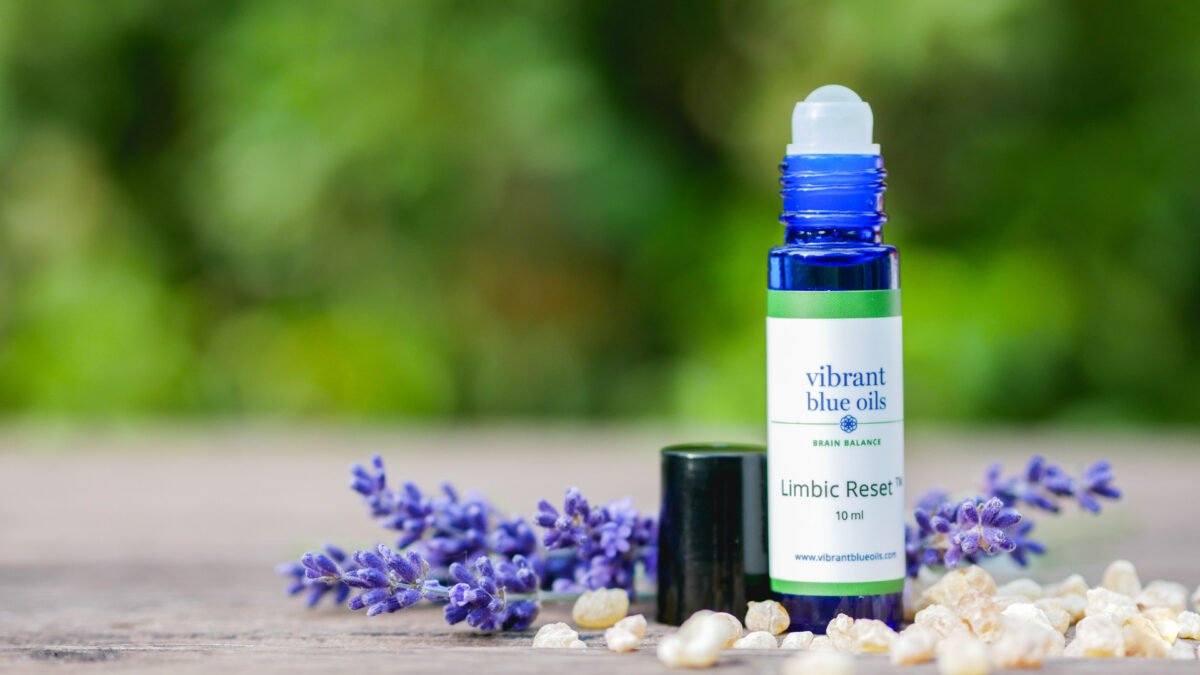
Season 4, Episode 4: Structured Water with Eric Laarakker

Jodi Cohen: Hello and welcome to Essential Alchemy. Alchemy is defined as the power or process that changes or transforms something in a mysterious or impressive way. My hope is that the information in this podcast can help you transform your mood, your energy, physical health, or even some dots to help you shift your mental or emotional state. I’m your host, Jodi Cohen, a bestselling author, award-winning journalist, functional practitioner, lifelong learner, and founder of Vibrant Blue Oils, a company that sells proprietary blends of high-quality, organic, or wildcrafted essential oil remedies designed to help you return to your ideal mental, physical, and emotional state. You can find out more about me and my company at vibrantblueoils.com. And with that, let’s get started with today’s episode.

Hello, I am Jodi Cohen, your host, and I’m so excited to talk about Coherent Water and the Amela Juan today with the founder of the company. I’m going to butcher your last name, so I’m going to have you say your name for everyone.

Eric Laarakker: Laarakker. Eric Laarakker.

Jodi Cohen: Eric Laarakker is a veterinary acupuncturist, a holten ballistic veterinarian, a teacher and the founder of Healthcare Academy. He’s involved in the International Research Institute water and Light, and performs investigations on health and the quality of crops and food for humans and animals. Welcome.

Eric Laarakker: Thank you so much. Thank you for having me.

Jodi Cohen: So I’m so excited. I live in Seattle and know Gerald Pollock, so I’ve been obsessed with structured water, coherent water for a while, but it’s really hard and can be quite expensive. And so this fabulous product that you’ve created is incredibly affordable, incredibly easy to use, and really allows so many more people to access the healing benefits of coherent water. So I would love it if you could just first explain what is coherent water and what are the benefits of coherent water?

Eric Laarakker: Well, first I need to explain that the name Coherent Water is a theory. It comes out of the quantum physics and because actually nobody knows exactly what water is, what does, I can tell you one thing, water is the most intelligent thing I think on this planet, and I consider this a living creature by itself. You have to look at it this way. I mean, we look at water as H2O molecules who just move at randomly in a glass of water. But the truth is it’s completely different that when the molecules they move at randomly, there’s not a lot of power in it.

Eric Laarakker: So you need a lot of water. But if you manage to let all the molecules work together, they move in the same direction in the same way, then it becomes a lot more powerful. Let me explain you by, it’s not the same, but just for explanation, the difference between light, normal, ordinary light, and a laser.

If you have a normal ordinary bulb, then it gives photons, which gives you some light. Suppose you will have a five-watt lamp in your house. It just gives a little light. But if you would manage them to walk all the waves together, then it becomes a very strong thing, which is called a laser. A laser fire port can burn through the table if you know what I mean. So in the same way, that’s how we look at it. If you manage that, all the molecules work together, they form like a kind of crystalline structure, and this crystalline structure is capable of receiving and giving a lot of more energy. It’s like constantly in tune with everything around us compared with the first crystal radios, you had a Kalina crystal in it, which makes sure that you get the right frequencies out of, well, the ether, all the radio frequencies which are there. So if you manage to put all the molecules in a certain crystalline form, and then it becomes a lot more powerful because all the energy of the cosmos, all the good energies, I’ll put it that way, the positive frequencies will be enhanced. And so when you drink that, you get a lot of more energy inside of your body.

Jodi Cohen: No, a hundred percent. And when I looked at what ag was calling structured water, and Gerald Pollock’s fourth phase of water, he points out that water is, we are mostly water. And then also water is really not designed to sit still. It’s designed to be flowing in streams and moving and not flowing through metal pipes and not having weird chemicals added to it. So our water is really not the water that the earth kind of intended for us to consume.

Eric Laarakker: No, most waters that we drink, almost all the water have been damaged in their perspective. True.

Jodi Cohen: But I love what you were saying, that water, I don’t know what water is either, but it is intelligent and it can be restored to factory settings for lack of a better way of explaining it. So can you talk a little bit about, for those of us who are listening who are like, gosh, my water has fluoride, it is been processed. How do I try to do the best with what I have if I don’t live near a spring? How does this tool kind of help us?

Eric Laarakker: Well, first of all, I mean the two steps in it, and I personally like to clean it first on a chemical base, take the toxins out with a good filter, et cetera. Although after using this stick, the chemicals become less harmful. I still would not like to drink polluted water. But after that’s done, there’s one issue, that’s what we think, and that the memory, the structure of all these chemicals are still inside. So on the chemical point of view, bacterial point of view, it’s out, but still the memory of all it is still inside. And the alem one is a beautiful way.

Eric Laarakker: If you swirl it, then it becomes more or less neutral in this coherent state. Like I said, getting more beautiful information instead of all the chemical information, which is still inside. But I would like to emphasize that some people think that this Alem wand is good enough to drink dirty water. If you steer it, then it’s good enough. No, it’s not. I wouldn’t drink it out of a lake or something like that because you still have to first clean it with beautiful filters. There’s a lot of it on the market, so we like to use it after that or even before the cleaning system. So then you have the best of both worlds. You have beautiful cleaned where all the chemicals are, but also well structured. So there is no place for information on the toxins of the bacteria anymore.

Jodi Cohen: Yeah, someone kind of explained our body like an aquarium. If you think of an aquarium, if the water is clean, the fish thrive. If the water is dirty, they get sick. And so the more we are cognizant of what we put into our body and really drink, not just clean, I mean clean’s a factor. But you kind of mentioned coherence. Can you speak a little bit to how would you define coherence and what have you found between the correlation of coherent water and health?

Eric Laarakker: Like I said before, it’s the non-coherent water. That means all the molecules that just do something, which they look the same, but it just moves randomly, we call it dead water. There’s no energy into it. And the main important thing is what we think is all the molecules that work together, so they’re in the same phase, they move in the same direction, and it’s not like there’s and dusty form line form when you have a beautiful mountain crystal, it attracts a certain information, gives a certain information. Silicates do that. And that’s also why we use silicates anyway from the wand itself. It’s not normal glass because normal glass doesn’t work for it. But we think in one glass you have multiple, maybe thousands, maybe millions different types of crystals. So all day are in tune with different frequencies. And that makes a lot of difference in your body.

Because first I need to explain, your body is actually not 70% water. What we learn at school, it is in mass, but in molecule wise, actually 99% of the molecules in your body is water. So water is the main ingredient in life. All our body, I mean we’re just like a sea inside of us actually. We have all have the same mineral account as in the sea. So we are just like with a sea, with a skin on it. And when you drink non-coherent water, your body needs to work a lot. It needs to work a lot because that’s maybe the reason why people say you have to drink one and a half two of water. But in my opinion, it’s a little bit nonsense because if you drink good, coherent water, you don’t need a lot. Your body knows a lot more what to do with it.

Eric Laarakker: So you need to pee less out of it. I mean, if you drink a couple of glasses of water, you know, have to go to the bathroom very soon, and it’s because there’s a lot of waste in it. Yeah. But if you think about it in the old times, 10,000 years ago when you had to travel from one place A to B, and suppose there was no water down the road. So if you would travel for 10 days, you have to carry about 20 liters of water, which is a lot in the desert especially. You see the people and animals who live over there, they actually drink coherently by eating plants. Plants are capable of making coherent water out of water. It’s more in this crystalline structure, it’s far more efficient. Also, I see it over here. I have a couple of horses over here.

When they go outside in a pasture and you have a little bit of good grass over there, they drink far less water because it’s a lot more efficient. So the benefits of it all, I mean, is almost endless. There is no process in your body where water doesn’t play a key role in everything. I mean, the DNA structure has been held together by water structures if movement from inside of the cell,

outside of the cell, and reverse. Everything has been done by water. Water is the mean, the most important ingredient of life. If you drink coherent water. We did a lot of tests, a lot of tests, as you may know, first of all, in the beginning we started doing research on plants. Actually for years. We started off to do with biophoton research about 15 years ago when the famous professor, Fritz

Pop, who invented that in our body admits light biophotons.

And he made all kinds of measurement tools for that. We took over the whole laboratory, we brought it from Germany to the Netherlands, from Roy to the Netherlands with all the people who worked over there. And well, actually we were not even busy with water when we came together with, our main goal was what can we do, which is easy to help this planet further because chronic sickness has become a norm on this planet. I dunno over there, but I think in this country, 43% of 20-year-old kids already have a chronic disease. I consider that not normal evolutionary. That’s quite strange. So there’s something happening. I think it’s worse in us. Yeah, I think so too. We were just looking for what is the mean in grid. What can we do as cheaply as possible to give as many benefits for the health that we can find?

So then we thought, okay, we start to check out first on plans because it’s easy to have a faster turnover if you want to check it on humans and animals, they have a longer lifespan and it’s not so easy to test in it. So first we want to be sure. So we changed all kind of parameters. Well make a long story short, we ended up in the water. We even bought a whole greenhouse, a six-acre greenhouse just for testing just to see what happens. And then we found that one of the most important thing actually, besides energy in as broader sense frequencies, the microbiome is a very important role, but all of it is ruled more or less by water. So when we were very confident, we saw that the plants which we fed on like tomatoes, which we fed with the al lemon water that we saw that we had an increase of 50 to sometimes 100% of biophotons.

Eric Laarakker: So that means there’s a lot more life, a lot more energy in that tomato. They look the same though if you look from the outside, they look the same, but they taste a lot better. There’s a lot more taste in it. And we are not even used to the normal taste of vegetables anymore. And if you grow them with alma water, if you don’t use any toxins, they taste completely different. So then we made the huge step into testing and soil, and we saw that actually the microbiome, which is the amount of bacteria and other viruses, fungi, et cetera in the soil, that actually we could restore them after being used with glyphosate and stuff like that, that we could restore the soil very fast after using the ana lama water. So…

Jodi Cohen: Wait, you mean remineralize the soil?

Eric Laarakker: No remineralize but the microbiome. So put the right bacteria, fungi, and everything in the soil. I mean, this is the most important thing in your soil. You have the Issa, which are fungi, which are in the soil, and they help the plants to get more nutrition out of the soil. And you see that also there will be more nutrition in the soil because there is something which we don’t look at a lot, but it’s called biological transmutation. That means that the microbiome can change minerals into other minerals.

Jodi Cohen: What? Oh, alchemy of minerals.

Eric Laarakker: Yes. Did you ever think about how a chicken gets so much calcium inside to lay egg every day? They need to eat a lot of calcium. Actually it changes the silicates from the soil into calcium. So there’s not much known about it. But also we think that in your gut, these bacteria, now I’m going to change to your gut. So then we thought, okay, let’s do research on that level because we are a microbiome, as you may know in your gut, when you have a healthy gut, there are more than 1,200 different species in a gut. And all of them have their function and we know just a little about what their function is. You have like 1000 species on your skin. You have 60 species of bacteria in your bladder, 600 plus in your lungs, and they read somewhere that even now they found over 1000 species in your brain, and on your skin you have 1000 species.

Actually, we are a colony of bacteria. And the funny thing is that when we tested it on people by drinking the water, we saw an 83% of the DYS index in the ALMA group. So what we did was a double-blind placebo-controlled research on gut bacteria. So people had to deliver the stool, send it to the laboratory, see what the microbiome levels are, the differentiation in it, and then we saw that 83% of the enhancement in the VS index in the alma group and 36% of this vs index in a better situation in the placebo group. But, and 80, 62% got worse or stayed the same. So that means that there’s a lot of improvement in your gut bacteria just by drinking different water.

Jodi Cohen: If it resets the terrain. And what you’re saying is when the terrain is in balance, it does not need to take all these calcium supplements, it just allocates resources to give you what you need. That’s amazing.

Eric Laarakker: Yes. The issue is that I worked a lot with vitamins, minerals, and stuff like that, and it’s good to take them, but if your microbiome is not good enough, I mean a lot of it will go to the toilet if you know what I mean.

Jodi Cohen: No, I agree.

Eric Laarakker: But if you have a good microbiome, I’d like to explain it in the following. If you have a bucket, you open a tap, and when there are a lot of holes in that bucket, you get a put a lot of water in it to keep a little bit of level of water in it. But if you close the holes, you just need a little of it. So yes, I’m convinced that if you drink the right water, so if you have the right microbiome in your body, you don’t need as much vitamins and you can take a lot more good vitamins out of good food. And of course, good food is the most important thing in that way is even better than swallowing all the minerals and vitamins. And so a healthy gut equals a healthy brain, equals a healthy immune system equals almost everything in that perspective.

Jodi Cohen: You’re setting up the terrain because the terrain is 99% water. And if we can set up the water for ideal function, then you set up the body for ideal function.

Eric Laarakker: Yes, yes. So from that moment on, we started to do a lot more research on the human body. We did a glycan H study, and I dunno if you know what it means, but glycans are sugar molecules attached to proteins and the main antibody protein of the human immune system, the immune globulins, they can be marked with different glycans, which determines whether a protein of the immune system will be anti-inflammatory or pro-inflammatory. Now the balance between them is very important. If it shifts to the pro-inflammatory glycans, it’ll lead to low-grade systemic infections and that which underlies faster aging and disease in a body. So what we did, we had a group of people and they started drinking the water for I think it was two months, and we did a glyco age test before and after. And out of the 2120 of them, the Glyco age changed dramatically. So they had a reversed aging from between one and 12 years and an average of four years. So only by drinking that al lamb water, they had a reversed age biologically for four years.

Jodi Cohen: So basically what I hear you saying to simplify, there are a lot of manmade toxins that are kind of disrupting our natural terrain. This is basically allowing us to put water, which is the primary, it’s foundational for us in a structured way that kind of restores the terrain. It puts the body imbalance and then the body starts. Okay. So…

Eric Laarakker: Also on all levels, maybe I can mention one other research that we did, which I think is very special, is that about a TP and the mitochondria and almost the mitochondria did determine everything. Actually all the food, what you eat, the glucose has been changed into a TP and that’s the food of your body. Your brain uses a lot of TP, and your muscles and everything in your body use a lot of TP. And we found out it was also a double-blind placebo-controlled research that by only after two months of drinking the water, there was an enhancement of 23% of a TP in the blood. So even these little mitochondria inside of your cell, which used to be bacteria also. So from all sites, it’s very beneficial for your complete health, like you said, on the terrain. And that’s your microbiome. That’s the water. These are mitochondria, et cetera, immune system.

Jodi Cohen: So here’s what I love and what I want to talk about a little bit. You’ve made this an incredibly easy tool. Talk to me a little bit about what this wand is and how people use it so that they can start adding structured water to coherent water to their lives.

Eric Laarakker: What we created is what we call kind of mother water, and it takes over several devices and up to a year to get all the information in it. That’s why we call it Alma. Alma is the movement of the sun to the earth. And we have a season where we found out that even the frequencies of your liver today are not the same as tomorrow. It’s a living system. And so it takes us over a year to create the mother water, but that mother water wants to copy itself because that’s the way nature intended it to be. So it took us a while to figure out how we tested different materials, and then we came up with a quartz crystal. And quartz crystal actually is amazing. Those silicates, they can receive information, store it, and give it to the next level. So actually what you do is because of the model water, which is inside, when you stir in a glass or a jaw or whatever, then all the water will get almost the same structure as inside of that wand.

Jodi Cohen: Amazing. And you have people activated it in sunlight for a minute?

Eric Laarakker: To be honest, it’s not even per se necessary. The funny thing is we tested a lot of water devices and the biggest problem is stability. And that makes also the alma water completely different from almost all the other waters that we tested, is that usually, you have a lot of devices that swirl, that use magnets, crystals, and stuff like that. Nothing wrong with it, but the memory is gone after half a minute or a maximum of one and a half day. But this will stay for you to know all the tests that we did was with old water in a laboratory with human beings in the soil, everything. Sometimes we even use nine months-old water. And that’s extraordinary that water stays in that stable position. That’s why you can use the w. Well, actually mine, which I use now is three years old already, and I still have the same one. So that will make it stable in your glass if you know what I mean.

Jodi Cohen: If listeners are going to buy this, we’re going to have a link below and receive it in the mail. They’re so excited. They have their wand. How do they get started? What do they do?

Eric Laarakker: Just roll the water.

Jodi Cohen: Does it matter if it’s in a plastic container or a glass container?

Eric Laarakker: No. No, it doesn’t matter. It doesn’t matter, of course. I mean glass, I don’t like plastic containers because I don’t like plastic. Especially not the soft plastic bottles because you get this weak, this stuff in the chemicals inside from the plastic, but for the coherence, it doesn’t

matter. But come back to your question, do you need to put it in the sun? I love to do it sometimes, but it’s not strictly necessary to do it. It gives it a plus. You know what I mean? So it gives it just an extra energy. It’s not necessarily necessary. I mean, in the wintertime, we don’t have a lot of sun in the whole wintertime, so otherwise, I could not use it. But no worries, you can use it.

Jodi Cohen: Okay. And then another question we get often is just for water. Can people use it for their coffee for any liquid or just water?

Eric Laarakker: No, no. For any liquid. If you like wine, use it for your wine will taste a lot better. Jodi Cohen: Amazing.

Eric Laarakker: A friend of mine, loves beer, so he uses it in his beers. So it doesn’t matter as long as there is water inside. Okay. I have to correct myself a little bit. I mean, be careful. After you cook your tea, of course don’t swirl too long with it in the hot tea because it will heat up and then it will explode for being practical. So usually for coffee and tea, what I advise is to make a coherent before…

Jodi Cohen: The water.

Eric Laarakker: And then when it boils, it takes a little while and then it will go back to his coherent position. So maybe after that, you can swirl again very fast. That’s also a possibility. But to be honest, in my farm where I live, I don’t use it because we have a whole house, Alma, which is built in. So all the water for showering when I have a bath with all the water over here is coherent.

Jodi Cohen: Oh my gosh, that’s amazing. That’s the next level. The other question that we get often for, there’s a lot of 5G, a lot of frequencies in the states, and this seems to kind of help people mitigate the impact of that. Can you talk a little bit about how near water might help you be less affected by S.

Eric Laarakker: I’m a little bit careful to say too much about it because it’s also of course a political agenda in it. But first what we did was actually we did a lot of brainwave tests and when people drink lemon water, the funny thing is that straight after drinking the water in a couple of seconds, you see the brainwaves changing and that goes very fast. And I think it’s through the nerves vagus, which have a straight communication with your brain. So we saw a huge more coherence in the brainwaves. We even did it on twins, we tested it, a lot of tests on it also double-blind. And what we found is that every time the brainwaves change, then we let them call with a cell phone, put a cell phone on their head, and then you see a complete change in the brainwaves. It’s a little bit scary, to be honest.

I mean, everybody uses this cell phone, but if you look at it how the brains change after putting a cell phone on your head, it’s amazing. The good news was that immediately after drinking a glass of water, even when the cell phone was on the head, we saw the brainwaves changing back to normal. And so at least for the brainwaves, we dare to say that it’s very beneficial. And 5G, I’m very careful because it’s not even rolled out all the frequencies. So we’re not sure what all of this is going to do, but we know for sure, I mean, we’ve been testing the water on biophotons and plants and everything, which has been standing next to a wifi router for months. And still after using that, it thought that we had the same results, not using the wifi in it. So for most EMFs it helps a lot.

It means that you don’t feel it anymore. Right? Sometimes I even have the idea that you feel it a little bit better, but it makes you less sick. And why? I mean, the funny thing is when you start drinking the Alem water, you will notice that you become more sensitive, more or less, your body knows better for you what is good and what’s not so good for you. Your body starts rejecting some kinds of food which is not good for you. And people get more consciousness. That’s quite funny that people change in their behavior, everything. And I think it’s due to, because you get all the right good cosmic information in your body, so you’ll become far more conscious. And so like my children, they’ve been grown up with this water and they still like to play of course on a computer and stuff like that, and we let them, but if I put, unlike the Bluetooth of my phone, they feel it immediately in two seconds. You put on the wifi or the Bluetooth, and they nodes immediately. It’s less harmful. But it’s not that you don’t feel it anymore. I mean that’s the differentiation. But as far as I’m concerned, you should feel what is good or not good for you.

Jodi Cohen: No, I agree with you. And I’m wondering, for people who are listening, is there a way that they can see the published research that you’ve mentioned? Can they go some…

Eric Laarakker: More? Yes. Yes. On the website of Anem, most of it has been published over there on the research. I mean, we just finished a beautiful research in agriculture and actually we found that the CO2 uptake implants enhance a lot and they start giving more oxygen. They need less water, have far better resilience, and far better immune systems. And it’s got to be published in this study soon. So on any level, well, we see a lot of benefits for it. And it’s like you said, it’s easy to use. I mean, you can carry it. And that was our goal. It must be easy to use and it must be accessible to everybody.

Jodi Cohen: Carry it in your purse. Yes. Is there anything that I haven’t asked that you would like to share?

Eric Laarakker: Well, I just want to share that actually our main goal when we start doing this, I go back to what I started with is that we wanted to get something on the market, which helps and which is beneficial for all and not only for happy few, but it’s beneficial for the soil, which is beneficial for plants, which is beneficial for animals, for everything. And actually our main goal somewhere at the end of the line is that we want to get all the waters on this planet coherent again. So think about what would happen if, how everything would thrive, if all the lakes and rivers will be coherent again, the plants start to regrow and everything will be a lot healthier. So actually that’s our main goal in the future, that we don’t have any business anymore, that all the waters on this planet will be coherent.

Jodi Cohen: Amazing. And you can even do this in your pet’s water bowl, correct? Oh, like my dogs have a…

Eric Laarakker: Water. Yeah, yeah, yeah. Oh yes. They have no issue. No issue. I mean, even people would use it for the cows tables, pick tables, whatever. I mean, especially with the whole house on a lemon, you can do a lot more. One thing I would like to say is use it in your bathtub.

Jodi Cohen: Yeah, I was thinking that. But with the…

Eric Laarakker: It’s amazing what happens. I mean, we’ve been in the midst of now of a huge research with people with cardiac problems. We just soak them in water and we see amazing results. Just lay down for half an hour in the alma water. And how I usually do it is when I open my bath, you put it just in your bath and leave it over there if it’s not too hot and swer a little bit and then take it out dried well. And then all the water in your bathtub will be coherent. And that even gives a surplus. And the reason why is I think that because it makes these harmonic tones around us, harmonic water is capable of making these harmonic tones harmonic. So all the information with an body comes out of your body will be a lot more harmonic. And of course, you have an uptake of what, half a liter? Liter, I think in half an hour. So from both sides. So I love to use it internally, but also externally. Also on our plants now, we just created a garden and LA so you can spray your plants with it. It’s beautiful. Amazing to see plants. Love it.

Jodi Cohen: Amazing. Well, thank you so much for your time, for your brilliance, and for this amazing, easily accessible tool. We are so excited to share this with our community. And thank you for everything.

Eric Laarakker: Thank you for having me over here. Thank you so much.

Jodi Cohen: Thank you so much for listening. I hope this podcast empowered you with some useful information and takeaways. If you liked this episode, please consider sharing a positive review or subscribing. I would also love to offer you my free parasympathetic toolkit as a gift just for listening. It will teach you how to activate the most important nerve in your body to turn on your ability to heal. This free toolkit includes a checklist, a video, and a detailed guide. If this podcast prompted any questions, you can always find answers at my blog at vibrantblueoils.com or my book Essential Oils to Boost the Brain and Heal the Body. Until next time, wishing you vibrant health.


Season 4, Episode 5: Your Mouth is the KEY to your health with Rachaele Carver-Morin

Jodi Cohen: Hello and welcome to Essential Alchemy. Alchemy is defined as the power or process that changes or transforms something in a mysterious or impressive way. My hope is that the information in this podcast can help you transform your mood, your energy, physical health, or even some dots to help you shift your mental or emotional state. I’m your host, Jodi Cohen, a bestselling author, award-winning journalist, functional practitioner, lifelong learner, and founder of Vibrant Blue Oils, a company that sells proprietary blends of high-quality, organic, or wildcrafted essential oil remedies designed to help you return to your ideal mental, physical, and emotional state. You can find out more about me and my company at vibrantblueoils.com. And with that, let’s get started with today’s episode.

Hi, I’m your host, Jodi Cohen, and I’m so excited to be joined by my dear friend Rachel Carver, a biological dentist who’s going to help us understand the importance of biological dentistry and the very important component that your mouth plays in your health. So welcome, Rachel.

Rachaele Carver-Morin: Thank you for having me, Jodi. Happy to be here.

Jodi Cohen: It’s always fun to connect with you, and I’m hoping that for our listeners who don’t really understand how biological dentistry differs from conventional dentistry if you could explain that a little bit.

Rachael Carver-Morin: Absolutely. So I was traditionally trained 20 years ago to believe that fluoride was the end all be all. We just had to kill all the bad stuff and then everything would be great. And through my own health journey, I suffered from eczema all over my hands after my second daughter was born. And when the conventional doctors just wanted to give me steroids for the rest of my life, it just kind of made me pause. It didn’t sit right with me. And so as I was going through my own health journey, I started to think about dentistry a little bit differently and started thinking, well, geez, we sure do use a lot of toxic substances in dentistry. Is there a better way? And so that kind of propelled me to do some more research and some more learning and got introduced only a few years ago now to this concept of biologic holistic dentistry, which really rides on the whole idea of terrain theory.

Rachael Carver-Morin: So most traditional medicine and dentists, we think about germ theory where there’s a bad bug, we need to kill it and then we’ll fix everything. But we know you could be getting a cold laying right next to your husband and the husband never gets it. If it’s all about the bug, that doesn’t make sense, right? And I think in the last few years we see that this virus that’s out there doesn’t affect us all in the same way. So again, it’s not about that particular microbe, it’s about the body that this microbe inhabits. So instead of just trying to kill all that gum disease and cut out all that decay from cavities, how can we create an environment in the mouth that will just be resistant to disease? And that’s really the key to health. Obviously it’s much easier said than done, but there are some really, really great ways.

If you go to the conventional dentist, it’s kind of like drill fill and bill. That’s what we kind of say. By no means do my colleagues do it maliciously or with any bad intent. Obviously we all get into healthcare because we want to help people. But again, it’s a different philosophy, it’s a different way of thinking about what causes it. And I’ve always been a really curious person. So after I was doing all this research and studying that, I would think, well, why is that tooth having a cavity? Why does that person have gum disease? It’s not that all of a sudden I swallow this bad bacteria and now my gums are bleeding and I’m losing bone. That’s not what happened. And people will say to me all the time, well, my mother, my father had gum disease, so inevitably I’m going to get it.

And there is certainly genetic susceptibility to all types of disease. However, what we inherit is maybe the enzyme doesn’t work as effectively as the detox enzyme. And so when we take in toxins if we can’t detox them, then our whole body becomes more acidic, and then there’s a whole cascade of events that affects our immune system and then can manifest in the mouth. The really exciting thing I think as a dentist is that the mouth is a mirror to the rest of the body. So in Ayurvedic Chinese medicine, we look at the tongue, the texture of the tongue, the color of the tongue, the shape of the tongue, all lets us know what’s happening in the rest of the, I had a new patient this morning and he had cracks all along his teeth or his tongue. And so I was asking him about digestive issues because in Chinese medicine where we see cracks all over the tongue, that is a sign of digestive weakness.

And then also depending on the location of the tongue, tells us about certain organs. So he had a red tip of his tongue, which is heart. So there are no blood pressure issues. So talking about that, and a lot of times the patient will be like, they list their medical history, I’m fine. And then you start looking at these things in the mouth and all of a sudden they’re like, oh, well actually I have reflux and actually I have this and that. So again, and there’s in the naturopathic world, they’ll say 80% of disease begins in the mouth, which is something that’s really important to realize because we know even Hippocrates, like way back BC said, all disease begins in the gut, and the very beginning of the gut is the mouth.

Rachael Carver-Morin: And we forget that the same oral, the tissue inside of our mouth is the same tissue that lines the entire digestive tract.

So again, that’s why we can really get a good mirror of the whole rest of the body. So if we have decay happening, I just read a really interesting article actually about the parathyroid hormone. So the other thing to know is that every tooth is its own organ. We kind of think of teeth as just

what we need to chew our food, but in fact, every tooth has a blood supply, a nerve supply, a lymph supply. And in a normal healthy body, we’re going to take that blood flow from the systemic circulation and we’re going to deposit the calcium and the phosphorus and all those minerals into the outside of our teeth. So that keeps our enamel nice and white, nice and strong. Now, if we have a toxic insult or we have mild chronic infections from say, Lyme or mold or whatever it may be, the fluid flows.

So when we get oxidative stress, right, call them ROS reactive oxygen species, which is just something that happens anytime we have toxicity or inflammation in our body, those substances can actually turn off our parathyroid hormone. Parathyroid hormone is really important for initiating that fluid flow. So when we turn that off, we kind of get a negative pressure backflow. So now the fluid flow is reversing. So now we’re pulling minerals out of our teeth into circulation because we need to keep a pretty neutral pH in our body for health. Our blood has a very small window margin of what the pH can be, and we need minerals in order to create neutrality. So because our food supply is so lacking in nutrients today, and if you’re not getting it in your diet, the minerals are going to have to come from your teeth and your bones.

And so when those things get leached out of our enamel, now our teeth are softer, they’re more susceptible to the normal bacteria and acids that are in our mouth. And again, that backflow of pressure can pull that bacteria inside the tooth. So what I’m thinking now, when I have a person with decay, not only do I want them to have a diet or a supplement with minerals, I want them to be on the SA soluble vitamins. So that’s vitamin D, vitamin A, vitamin K, vitamin E two, but that’s not as crucial to the teeth. So D and K in combination with minerals, that’s how we create good healthy bones and enamel. But then thinking about this oxidative reaction that’s happening, that’s also attuned to flu, makes me think, okay, we also need some antioxidants on more which vitamin A. Vitamin A is a good antioxidant, but the other big one is vitamin C.

So I want all my patients to also be on some good vitamin C and that K two, that’s a really important, I didn’t realize that it was a quinolone, which is very similar to coq 10. coq 10 is really important for the mitochondria, making sure that we have good immune defense and good energy production in ourselves. So K two helps with that PTH.

Rachael Carver-Morin: So again, when I’m thinking about the cavity, I’m not thinking about fluoride, I’m thinking something’s happening internally. We need to think about those kind of supplements. So that’s kind of decay, as I said, with gum disease. Then I’m thinking, okay, so what has caused the whole shift in the environment to have this more prevalent of this bad bacteria? And what we’re learning is that anytime again, we have that toxicity in our body, the environment is shifting. So I talked at the conference about being hangry when we’re not said, well, we’re hangry, we’re not ourselves, we’re angry, we act differently.

And so that’s literally what happens. We have these normal bacteria in our mouth, and when there are not enough nutrients because of our poor diet, because of toxicity and inflammation, they literally, these bacteria literally change forms. So we call it ple amorphism. And so they ple morph into this bacteria that’s able to live in this less oxygenated, less nutrient-wrench environment. It’s very similar to what happens in cancer. Cancer we know is a lack of oxygenation. And actually there’s been a lot of studies too showing how there’s a shift in bacterial populations in cancer patients. Again, these organisms are so vital to our health, that bacteria is vital to our immune system. And so anything that’s changing in the body, the whole environment changes. Then the whole population of bacteria changes too. Then you have these more dangerous or pathogenic bacteria that cause tissue destruction, and it’s really our own immune system. So you can think of gum disease as an autoimmune condition because the body’s response to this bacteria is to degrade away the bone and the gum tissue. The definition…

Jodi Cohen: I want to hover on that. No one’s ever said it that way before, and that’s so powerful. Gum disease is an autoimmune condition. So it’s your immune system that’s withering away at your gums to get better access to the bones, to get the minerals.

Rachael Carver-Morin: No. So what’s happening is because of these bad bacteria, they’re stimulating your immune system to come and try to clean up the inflammation. So the bacteria release all these cytokines, which are basically little signals saying, Hey, there’s a problem up here. Come and help me out. And when over. So inflammation is normal. We need inflammation. Every time you get a cut, it gets red and it’s hot because that’s the body’s way to heal. But we know we have the chronic disease when that inflammation doesn’t get turned off, normally it’s we have an injury, the body cleans it up, and we’re done. But it’s something like an autoimmune condition. That inflammation signal never gets cut off because that toxin is still there, the infection is still there. We can’t get rid of a source, and therefore that chronic inflammation is what causes bone destruction.

Jodi Cohen: Okay.

Rachael Carver-Morin: So your body’s, that’s what we want to do. We know autoimmunity stems from the gut. That’s why when we’re thinking gum disease, we’re thinking what’s happening internally? Is there a leaky gut? Are there parasites or mold or heavy metals? The other thing, one of the big sources of heavy metals in our mouth are those what we call silver fillings. Silver fillings are over 50% mercury. And were told, I was told 20 years ago in school, well, that’s okay because once you condense it all in the mouth, it’s fine. It’s stable, you’re not going to release mercury. But there’s a lot of evidence, videos even showing that we do release the mercury vapor every time we chew if we have something hot. I just read a recent article about fluoride. Fluoride increases the corrosion of those silver fillings, therefore releasing more of those heavy metals into your lungs and therefore getting into the rest of the tissue too.

Heavy metals go hand in hand with candida. So if you’re having a hard time with yeast, may want to look in your mouth. Are there a lot of amalgam fillings in there? And heavy metals and parasites go hand in hand too. I know that’s really what ended up being the root of my problem was parasites. And thanks to cell core and their parasite products, I was able to eradicate a 10- year problem in only two months. So it really, really important to see there’s all these connections. And for 10 years I have always been trying to treat symptoms, and that’s how most of us are trained. We treat symptoms. And that gets us only so far because again, we’re not And symptoms, it’s really interesting too in the mouth that we have so many things going on in the mouth that can lead to systemic problems. So let’s talk about root canals.

Dentistry is the only profession that leaves a dead organ in the body and any kind of dead tissue in the body is going to harbor. Viruses, parasites, mold lines, you name it. Because what happens with a tooth, it’s great. And it was so wonderful, the advent of root canal therapy because we’re able to keep the tooth, there’s nothing worse than losing a tooth and having a gap and not being able to chew as well. So the root canal systems, and most of the time you have a root canal and you feel great, you feel nothing. However, now with the advent of 3D x-rays, we can see that there are infections that kind of stay in those root canal teeth. And the reason I actually had a patient this morning and he had had a root canal six months ago by the specialist and said, well, he still has a draining fistula right there.

I said, well, there’s no way we can guarantee to get everything out of a root canal system, although the main canal goes straight down the middle of the tooth, there are thousands of little offshoots, think about capillaries, and there’s no way that you can fully irrigate all of those areas out. And so when you do a root canal taking out the nerve and you’re cutting off blood supply. So he asked me, why can’t you just give me antibiotics? And I said, well if you don’t have any soft tissue swelling. So the antibiotic has no way to get into the tooth because there’s no blood supply anymore. So we use ozone therapy for him, and ozone is a wonderful modality.

Rachael Carver-Morin: Most biologic dentists will use this, and it’s antibacterial, antiviral, anti parasitic antifungal, and it works on contact with the zero side effects, with no contraindication. So it’s an amazing tool, and these are the things that biologic dentists are going to work with.

We have all these different tools that help us help the body heal without all the negative consequences. I’ve just recently started using a lot of homeopathy like Arnica and Hypericum, all these things to try to avoid people needing ibuprofen because the long-term anti-inflammatories really tax our liver and our kidneys, which are already totally overwhelmed in our toxic world today. So that’s the thing about a root canal. It may feel fine, but then we take these X-rays or let’s say you’re a patient who’s been diagnosed with fibromyalgia, chronic fatigue. I kind of see those diagnoses as we’re not really sure what’s wrong with you. So yeah, catch up, right? Your mitochondria are not functioning properly. So we have pain. We’re tired all the time. What’s affecting the mitochondria? What’s the toxin? What’s the infection? I truly believe that every disease comes down to toxins and infections.

Jodi Cohen: No, I agree with you. I’m curious, as we’re talking about these wisdom teeth, they cannot wait to yank them out of our children. What are the repercussions of that?

Rachael Carver-Morin: That’s one of the biggest concerns we see with what we call cavitation lesions. So if you have a tooth extracted and the dentist does not remove all of the ligament or there’s any bacteria or anything left behind bone may not fill in properly. And this cavitation lesion, it’s most common in a wisdom tooth extraction. That’s the most common teeth that are extracted all the time from all of us. And again, so if that doesn’t fill all the way back in, what you’re left with is this little pocket in the bone, another place that parasites and lime and all those goodies love to hide because again, there’s no blood supply. So the immune system can’t see them. But what happens is their byproducts, right, their endotoxins, we call them basically their…

Jodi Cohen: Pooping product

Rachael Carver-Morin: That does leach out into our lymph. Let’s talk about that a little bit, right? So one of the reasons why a lot of dental problems can cause systemic problems because we said, right, the lymph drains from the face down the neck into all our lymph nodes. What is the big nerve that runs down here? It’s our vagus nerve. Anybody listens to Jodi? We know all about vagus nerve toxicity, so it’s dental toxins which caused that. Imagine you’ve got this infection in a whim tooth area right here. Where’s it going to drain? It’s going to drain right here.

Rachael Carver-Morin: That’s one of the reasons I love Jodi’s parasympathetic oil. I use it all the time with so many, not just like my nervous patients when they come in because that’s an interesting thing before you have an extraction. If you’re one of those super, super anxious patients and you’re in that sympathetic flight all the time, I already know that that person’s not going to heal as well.

So a lot of biologic dentists who do a lot of these kinds of surgeries, they may sedate you, which is great because you want to be in that parasympathetic mode in order to heal if you’re amped on. So that’s why I’m using oil. And these are things that patients, it’s nothing invasive. It’s so easy. Dab a little oil behind your ear, take the little sugar pellets of some of the homeopathic we use anything, just get you into that right thing. Otherwise, you’re more likely to have these consequences. And so if that base nerve is infected, all of your digestive organs are affected. And we, since most disease starts in the gut, if we don’t have a well-functioning vagus nerve, then we have all sorts of problems. So that’s a big, big, big consequence. And that’s really where a lot of the problems with oral infections lead to problems is they affect that vagus nerve.

And then again, every time you’re swallowing, you’re swallowing the bugs into the gut, which then causes disruption in the gut. So it’s kind of like the chicken or the egg, is it the gut inflammation that causes the oral problems or the oral problems? And I’m not sure there’s a real good answer. I think they just go hand in hand with everything. It’s the same blood flowing through our whole body. So we want our gut bacteria, and if our gut is in good shape, our mouth is in good shape. If our mouth is in good shape, our gut will be in good shape. So traditionally for gum disease, we would, okay, we’re going to numb you up. We’re going to scrape those teeth, we’re going to give you an antibacterial rinse, and send you on your way. What we do instead, we may do some of that deep cleaning.

We’re going to irrigate you with the oz native water. We’re going to give you binders, something like biotoxin binder, which we have the patient open up and swish, and that’s going to help bind up some of those toxins we talked about that those bugs may be giving off. We’re going to give probiotics because we want, again, what we want to do is not necessarily kill the bad, but create a really healthy environment so that the good continue to colonize and overcrowd the bad. So it’s mineral. So it’s thinking about the gut, thinking about the liver. And when you do that, you’re going to, and I’ve been using, I did kind of a mini-study using saliva samples before and after my treatment, and I was getting just this, okay? Because traditionally when you do the saliva sample, okay, now put ’em on metronidazole and all these antibiotics, which I stopped doing it for a while because I said it.

Rachael Carver-Morin: One, it’s expensive. Two, it doesn’t matter what the bugs are, they’re giving the exact same recommendation. And as learning more about holistic care, I was like, I don’t want to be given antibiotics because I’m destroying a huge part of the person’s immune system. So I was so excited to see that just using these products, I was getting, I think one of my first pains, 60% reduction in only four weeks of the bad bugs. The really…

Jodi Cohen: Anecdotal, I don’t have cavities, but I have bleeding gums, and my dentist wanted to refer me to a periodontist, which basically means just sharper knives. And I have seen your talk and I tried your protocol. I switched with the biotoxin binder and night and day I barely bled. It was crazy.

Rachael Carver-Morin: Yeah, it’s amazing. And then also doing some of the more holistic products when we take toothpaste are some of the most toxic subs. And not just the fluoride, but they have the sodium oral sulfate and the dyes. We shouldn’t be putting blue things into our mouths. Again, that’s just adding another toxin. And there’s so many toxins we can’t avoid because they’re in the air, they’re in the water. So anything we can do to minimize our tuss and beauty products is one of them, right? So, we shouldn’t be rinsing with act purple liquids. It is just not what we’re bothering…

Jodi Cohen: Fluorescent green. Yeah.

Rachael Carver-Morin: No, that’s just flavored and you’re wasting your mind what a really great oral rinse is hydrogen peroxide, just your $3 bottle of hydrogen peroxide, mix it 50-50 with water, and swish with that. And for every patient who gets a crown, we have them do that for at least two weeks while they have that temporary in there because the temporaries fit, but they’re not perfectly. So sometimes you get gummy irritation when my patients follow that protocol, when I go to seat, that permanent crown, their gums are perfect, beautiful because if the gums are bleeding and I try to cement something, I might not be able to cement it because there’s too much bleeding and it impairs the cement ability of that crown. So that’s an amazing, super cheap, easy way, and you don’t have to do it every day. But getting, again, we talked about we need extra oxygen to feed the good bacteria.

Jodi Cohen: And for the hydrogen peroxide, is that just something they can go and get at their local drugstore? Is there a special…

Rachael Carver-Morin: The ground bottle you see right by the alcohol on the bottom shelf there? Okay. I like peroxide. I think Colgate makes one called Peril. It’s blue. So again, you don’t have to waste your money on that. And most people have a bottle of head.

Jodi Cohen: No, that’s wonderful. And then we were also talking about the dirty mouth toothpaste, primal life organics. That was easier I thought, than the biotoxin binder. It was slightly easier to access and less messy.

Rachael Carver-Morin: Yes, yes, I use that one. And I like to do kind of rotate, just like with probiotics, I like to rotate my probiotics because we’re trying to build diversity in order to have good, healthy systems. And I kind of feel that way since the mouth is one big cesspool of bacteria too. Same thing with toothpaste. I like to change it up to make sure that, because if I’m always using the same one, maybe I’m only going to have a certain amount of bacteria. I like the toothpaste for bitten because the whole idea behind that toothpaste also is to create the environment. So Retin, so it’s got prebiotics in it. So again, and the vitamins, the…

Jodi Cohen: Jerry’s.

Rachael Carver-Morin: Product, yes. That’s great stuff. So again, that same idea is how do we create a good environment to colonize the good stuff? So again, I probably have four different things, kinds of teeth-cleaning things in my little drawer I like to change. What are…

Jodi Cohen: The ones you have on rotation rein, the primal…

Rachael Carver-Morin: Rein rise? Well, I have the primal life organics. Sometimes I just use, if I feel like my gums, sometimes I’ll be flossing and I dunno if everybody noticed like, that doesn’t smell so good. I’ll just get out my ozonated olive oil and I’ll brush with ozonated olive oil. It doesn’t taste that great, but it knocks out whatever. If I eat something, it’s really interesting. I’ve seen the connection where I didn’t eat as clean that day or that my gums tend to not be as healthy. So a little bit of Oz needed olive oil for one-time toothbrushing and good to go.

Jodi Cohen: Where can they get that?

Rachael Carver-Morin: So it depends on it, there is one company called Pure O three, which you can find on Amazon. They have different kinds of oils and they have some flavors too. So it’s not as potent. It’s not as strong. The one that I use in the practice is from a company called Longevity. And I believe you can only get that through practitioners much.

Rachael Carver-Morin: It’s at one point their plant blew up because ozone is a little volatile, so they weren’t making it. We went six or, and so I had to use Pure, and I was sad because the pure O three didn’t, it’s not as potent as the longevity. So it’s really good for daily stuff, use it in place of Neosporin. So again, Neosporin, we’re putting antibiotics on there, which isn’t great. Again, ozone will kill all kinds of stuff without creating any antibiotic resistance, but for the really hard stuff.

So I put the longevity person has an extraction site or a big wound. My daughter had planners work. I used that to get rid of that. She had a really bad, she had a scrape on her leg and started picking at it and ended up getting an infection on her leg and almost started getting into cellulitis. But I refused to take her to the ER because all they were going to do was give her antibiotics and steroids, and I didn’t want that for her. We used ozone, I used the biotoxin binder and I took that and poured that on her, and within a week it was all completely better. Well…

Jodi Cohen: That’s so interesting. You put it directly on the wound.

Rachael Carver-Morin: I said, why not? I’m going to try a little bit of everything. So I wanted to pull, because she had pus there. I also did give her an injection of ozone gas and that created, that brought all the pus to the surface. So we’re able to get that out. And then I used the biotoxin binder mixed with a little bit of water just to put it on it to also try to suck out the bad toxic reaction from the infection there. So she did great. It took a week. If I had gotten the drugs, it probably would’ve been better in a day or two, but I just wasn’t willing to compromise for overall immunity for something. I was pretty sure that I would be able to resolve it.

Jodi Cohen: And so for anyone who’s listening that’s like, wow, I had my wisdom teeth removed. How do I know if there’s an issue? What’s my next step?

Rachael Carver-Morin: So the interesting thing to think, there’s also something really important to look at that you can look online for a tooth meridian chart. So in Chinese medicine, we have these meridians. Every tooth is on a meridian, so the wisdom teeth are on your heart and small intestine meridian. So if you maybe have chronic IBS or some kind of heart issue or something that nobody can kind of understand what’s causing it, then that might make you think maybe I should go to my biologic dentist, have a 3D X-ray and investigate whether there’s a cavitation because most of the time that’s how we diagnose it is with an X-ray and some biologic dentists will have some muscle testing, kinesiology background, energy medicine. I use that a lot of times to look at, put your finger on the area, and kind of ask. Seems a lot of woo-woo to a lot of people, but it’s amazing.

Rachael Carver-Morin: Everything in the universe is energy. And so when you have any kind of infection or cut or scar, it’s going to interrupt the energy flow and so you can kind of tap into that energy flow to see if there’s a problem in that area. And it’s good if you’ve ever had an extraction

or ever had a root canal and you do have some nagging health things, it would behoove you to check with a biologic dentist, and have a 3D X-ray. Just make sure that it’s not something like that that could be contributing. So many people, you’ll hear so many stories. We remove that cavitation lesion, we take out those root canal teeth and go away. I had a patient who had a root canal, looked kind of funny on the lower molar and I asked him, I said, you have any aches or pains anywhere? He was a young guy and he said, my left shoulder just I can’t get it better no matter what I do.

He was very athletic. And I said, well, interesting because that tooth is right on that same side. We removed the root canal shoulder. Totally healed within two weeks. Really interesting. You see, I see a lot too. Somebody has a joint replacement and then on that same side in the corresponding tooth, they all of a sudden have tooth pain there. So it’s really, really interesting and I encourage everybody to look that up. Tooth meridian chart, you’ll see a bunch of different ones. And I’ve seen, I just had my sixth case yesterday with a woman with breast cancer and she had a root canal on the breast. Breast meridian. I see it all. This is the most common one I see is upper first molar, lower premolar. So if you had a root canal in there and there’s a history of breast cancer, you may want to consider discussing options with the biologic dentist or if you have cancer or have had it, maybe you’ve gotten better.

If you want to really avoid recurrence, definitely have you look in the mouse, and get rid of any root canal to look for cavitations. And obviously it’s easier said than done, especially if it’s the front tooth because it’s going to be an expense. But when we do these things preventatively, I mean how much time and energy do we spend on our sickness? So if we pay a little bit more upfront and prevention, we save ourselves so much time and so much money and emotional toxicity too by taking care of those things that are a potential source of inflammation and infection.

Jodi Cohen: So one final question on the wisdom teeth, like let’s say they come to you, they do the 3D x-ray, there’s an issue. What do you do? Is it another surgery or is there a way to after the fact kind of clean up?

Rachael Carver-Morin: So I mean if they have the wisdom tooth or if it’s been extracted.

Jodi Cohen: If the wisdom tooth was extracted, but somehow they left a pocket and there’s an infection or something’s not quite healing.

Rachael Carver-Morin: So kind of the mainstay we say is okay, we open it back up and clean it out. But there’s some of us who don’t love surgery. We want to try to keep everything intact as possible. So there is a technique we used with ozone so we can kind of measure exactly where the problem is on this x-ray, and then we use a little thing called an X tip, and that helps us drill a teeny, so we don’t even have to cut the gum tissue with this little X tip. You can drill a very small little hole directly into that area and then blow ozone into it.

Colleague, Dr. Griffin Cole, said he used this and he had about 80% success resolving, and he determined success by looking from the before radiograph to the after. So again, totally noninvasive. And again, what you’re doing, if you kill all that bacteria with the ozone gas, then the bone will fill back in. So there is that technique as well, and I use that all the time. All my patients who have root canals once a year, when they come in and I see them, I give them ozone directly above that because ozone is going to kill anything that may be going on up there. So some people are like, well, I don’t care. I’m not taking my tooth out. Okay, well then we’re going to give you oxygen therapy regularly to try to minimize the effect that that could have systemically.

Jodi Cohen: Amazing. Is there anything that we have not touched on that you’d like to share?

Rachael Carver-Morin: Well, the other really big topic is the airway. So if you notice that you’re snoring a lot or you notice that your teeth are really worn, some people, and I used to believe it too, oh well you’re older, so it’s just normal, but the normal rate of tooth wear is one millimeter every 100 years, which is essentially zero, right? So we should not be having wear on our teeth, and most of the time it’s because evolutionarily we’re not growing forward and down enough. All of us are kind of smushed back in, and so that’s affecting our airways. We kind of hit middle age and all of a sudden, all of a sudden we feel like we’re snoring. And it’s not like anything has changed. It’s just that now gravity is kind of having that effect. So I’m excited. I just purchased a photo laser, so now there’s this great noninvasive therapy for those of you who are snoring and maybe you can’t do a CP, pap P and this laser, it’s three 20-minute sessions.

I just sit back and relax and we run the laser and it really stimulates, I kind of call it rejuvenation, and it brings you back to your twenties, your airway of your twenties, which nice and firm and light and really is very, very helpful and maybe you need to touch up once a year or something like that. But super excited about that, the ability to do that because we see that in so many of our adult patients that we may not be gasping for air with apnea, but a lot of us have maybe a mild apnea, a little bit snoring every once in a while. And that’s a really problematic, because if you’re not getting oxygenation while you sleep, it may keep you in a sympathetic state. And when we’re in a sympathetic state, we’re not going to sleep well, we’re not going to repair, we’re not going to restore, and therefore we’re going to have those diseases of aging, right?

Rachael Carver-Morin: The arthritis and the muscle pain and worse give you the possibility of having stroke and diabetes and all sorts of bad things. So most biologic dentists maybe have some background in that airway too, but it’s something that, and there’s a lot of different devices we can even grow even in adults, we used to say, Nope, past age 12, that’s it. You can’t grow the mouth anymore. Absolutely nonsense. I’ve got great cases. I’m doing it all the time where the real problem is people say, I relapsed from my ortho because I didn’t wear my retainer, but that’s not the case. It was the case is that the orthodontist focus on the teeth instead of the entire face, right? The reason why teeth are crooked is because there’s not enough space in the jaws. So grow the jaws and make sure the muscles, A lot of us too have swallow from or where we pinch our cheeks and stuff. Funny. And that affects the way we grow today. Little kids, we see them with all these little squeeze packs and that is going, what’s going to happen when your cheeks are pushed in? It’s going to make your palate really narrow. Then there’s no room for your tongue.

Jodi Cohen: Oh my gosh.

Rachael Carver-Morin: Don’t want any of those actions. So now what we know, so in two and three-year-olds, we can already see what’s happening. And so that’s great because as a kid, you take advantage of their natural growth and it’s so easy once you fix all those habits and they wear special, it looks like a sports mouth guard and it corrects that and helps guide them into the, so hopefully they never need braces. They’re never going to have airway problems because we grew them to the proper dimension. That also affects your brain if you’re mouth breathing, if everything’s narrow, the brain doesn’t even develop properly. And then we have all those issues that go with improper brain development.

Jodi Cohen: My gosh, I could talk to you forever. It’s so helpful. How can people find out more about you, work with you, and connect with you?

Rachael Carver-Morin: So we have, my website is just carver family dentistry.com, and I believe there’s a button on this. It’s Ask the Doctor, but there’s our phone number on there. I do a lot of them since I’ve been doing all these podcasts, we do a lot of, on Fridays, normally I will do some Zoom consults. People have a lot of questions and in email, my email is

Dr*******@ca*******************.com, and that’s also a good way to get in touch with me.

Jodi Cohen: Thank you for your time.

Jodi Cohen: Thank you so much for listening. I hope this podcast empowered you with some useful information and takeaways. If you liked this episode, please consider sharing a positive review or subscribing. I would also love to offer you my free parasympathetic toolkit as a gift just for listening. It will teach you how to activate the most important nerve in your body to turn on your ability to heal. This free toolkit includes a checklist, a video, and a detailed guide. If this podcast prompted any questions, you can always find answers at my blog at vibrantblueoils.com or my book Essential Oils to Boost the Brain and Heal the Body. Until next time, wishing you Vibrant Health.


Season 4, Episode 6: Pelvic Health with Jana Danielson

Jodi Cohen: Hello, I am Jodi Cohen, your host, and I’m so excited to be joined by my dear friend Jana Danielson, where we’re going to talk about all things like mobility, pain, and her fabulous cooch ball product. Jana is an award-winning wellness entrepreneur who through her own experience with physical pain, turned her mess into her message, which has now become her mission. She is an Amazon international bestselling author, founder of Lead Pilates and Lead Integrated Health Therapies, and the Cooch Ball, the world’s first pelvic floor fitness tool for women that you can use for three minutes a day and have amazing results. So welcome, Jana.

Jana Danielson: Jody, thanks so much for having me here. I’m excited for this conversation.

Jodi Cohen: I’m too, and I want the listeners to know how did you talk to me about how you came up with…

Jana Danielson: This? Yeah, so as you alluded to in my bio, I think that those of us that are in the world of healing now had some sort of experience with pain or something that was gifted to us in a former life, and that brought us to where we are today. That’s exactly what happened to me. I was in my early twenties. I had a lot of undiagnosed digestive pain. I spent about two years going from doctors to specialists with no diagnosis and just the next prescription, the next piece of paper to go to the pharmacy to fill. And so I found myself at 21 years old on 11 different medications every single day, just to be told by my doctors one day that they believed the pain was in my head and I was seeking attention.

I felt like the rug was being pulled out from under me. I thought that my whole life I was newly engaged to my high school sweetheart, and I was questioning why would I go through with the wedding. Because why would a partner that can’t even get up in the morning, I wanted to be a

mom, how would that even possibly happen? And so through this series of events, I actually found Pilates, and I love that you mentioned the word mobility because what actually happened for me, six months after being told that the pain was in my head, I went to my first Pilates class and 16 weeks after that date, I was off all my medication. I had no idea what had just happened. How did movement heal me? How? And that’s exactly what happened. I thought I was fit. I used to teach aerobics in university to pay for my tuition, but what I didn’t realize was the importance of breathing with my diaphragm, moving my spine in beautiful ways, what that does for all the organs, and how we optimize their functionality, our mindset, how critical it is when you can be, like I always say in Winnie the Pooh, there’s ior, the little donkey, and I really was living like an Eyor.


Jana Danielson: I was feeling sorry for myself. I thought that others should feel sorry for me. And it wasn’t until I kind of turned things around and became more of that Tigger for myself, a cheerleader for myself, believing that I deserve to have a healthy life. That’s when things turned around for me. And so anyone that’s been in pain knows that if you’ve been in pain long enough, it’s not just the pain where it started, your whole body succumbs to the pain. And in my early twenties, I found myself having a lot of pelvic floor pain, hadn’t had a baby, and was not in menopause. And I was wondering why, what is happening here? And so I shifted my world from the corporate, climbing the corporate ladder to wellness entrepreneurship, and I got certified in Pilates, opened my own studio, and expanded five years later to include an integrated health therapies clinic.

And the one thing I found that was so interesting was as I would teach Pilates to women and would talk about pelvic floor through the breath work, they would stop making eye contact with me. They wouldn’t be asking questions. And I was like, Hey, what’s happening here? They trust me. We have a relationship and yet we can’t talk about this part of our body. And I figured I was onto something and I did some work with a urogynecologist out of the US who had just released some new research in the mid-20, around 2014. And his research said that in a woman’s body, 90% of pelvic floor dysfunction is actually rooted in lack of mobility, poor posture and fascial restriction. And I was like, wait a minute, if that’s really true, I can help nine out of 10 women as a Pilates instructor. And that’s literally how the cooch ball was born. I was a mom by then. I went downstairs to my boys’ toy box. I sat on their mini basketballs, their floor hockey balls just to see what would this feel like if I brought blood flow to the area. And that’s the story.

Jodi Cohen: Well, you know what? There’s also trauma down there, the women that have been raped that’s really involved in it. I love what you said though, a couple of things. The victim mentality, I always talk about ER too, and I’m not, my goal is to be poo because I am a little bit too bouncy, floy, Tigger. If I can just be chill, that would be great. But mobility really helps. I also love what you said about moving the spine to open the organs. Can you talk about that a little bit more and how breathing, because I think everyone, they hear breathing and it’s almost like, oh, that’s too hard. Or they hear pelvis and they’re like, Ooh, don’t want to go there. We have all of these. It’s like me with pigeon pose, the things that we avoid that we probably need. Can you talk about that?

Jana Danielson: Absolutely. So Joseph Pilates, who is the gentleman who invented the whole system of movement around Pilates, said that the health of our spine dictated the health of our body. And so there’s five ways, it’s kind of like a recipe.

Jana Danielson: There are five ways every day to simply move our spine. So if you think of the spine, if it’s like a Christmas tree and all the lights are plugged in, if there’s that one bulb that’s not working, sometimes a whole section of lights doesn’t work. It’s the same thing, right? When our spine doesn’t move, think of what happens in our body when we have small little bones in

our hands and our feet and our spine. Those bones are meant to move. When we have long bones, like the bones in our arms and our legs, those bones are meant to hold us for stability. And yet because we sit so much during the day, those little bones in our spine start to take on the personality of being a solid bone. And so the five spinal movements are simply spinal flexion. And you know what, I’m just, I’m going to just shift my camera. I want to just show really quickly, oh, I love this. Thank you.

A little movement here. Okay. So spinal flexion simply means if someone was going to poke you in your belly button, you would create a little tuck. Oh, okay. So it’s not this. So too many of us are like this already at our desks. So the spinal flexion or the rounding of the spine actually comes from the lumbar or the lower back. It’s a little tiny tuck. Okay? You’re sitting at your desk. If you do a little tiny tuck, you almost feel like if you were wearing a belt, that belt just got cinched up one notch tighter. We start to actually massage our organs. It’s an internal massage. And so for those of you who are bloated or constipated, that also is a pelvic floor issue. It’s rooted in the pelvic floor, the pelvic floor being dysfunctional, either too tight or lacking tone. Okay? So that’s spinal movement number one.

The opposite of flexion is extension. So it’s kind of just sticking the booty back, creating a little bit more of an arch in your back. So we have flexion and extension. So sometimes when I’m sitting at my desk on a Zoom call without people even knowing I’m doing these, this little tailbone tuck, and then I’m sticking my booty back, and if you do it with good posture, do you even see how my blinds have those lines? You can’t really even tell that I’m doing these little tucks. And that is what really starts opening up or massaging those organs. The next two spinal movements are simply bending to the side lateral flexion. You want to make sure those bony bones in your butt stay grounded. Kayla, I don’t want you to lean all the way over, kind of like in yoga when you, yes, here’s the one watch for, okay, you want to make sure that your pelvis like those bony bones in your butt.

They’re like the roots of a tree. So if you’re in a chair doing a side bend, you want to make sure that as you’re bending to the side, you don’t let go with that butt. You keep the butt nicely grounded. You want your spine to be moving, okay, nice spinal rotation. You do a shoulder check or even if someone calls your name, you turn. So rotation is also very important. And when we twist our spine, the organs get to again, massage on one another.

Jana Danielson: So there’s this yummy just interaction between the tissues and they actually start talking to each other like, Hey, how are you? I’m kind of tight today. And so there’s this beautiful kind of communication system. And then the fifth spinal movement, you would have to lay on the floor, but if you laid on your back with your knees bent and if you lifted your butt off the floor into a little bit of a bridge, we call that an inversion. So your tailbone is a little bit higher than your heart. Spinal fluid gets to work against gravity in a different way, and that really was Joe Pilates recipe for a healthy body was moving your spine that way, and it literally takes minutes a day. So that’s the correlation between spinal movement and the health of our organs.

Jodi Cohen: I see yoga and all of those, that’s amazing. And I love Pilates. Also, talk to me now about the cooch ball and how you bring the ball into the practice.

Jana Danielson: So let’s quickly do, I’m just going to grab an apple. Okay.

Jodi Cohen: Thank you. And by the way, I love that this does kind of remind me of the little kid basketballs. I don’t think they’re allowed to play dodge ball anymore. People could get hurt, but these were like the dodge balls.

Jana Danielson: They were the dodge balls. They totally were. And we’ll talk about what makes this different from a dodge ball. In a second, I want to use an apple. So here I have a basic apple. Our core is exactly the same as if we were to eat the fruit of this apple, we would have the apple core left, right? The core has a top, the core has a bottom, and the core has the 360 degrees cylinder, the diaphragm muscle, which is our main muscle of respiration. It’s sits in our rib cage like an open umbrella or a mushroom cap that sits here. That’s the roof of our core is our diaphragm. The floor of our core is our pelvic floor, okay? The pelvic floor is made up of 14 little muscles that create this beautiful hammock inside of our pelvis. And the pelvis is the bones of our hips that come.

Basically this band here is our pelvis. Okay? Yes. So we have a roof and a ceiling, and then the cylinder is made up of four different abdominal muscles. The deepest set of abdominals are the transverse ados. And what we don’t understand is from a fitness perspective, we believe we have to chase the six-pack, right? If you have a definition in your six-pack, that means you are fit. But actually I’m here to tell you that that is such a myth because the six-pack muscle called the rectus ados is actually the least functional of all your abdominals. It doesn’t give your waist shape, it doesn’t support your spine. It is the muscle of the abdominals. That’s the first. It goes to the skin and then the rectus abs. So if you have a low enough body fat percent, yeah, you’re going to see those lines. But if you really want health and vitality and longevity, you’re looking in the wrong spot.

Jana Danielson: The deepest abs, which are the transverse abs that wrap this entire core, start at your back, and they wrap to your front. And when you breathe diaphragmatically, ladies and gentlemen, you are accessing that deep, deep abdominal muscle. So here’s something that a lot of people don’t know. When you stop using your diaphragm, when you watch a newborn baby breathe, what do you see their belly doing? That belly rises and falls with every breath. We become young women and all of a sudden we’re sucking in, we’re trying to look really narrow. We wear fashion that kind of cinch us, and takes away space at the expense of this muscle losing its ability to breathe. And because our body is so smart, the body just sends the breathing work into our neck. These muscles, the scales, and the sternocleidomastoids already have a job. They hold this bowling ball up on the spine.

And so we’ve taken away this big muscle and we’ve replaced it with these little muscles. And about 21,000 times a day, we’re asking these muscles to breathe, and we have neck tension, jaw tension, low-grade headaches at the brow line, at the hairline mean. And then you have to start using Jody’s fascia release oil to start to get some relief because that’s what’s happening is you’re just getting so locked up because you forgot the first act of life, which is breath, and we forget how to do it. And when you breathe diaphragmatically and you can figure out if you breathe with your neck, I call you my little gold fishes, right? Because you’re breathing with your gills essentially. So the way to really quickly find out, are you a goldfish? You want to put one hand here on this flat bone called your sternum, and one hand on the belly button. And when you take in a big breath of air, which hand moves more?

Jodi Cohen: I’m actually surprised my belly does. I thought I was a…

Jana Danielson: Okay. You thought you were a goldfish?

Jodi Cohen: I did. I was thinking I was guilty of being a goldfish.

Jana Danielson: Okay, so that’s how you test that. And your top hand is moving more. You have conditioned your neck to be your breathing muscles, and it’s just about relearning. If you’re bottom hand move more on that inhale, then that’s amazing. That’s what you want. But here’s what people don’t realize when the diaphragm goes to sleep, when we don’t ask it to do its job, because of its location, it lives right above the pelvic floor and it has a direct line. These two talk all the time. So if this muscle stops functioning, this muscle is also going to stop functioning. So all we need to do is start to breathe properly and we start to improve our pelvic floor health. The one piece that I felt was missing as a Pilates instructor, and in my clinic, I would work with my pelvic floor physiotherapist on this too, as we know that any muscle that is lacking oxygen, rich nutrient rich blood is going to be dysfunctional.

Jana Danielson: It’s like a plant without sunlight and water, right? Yeah, exactly. So my challenge was I knew if I sent my clients to my pelvic floor physical therapist, at my clinic, that they could get an internal exam, they could do some internal work, and get blood flow. They could release trigger points. But I wondered what I could create that I could use in my Pilates classes that people could throw in their suitcase or throw in their gym bag and do for minutes a day that could bring blood flow to that area. And then when they did go to see their pelvic floor physiotherapist or their massage therapist or their acupuncturist or their chiropractor, they would be like, what are you doing? It seems like you have a whole different body. And that’s really how the cooch ball was born, was when you sit on it and the goal is three minutes, but your breath is your guide.

So what do I mean by that? If you get on this ball, and there is something called the ouch factor, I am going to be totally honest about that. The ouch factor is correlated to the health of your pelvic floor. So if you get on this ball and it’s like, wow, I don’t think I can stay for more than 10 seconds, it’s telling you with confidence that it’s like the desert. There’s a lack of blood flow. We can’t start to change the neural network, the paths in your brain without the environment for change. So when you sit on this every day, it’s every day you wouldn’t brush your teeth once a month. What you start doing is you bring that beautiful, consistent supply of blood flow to the pelvic floor muscles so that you can melt through fascial restrictions. Because fascia will do that. It’s like that bo constrictor snake that doesn’t lead blood flow through to muscle fibers. And once you can melt through the fascia, the magic starts to happen. Do you tell

Jodi Cohen: People to do it on a hard floor, on carpet, on a chair? What do you recommend?

Jana Danielson: So it’s not a one-size-fits-all. First of all, I want to show you my ball. Do you see how it’s a little bit squishy? Oh.

Jodi Cohen: Yours is Okay. Mine’s too, too pumped up with air.

Jana Danielson: So I want it to be a little bit squishy. Four. I don’t want the sympathetic nervous system, which is the fight flight freeze. I don’t want the alarm bells going off, so I want the body to be able to melt into this. So you know what? I don’t have a pump by me, but…

Jodi Cohen: So the pump comes with the ball, the little top is in this side, and you put it on top. So I pumped it full of air. How do I, yeah,

Jana Danielson: So you, you’re going to unscrew the needle from your pump first.

Jodi Cohen: Okay? Oh, I’m so glad. A lot of my people have questions, so this is really good.  Jana Danielson: So unscrew that from the pump, and then simply it totally. Jodi Cohen: Messed up on purpose.

Jana Danielson: Yeah, well, it’s a teaching moment, right? Yeah. So take that off, put the pump down, take the needle, and slide the needle into the valve.

Jodi Cohen: Oh, okay.

Jana Danielson: And then you’re just going to squeeze it and…

Jodi Cohen: You have to push a little bit, right? Oh.

Jana Danielson: Yeah, there then. So when I squish mine, do you see how it kind of goes just to the top of the word cooch? That’s how I know. That’s how I want. Okay.

Jodi Cohen: Oh my God, I’m so glad I made that mistake. Okay. And…

Jana Danielson: You know what? Yeah. I’m so glad you made that mistake. That’s perfect. Okay, and I know we saw the other side of the ball too. So men, you also have pelvic floors. Ladies, your men have pelvic floors. So this is the Gooch ball for men and the cooch ball for women, because in a man’s body, pelvic floor dysfunction shows itself as chronically tight hips, low back pain across the entire back, cold, tingly feet, constipation, erectile dysfunction, that is all post prostate cancer or during prostate cancer treatment or post-surgery. Guys have pelvic floors too, and it’s really, and are…

Jodi Cohen: Are the symptoms similar for women?

Jana Danielson: Yeah. Yeah, for sure. I mean, in women, I think one of the most common symptoms is incontinence. And there are two kinds of incontinence. There’s urge and stress. So the urge is we’re having a conversation. I don’t have to go pee, and in two seconds from now I’m running to the bathroom, undoing my pants. It’s that urge I have to go right now. And oftentimes we correlate urge incontinence with a pelvic floor that’s lacking tone. We call it hypotonic. So lacking tone, weak, and then we have stress. So you might cough or sneeze or laugh really hard and find yourself wetting yourself a bit. That’s called stress incontinence. We tend to relate that to a pelvic floor. That’s…

Jodi Cohen: Trampoline, jumping, incontinence.

Jana Danielson: Yes. Well, yeah, that’s what it is. And here’s the thing. I heard this stat lately that in women, 70% of women who have incontinence issues, their pelvic floor is too tight. It’s like a rock wall. And yet we’re told to do Kegels, right? We’ve all heard, oh…

Jodi Cohen: Yeah, after the babies, of course.

Jana Danielson: Okay, but here’s the problem or here’s the disconnect. Is that a Kegel or I’ll ask you. So Jody, when you learned about Kegels, how were you taught? How do you do your Kegels when you do them?

Jodi Cohen: It’s basically like squeezing. Yeah, it’s clenching. Kind of.

Jana Danielson: The way I was taught after I had my first son was it’s like you’re stopping the flow of urine. You got to…

Jodi Cohen: Start.

Jana Danielson: The flow of urine. Okay? But let’s think about that. If you already have a tight muscle is not a strong muscle. If my biceps are tight and I can’t completely straighten my arm, that’s not a strong muscle. That’s just a tight muscle. So we now know that tightness does not equal strong. And yet if you already have a too tight pelvic floor, it doesn’t know how to rest, it doesn’t know how to relax, and now you’re saying to it, stop the flow of urine, stop the flow of urine. You’re just actually exacerbating or making that tightness more because you’re adding

more tension to it. And like you said before, we already hold the pelvis as the number one area in women for tension, anxiety, and trauma. That’s where we hang onto it. It could be childbirth, it could be slipping and falling. It could be sexual trauma. It could be the clothes we wear, right? Like the jeans we wear or the shoes we wear can create trauma in the pelvic floor. A lot of women don’t realize that tight fascia in our feet like plantar fasciitis and a lot of tension in through our jaw. Those two areas are directly related to tension in the pelvic floor. So if you have a lot of jaw TMJ stuff going on, for sure you’ve got pelvic floor.

Jodi Cohen: I just learned that because my hips are super tight and I thought it was trauma. I used to carry Max on my hip chasing after my older kid, and I’m like, oh, it’s that trauma. And I wasn’t kidding. I do not like pigeon poses. All the hip-hitting is hard for me, and I do grind my teeth. And someone just pointed out that’s correlated. All right, so tell me, what should I be doing every day for three minutes?

Jana Danielson: Okay.

Jodi Cohen: I och ball. That’s now properly inflated.

Jana Danielson: Yes, now that you’re ready to go. So the breathing is really key. Alright, and I want to just quickly just, we’ll walk through this and I should say that we do have a special offer that we’re going to talk about for your community. Take the time, ladies, just take the five or 10 minutes to just watch the get started videos because it will optimize your experience and it’ll boost your confidence. The biggest question is, am I doing it right? I don’t know if I’m doing it right. Well, have you watched the videos? No, I haven’t watched the videos, right? So think about this. When you inhale through your nose, your lungs are filling with air and your lungs actually end just above your collarbone. The lungs are quite large. So when we inhale, the volume of the lungs fills up. That diaphragm muscle actually has to duck out of the way because the lungs are leaving no room.

Alright, so when we inhale, the diaphragm melts, it contracts, it gets smaller. Remember earlier I told you the diaphragm and the pelvic floor have a direct relationship. So as the diaphragm descends, the pelvic floor is also going to descend, which means as the diaphragm is contracting and getting smaller, the pelvic floor is going to be expanding and melting in the same direction. They go in the same direction, but they’re doing two different things. One is contracting, one is expanding. Alright, when we exhale out of our mouths, the lungs empty. There’s no room for the diaphragm. So the diaphragm comes back up, it expands into that mushroom cap shape and the pelvic floor follows it contracts. It’s almost like picking up a grape with your vagina. So there’s this beautiful melt and float, melt and float, melt and float. So when you’re sitting on the ball, and I was talking to Jody before we went live, I love using the fascia release oil.

If it’s at night, if I’m doing my cooch ball at night, I love using the circadian rhythm oil while I’m doing my breathing, it becomes like my gift to myself. Those three minutes, I turn off all auditory stimulation, I close my eyes, the visual stimulation, I have the smell of my essential oils, and I’m sitting on my ball and I’m connecting with my body. I’m checking in with her, how are you today? Geez, this feels a little bit different than yesterday. You know what? Haven’t been filling my water bottle as much today. I’m going to make sure I have this inner dialogue with myself. And just check in. And that’s what you’re doing. If you find yourself holding your breath or your breath is a bit erratic and your timer on your phone hasn’t hit three minutes yet, just come off the ball and just continue your breathing until the three minutes is done. And then maybe tomorrow you can stay for an extra 20 seconds. It’s not like the tortoise and the hare, it’s not like winning the race. It’s the process and the beautiful learning that comes along with a little bit of TLC every day.

Jodi Cohen: I love that. I love that. So it’s as simple as just sitting on it. It’s not complicated. You’re not doing any movement. Okay, that’s

Jana Danielson: Fabulously easy. Just start with that. I mean, when my husband is on his, he does, I was showing you that spinal movement, he kind of does move a little bit on it. It’s not like you can’t move on it. The biggest thing to remember is that if you are sitting on your yoga mat and you’re like, the ouch factor is impacting my breath, then sit on your couch or go sit on your bed because the mattress or the couch cushions will absorb a little bit of the ball and it’ll be a little less intense, right? Take more air out. Stay for me, I have some women that really, seriously, they started 15 seconds. That’s all they’ve got because it’s like Alcatraz, it’s a rock. They need to learn how to chill out and relax. And then do you feel coming off the ball when you get off the ball Over time, you want to feel warmth and tingliness.

That’s how you know with confidence, the blood flow is getting through those fascial restrictions into the musculature. You might feel like almost like you’re sitting in your chair or into your floor. Things will feel quite wide open. Your hips will feel like they could take a breath of fresh air for the first time maybe in years. And you’ll just, because it feels good to feel good. You don’t even know that you’re restricted until you learn how to really release. I love that. I love that. This has been so incredibly helpful. Do you want to share your special offer for the community? Yes, I do. Alright, so Jody will have the link to this offer. So what it is is the cooch ball bundle. So you get the cooch ball, you get your pump, you get a little get-started postcard with it as well. I think Jody, yeah, you have that too. And yeah, there it is. Okay.

So that’s what you get. And then you’ll be a part of my community. You’ll get an email that’ll get you access to your student dashboard where you’ll find the Cooch Confident Training System, which is 10 minutes to get started. And then I also have a fun half-hour workout with the Cooch Ball called Cooch Ball Tone. So we get down on the mat and I show you how to use it to get some glute work, to get some great ab work to work on your posture and alignment. So that’s in there as a bonus of being part of Jodi’s community. We’re also going to gift you the, we call it the Cooch Fix Pack mini. So this little thing is not just a one-trick pony. I’m going to show you how to use it for upper body wellness, breast health, the health of neck.

Neck is huge. Yeah, it is huge, right? There’s one video where we do together lower bodywork and then one on gut health. And I should mention that the design patent of this ball and why it’s not like a dodge ball you can buy at an apartment store is it’s what you can’t see. It’s like you can’t see the pelvic floor, you can’t see the magic.

Jana Danielson: But in between, there’s three layers of this ball, the bladder, no pun intended. And then the outer core between those two layers, we found some really cool nylon thread that is quite stretchy and we wrap that nylon thread in a really unique pattern around the bladder of the ball. And then we put the blue outer covering on it. That’s why as an adult, we can sit on this ball and it doesn’t just get squashed down. The magic happens.

Alright? And we have another bonus as well because I just think Jody is fabulous. We’re going to add into this offer two months of my brand new membership called Koch School. So you don’t have to do this on your own. We talk so much about DIY. This really ladies is like DI we. And I think in the process of girl power and being independent women, we have simply forgotten that we are meant to be in community. The divine feminine is meant to be in community and support and dust each other off and not compete. And my success is independent from yours. And so Koch school really is about supporting you to make this a part of your lifestyle. We’ve got live q and as. I’ve got amazing guest speakers. There’s something in there called a Pilates playground. So you’re going to learn how to use your Koch ball through some really amazing movement, and we’re going to give you two months of that for free as well.

Jodi Cohen: No, this is amazing. I am so excited to get started on this. And I will keep you posted because my hips are painfully tight. I’m excited for this. Oh, I have a quick question. How soon might people start to notice results?

Jana Danielson: So I’ve had women in as little as seven days be like, I’m only waking up once at night. But what I say is to be consistent for 30 days. Give yourself 30 days of consistency and there will be some change. Either you won’t be running to the bathroom as much, or you’ll have more control.

Jodi Cohen: This helps with nighttime waking to pee.

Jana Danielson: Well, for sure it does.

Jodi Cohen: Oh, a lot of customers for you. Okay.

Jana Danielson: Yeah. So I like to say give it the 30 days because it and consistency is key, right? You can buy it and then it can become…

Jodi Cohen: A dog. It can go in your supplement graveyard. And here’s another question for the overachievers out there. If once a day is as good as twice a day is better.


Jana Danielson: Twice a day is totally fine. I like to do my morning and night and sometimes I’ll lay down and just put my mat on the floor and I’ll lay on my belly and I’ll do my SOAs, right? I’ll lie down. So some of those things from the cooch fix pack, lay and do a neck release, do your breastwork, right? There’s just, if you have more time, use it on other parts of your body.

Jodi Cohen: Thank you. Is there anything I haven’t asked you that you’d like to add?

Jana Danielson: The only thing, or what I would like to leave your community with is that I feel like for those of you that are here, you’re here for a reason, right? You’re looking, you’ve been searching for maybe answers or you want to uplevel your health and wellness. And sometimes this can feel like a lot. And because we’ve been very muted about pelvic floor health, we think we’re the only ones going through it. And in fact, one in two women in the US is dealing with some sort of pelvic floor dysfunction. So first of all, you’re not on your own. Not at all. And anything that I mentioned today, if it’s resonating with you, that information becomes education. When it resonates and you take, so maybe you’re like, oh, maybe I should be moving my spine in a different way, or I didn’t realize that breathing diaphragmatically gave me all these benefits.

And then once you live that information and it becomes education, share it with someone because that’s when it becomes that innate women’s wisdom. And that’s how because I’m on a mission. I’m on a mission, Jody, the incontinence product industry is a 21 billion industry with a B. Do you know how many women on this planet believe that pads are the solution to their pelvic floor problem? And if I could get the help of any woman watching this today, and men, right? Men rise up too, because the erectile dysfunction industry is a $9 billion industry and 90% of erectile dysfunction is actually rooted in pelvic floor tension. Just that would be huge. The more people that we can spread this message to about the simplicity. I think sometimes we think health has to be complicated and it doesn’t.

Jodi Cohen: No, I actually was asked to write a blog on nighttime Waking to Peace. So I’m going to give this one a try and this could be part of my solution. Thank you so much for your time and your brilliance. This was fabulous. I really appreciate it and your generous gift.

Jana Danielson: You’re welcome.