
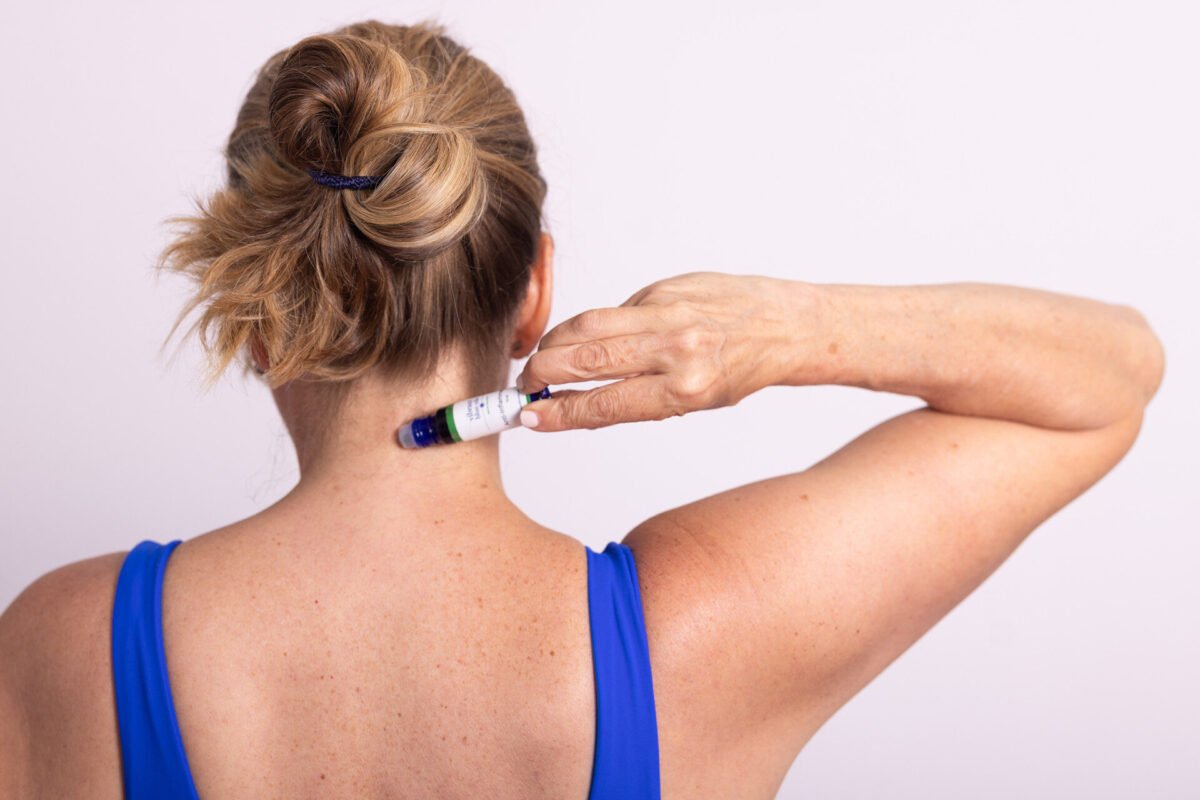
Where you apply essential oils can be more critical than the oils you apply.
Why? Because the method of application can impact the effectiveness of the oil. The faster it gets into your system, the quicker you feel the benefits.
Topically applying essential oils to pulse points—also known as pressure points—can enhance and expedite absorption into the bloodstream. This results in a more targeted therapeutic effect, especially for emotional or localized issues.
The proximity of blood flood to the pulse points enhances the effectiveness of this application point. As blood is flowing close to the surface of the skin, applying essential oils to these points means they can filter into the bloodstream more quickly than topical application in other areas of the body.
What are Pulse Points?
Pulse points are the specific locations on the body—like the wrists, temples, and neck – where blood vessels run closest to the surface of the skin. This provides a direct route for essential oils to access your bloodstream and, in turn, your brain.
Pulse points are ideal application points for essential oils as they are:
Close to the Surface: Pulse points have blood vessels that lie just under the skin. This allows essential oils to absorb quickly, as there’s less distance for the oil’s active ingredients to travel to enter the bloodstream. When applied to these areas, essential oil can penetrate deeply and act faster than they can when applied to other areas of the body.
Heat Emission: Since blood vessels lie just beneath the skin on pulse points, these areas emit more warmth than others which allows the body to absorb oils faster. Warmer skin increases blood flow to the surface, which speeds up absorption of essential oils. This heat also “activates” the essential oil, helping to unlock the oil’s therapeutic properties more quickly and spread the oil throughout the system more effectively.
This warmth also intensifies the scent, so the essential oil aroma is enhanced and longer-lasting, contributing to a more intense sensory experience.
Benefits of Applying Essential Oils to Pulse Points
The application of essential oils on specific pulse points may support enhanced mental and physical well-being:
Enhanced Therapeutic Effects: The application of essential oils to pulse points, allows them to enter the bloodstream more quickly which helps deliver the oils’ therapeutic effects almost immediately. This can provide immediate relief from stress, tension, or discomfort.
Accelerated Absorption: Pulse points enhance absorption, allowing the active ingredients to penetrate more effectively than on other areas of the skin. This means you can experience the oils’ benefits—like relaxation, mood enhancement, or focus—almost right away.
Direct Impact on Emotions: Essential oils applied to pulse points also exert a powerful effect on the limbic system, which is the emotional center of the brain. When using essential oils on your pulse points, you trigger a direct response from this part of your brain, so using them at these pressure points will have an immediate emotional effect on you. Applying oils to pulse points offers a fast, natural way to impact your mood and emotional state.
Proximity to organs: Topical application onreflex points associated with organ systems—such as application on neck points that correlate with the vagus nerve, fascia and lymphatic systems enhance absorption and therapeutic effects, working directly on the area they’re nearest to.
The Most Powerful Pulse Points for Essential Oils
The key pulse points that are particularly effective for using essential oils topically include:
1. Behind the Ears
The skin behind the ears is more absorbent compared to other surface points across the body, making it easier for essential oils to permeate the layers of skin for fast relief. The mastoid pressure point can also be found behind the ear.

Essential oils applied on the pulse point behind the ear can be used to naturally stimulate your vagus nerve and activate your parasympathetic nervous system, which helps you feel more calm and centered. A neural anatomy study showed the vagus nerve is most accessible for stimulation via the lower half of the back ear. Research on “acupuncture and vagus nerve stimulation (VNS) found that acupuncture points produce clinical benefits through stimulation of the vagus nerve and/or its branches in the head and neck region that are anatomically proximate to vagus nerve pathways there, where the VNS electrode is surgically implanted.”
Topically applying stimulatory essential oils, like Parasympathetic®, on the pulse point behind the earlobe on the mastoid bone can stimulate the vagus nerve where it is most accessible to the surface of the skin. Research has shown a substantial decrease in inflammatory symptoms from stimulation of three minutes a day, indicating that less might be more. We recommend applying Parasympathetic® to the vagus nerve three times daily, ideally before meals.
2. Other Ear Points
In addition to the pulse point behind the ear, your ears contain physical and emotional reflexology points corresponding to all of the meridians, internal organs, and the musculoskeletal system.
Just as you often find repeating geometrical patterns in nature, the ears serve as a microcosm of the body. If you look closely, you can identify an upside-down human fetus in the ear, with the earlobe representing the head. There are over 200 acupuncture points on the ear correspond to the body parts of the fetus shape.
Almost every organ and tissue has corresponding reflexive point on the ear. Ear reflexology, acupuncture and acupressure techniques stimulate these points on the ear which often stimulates the corresponding organs and systems.
It is believed that the entire physical and emotional body can be effectively treated by applying stimulation on the surface of the ear. Just apply essential oils to the reflexology points listed here to aid in removing emotional and physical blocks and help restore balance to the body.
3. Neck
The sides of your neck contain several easily accessible pulse points.
Essential oils can be topically applied to these points to help relieve anxiety, tension and pain and promote relaxation. For example, applying oils like Fascia Release™ to the side of the neck, near the carotid artery, can help soothe muscle tension and reduce pain.
Fascia Release™ helps release adhesions and fascial restriction, increase circulation, and decrease swelling in the tissue. By supporting the fluid dynamics of the fascial system, this blend may help ease inflammation and reduce swelling.
As you may know, the fascia lies just below the skin, so topically applying essential oils to the skin allows for easy and immediate access to the fascia. The skin is your largest organ and is relatively permeable to fat-soluble substances like essential oils. The essential oils in the Fascia Release™ blend are uniquely formulated to unravel deeply held tensions, constrictions, and energetic blockages in your tissues to reduce pain, improve blood and lymphatic circulation, and release fear, repressed emotions, and tension held in the body (organs, muscles, tendons, bones, and joints) or the mind.
Similarly, topically applying Lymph™ on the point where your collar bone joins your sternum and the sides of the neck will help clear lymphatic congestion.
Your lymphatic system carries toxins out of the brain down the neck channel. If there is congestion in the lymphatic system in the neck or downstream in the body, it will impair drainage from the brain. To enhance lymphatic flow and drainage, generously apply Lymph™ around the sides of the neck to relieve congestion, improve drainage, and reduce brain inflammation.
4. Base of the Skull
The pulse point at the base of the skull is known to increase circulation and improve relaxation. It can be found at the “hollow” or “dip” at the base of your skull.
Applying oils, like Circulation™, to the base of the skull can be particularly helpful for enhancing mental stamina and relieving tension related to stress. It is believed that essential oils on your neck will quickly permeate your brain. Circulation™ blend may help improve circulation by relaxing and improving the health of the blood vessels. This allows more blood circulate through them, improving circulation in the process. Essential oils can also help the veins contract, stimulating blood flow. Apply 2-3 drops of Circulation™ on the sides or back of the neck, over the left clavicle, to help support circulation.
5. Temples
When you are trying to concentrate, rubbing your temples might seem like an automatic response. It is believed that massaging the pressure points on your temples can promote blood circulation and help eases tension and promotes calm, concentration and focus.
Your temples are located on the side of the head, near the hairline, just between the forehead and ears. This pressure point is most commonly known for headache and tension relief, and many people will massage temples to ease pain associated with tension. Before massaging temples for pressure relief, try topically applying essential oil like Focus™. The temporal artery is close to the skin’s surface.
Topically applying essential oils to the temples is believed to draw energy and increase flow of blood to the area and to the prefrontal cortex. Your prefrontal cortex contains several reflex points that can be stimulated with essential oils to help with emotional release. Research shows that increasing blood flow to the prefrontal cortex can prevent the reduction of brain function in elderly people, especially in attention and working memory.
It’s hypothesized that when we are under stress, blood goes to the back of our brain, where the past is stored. Placing a hand, or appropriate essential oils, over the temples or others areas of the forehead, helps shift the energy and blood flow from the more emotional mid‐brain regions to the area just below the forehead known as the prefrontal cortex which is associated with a calmer mind and rational, logical thinking.
Focus™ has been formulated to enhance concentration and alertness, especially when applied over the forehead to the prefrontal lobe. Focus includes several individual oils that help keep the mind thinking clearly and focused on the task at hand. For example, research shows that 1.8-cineole, one of the main compounds in Rosemary essential oil, results in improved speed and accuracy on cognitive tests. Similarly, research from the University of Cincinnati found that inhaling peppermint oil increases the mental accuracy by 28%.
Apply 1-2 drops across brow, back of neck, collar bone or on temples and wrists to increase mental focus.
6. Third Eye

The “third eye” reflex point is located between the eyebrows straight above the bridge of the nose and is believed to help with stress or anxiety.
The third eye is found in the front part of the brain, the region known as the prefrontal lobe, and is said to be connected to the pineal gland, eyes, and nervous system. The prefrontal lobe is the part of the brain that controls thoughts, actions, emotions, critical thinking, and behavior.
The pineal gland is located outside the blood-brain barrier between the cerebral hemispheres, in the brain’s midline. The pineal gland works with the pituitary, the hypothalamus, and the thalamus glands to regulate the body’s hormonal system.
Essential Oils—like Hypothalamus—may help support the healthy function of the Third Eye.
Your hypothalamus is a pearl-sized region of the brain located just above the brain stem, serving as the control center for neural and hormonal messages received from/sent to the body. Topically applying Hypothalamus™ to the Third Eye may help restore the ability of the hypothalamus to receive clear messages from the body.
Formulated with Mandarin, Patchouli, Frankincense, Bay Rum, and Pine, Hypothalamus™ helps return your hormonal control center—the hypothalamus—to its original blueprint to ensure that it sends and receives healthy signals. Frankincense in particular contains compounds known as sesquiterpenes that cross the blood-brain barrier and increase oxygen around receptor sites in the emotional centers of your brain, like your hypothalamus and amygdala, helping to calm anxiety. Sesquiterpenes are C15 carbon chains that do not contain oxygen molecules, but seem to pull oxygen in. This is one reason oxygen levels seem to increase when essential oils high in sesquiterpenes are topically applied to the brain or inhaled through the nose.
To help return the hypothalamus to balance, apply one drop of Vibrant Blue Oils Hypothalamus™ to the forehead right above the third eye (right above the nose between eyebrows and hairline) up to 6 times daily.
7. Bottom of the Feet
The bottom of the feet contains numerous reflex points mapped to corresponding areas of the body, with points for major organs in the arches and the pelvis in the heel region. The toes correspond to the head and neck, the ball of the foot to the chest, and the arch to the abdomen. Stimulating these points through with the topical application of essential oils is believed to promote relaxation, improve systemic circulation, stimulate muscles, reduce tension, and ease pain throughout the entire body.
Oils absorb faster through the feet as the pores on the bottom of your feet are the largest on your body, making them exceptionally absorbent as they can quickly pull the essential oils into the bloodstream.
When essential oils are applied to the feet, traces of the oil can be found throughout the entire body in less than 20 minutes, according to research on the chemical constituents of Lavender essential oil. The book Clinical Aromatherapy also found that essential oils rubbed on the feet affected the autonomic nervous system within minutes.
Your feet are also free from hair follicles—which produce sebum oil that lubricates your skin and acts as a barrier that can hinder or slow down the application or absorption of the essential oil.
The skin on your feet is also thicker and much less sensitive to “hot” oils (More Here) than other areas of your body, making it safer to be applied safely and directly without dilution and less likely to trigger an adverse reaction. This means that many people who might experience irritation when they apply specific essential oils to other parts of their body often don’t have any issues when they apply the same oils to their feet. The lower sensitivity of the skin on your soles means you can usually apply essential oils undiluted. It also makes a great location to apply “hot” oils like Breathe™ or Immune Support™, which can sometimes cause issues for people elsewhere.
Topically applying the Anti-Inflammatory™ blend to the bottom of the feet before bed can calm inflammation in the body and the skin. Users rave that it calms acne and other skin issues while you sleep.
Anti-Inflammatory™ is designed to reduce inflammation and encourage regeneration of damaged or stressed connective tissues. Anti-Inflammatory™ is especially helpful for calming inflammation in protective tissues around nerves, reducing the inflammatory compression that contributes to nerve pain. Anti-Inflammatory™ contains Ylang-ylang which has healing properties that repair nerve damage.
It also includes Frankincense™ which is known for its anti-inflammatory, analgesic, and sedative properties. Frankincense™ has been shown to improve the accurate transmission and communication of messages between the nerves and the brain. Incorrect sensory messages can result in nerve pain, so improving the accuracy of signals can eliminate pain.
The Journal of Ethnopharmacology in 2016 published a study showing how Frankincense™ has pain-reducing qualities. The oil works to block COX-2 (an enzyme connected with inflammation) and “exhibits significant anti-inflammatory and analgesic effects.”
In a 2003 study, patients with osteoarthritis knee pain were given either frankincense essential oil or a placebo. The group that was given the frankincense essential oil reported improved knee movement, better range of motion, increased ability to walk for longer distances, and an overall significant decrease in knee pain.
Anti-Inflammatory™ also contains ginger, an excellent antioxidant that helps reduce inflammation and kill bacteria to heal infectious areas. Ginger oil is a rubefacient which means it is warming in nature, which helps dilate your capillaries and increase blood circulation.
It’s perfect for chronic joint pain, stiff muscles, and tendons and ligaments that need softening. Ginger works by directly inhibiting vanilloid receptors to soothe nerve pain, increase blood flow, bring down inflammation, and relieve achy types of pain when applied topically. Apply 2-3 drops of Anti-Inflammatory™ to the bottom of the feet before bed.
You can find a detailed foot chart to help with oil application here.
6. Wrists
The inner and outer sides of your wrists are one of the most powerful pulse points in your body. This is because the arteries and veins are so close to the surface of your skin in this area, that essential oils can be easily absorbed into your bloodstream.
Your radial artery can be found near the inner wrist, which allows for the oils to cross into the bloodstream faster.
My favorite wrist point is known as the “heart point” in traditional Chinese medicine or the Shen Men (HT7) acupoint, located on the palm-side of the wrist crease, towards the pinky finger side. It is found in a small hollow between a tendon and the wrist bone.
To find the Shen Men (HT7) point, turn your palm up to face you. Find the crease at the base of your palm where it meets your wrist. On the side of your wrist with your pinky finger, find a slight hollow. This is just inside the thick tendon you can feel there. This point is said to help with stress, anxiety, and insomnia.
Topically apply Heart™ on to the wrists, then massage gently with your thumb or rub wrists together. Heart™ balances the heart that enhance compassion and support, integrate and reset all the systems of the body, including supporting feelings of open-heartedness, expansiveness, receptivity while mitigating loneliness, sadness and grief.
The heart integrates and balances the physical, emotional, and mental body, providing blood to every cell and every organ. It also serves as a complex information processing center, influencing brain function, the nervous system, hormonal system and most of the body’s major organs.
When any part of the body isn’t functioning at an optimal level, the heart has to work harder. For example, when the body is in a state of stress, it needs more oxygen which increases the heart rate. The heart is our body’s reset button, but a state of constant stress can fatigue the heart and compromise our ability to reset, leading to inflammation, infections, toxicity and heart disease.
By returning the heart to balance, we support the cardiovascular and circulatory system, regenerate the structure of the heart and helping to reset the homeostatic mechanism for the entire body.
Featured Oils:
Ready to get started? Click the links below to order today:
References:


