Essential Oils for Post-Partum Depression

I suffered post-partum depression after the birth of my second child, Max.

My doctor immediately recommended pharmaceutical drugs, which were such a negative experience that it kicked off my exploration of natural alternatives, like essential oils.

It was only recently, during a casual conversation, that I learned of the connection between past sexual trauma and post-partum depression.

The more I think about it, the more it makes sense that childbirth could re-activate trauma in the pelvic region and trigger the trauma response of a “freeze” response—the symptoms of which significantly overlap with the symptoms of post-partum depression.

Birth and Trauma

I was so ill-prepared for the actual births of my children. No one told me how painful it was going to be and how quickly doctors can recommend surgical interventions that fall outside of the scope of your birth plan. 

My first experience of childbirth was with my daughter Carly. Things seemed to be progressing really well until suddenly they weren’t. The doctor announced that the baby had been crowning for too long and that she would need to perform an episiotomy. Everything in my body screamed “Noooooo!”

I pushed back aggressively—which mortified my mother—but the doctor agreed to grant me three more pushes before intervening surgically. Carly came out on the third push with her hand on her face. 

In early baby groups, it was common to share your birth story, and mine was among the more positive. Many of my friends experienced unexpected surgical interventions—including C-sections—that felt unexpected and traumatic. Many fell into post-partum depression and—like me—were offered pharmaceutical drugs and a healthy dose of shame and blame without any explanation as to why they might be feeling these symptoms.

It only recently occurred to me that the terror, helplessness, and pain in the pelvis that you may experience during childbirth could trigger your body’s trauma response—sending you into a protective freeze response that has been labeled as post-partum depression due to the post-partum timing of the onset.

What is Post-Partum Depression?

Postpartum depression is a mood disorder that postpartum women may experience.

Diagnosis of postpartum depression is based on the presence of symptoms—including emotional highs and lows, frequent crying, fatigue, guilt, and anxiety—that persist for at least two weeks.

It’s interesting to note that no medical experts seem able to identify the exact cause of postpartum depression. It is often attributed to:

  • Hormonal Changes: A rapid drop in estrogen and progesterone levels after childbirth can lead to hormonal imbalances that affect mood.
  • Stress and Sleep Deprivation: Caring for a newborn can be stressful and lead to sleep deprivation, which can exacerbate mood symptoms.

I cannot help but wonder if the root cause of postpartum depression might lie in unprocessed trauma—especially sexual trauma—and the hormonal changes and lack of sleep are not the root cause, but instead exasperating factors that significantly exacerbate the unprocessed trauma and its associated symptoms.

For example, we know that restful sleep, particularly REM sleep, is vital for processing emotional memories and reducing their intensity. Sleep deprivation can intensify the fight, flight, and freeze response that may present as symptoms of postpartum depression.

Similarly, fluctuations in sex hormones are known to influence the expression and severity of trauma-related symptoms. Just ask any woman or anyone who lives with her about her experience of anger and irritability, and how those emotions appear to worsen during phases of the menstrual cycle when estradiol and progesterone levels are lower.

Symptoms of Post-Partum Depression

Postpartum depression can present as the following emotional, physical, and psychological symptoms:

Emotional and Mood Symptoms 

  • Emotional numbness or detachment, even from your newborn child
  • Persistent sadness, anxiety, or an empty mood
  • Severe mood swings, irritability, or anger
  • Feelings of guilt, shame, or worthlessness
  • Feelings of hopelessness or helplessness
  • Crying spells, sometimes for no apparent reason
  • Feeling hopeless, worthlessness, ashamed, guilt, or inadequate
  • Inability to be comforted

Physical symptoms

  • Extreme fatigue or a significant loss of energy
  • Changes in sleep patterns, such as insomnia or sleeping too much
  • Changes in appetite, such as eating too little or too much
  • Physical aches and pains, headaches, or stomach problems
  • Decreased motivation or lethargy
  • Low libido

Behavioral and cognitive symptoms

  • Loss of interest or pleasure in activities you once enjoyed
  • Procrastination and distractibility
  • Social withdrawal
  • Difficulty concentrating, making decisions, or processing information
  • Doubting your ability to care for your baby
  • Feeling overwhelmed by small tasks
  • Restlessness or being unable to sit still
  • Poor self-care
  • Mentally “checking out”
  • Continuing to function but lacking motivation or joy

Overlap Between Symptoms of Post-Partum Depression and Symptoms of Functional Freeze

The overlap between postpartum depression and functional freeze is significant, as both can involve a lack of energy, difficulty concentrating, and a sense of being overwhelmed.

Functional freeze refers to a survival response state of emotional and physiological shutdown that occurs in response to overwhelming stress, exhaustion, or unresolved trauma. It is a protective mechanism that may allow you to cope with difficult situations by temporarily becoming emotionally and physically numb to disconnect from your feelings and environment.

Chronic and prolonged stress can keep your nervous system locked in an ongoing state of “fight or flight”, known as sympathetic dominance. This prolonged stress, coupled with the re-emergence of unresolved trauma (like the pelvic trauma of birth that may stir up the unresolved emotions of sexual assault), can tip you over the edge from sympathetic dominance into dorsal vagal shutdown, a stress response initiated by the parasympathetic nervous system that redirects your limited energy towards essential functions such as conservation and self-preservation.

In other words, trauma can shift the two branches of the autonomic nervous system from functioning harmoniously—pendulating between arousal and relaxation—into over-activation of your parasympathetic branch, causing you to freeze rather than simply slow down.

In his ground-breaking book, The Polyvagal Theory, Dr. Stephen Porges explains how your vagus nerve consists of three distinct branches: ventral vagal (safety), sympathetic, and dorsal vagal (shut down). The dorsal side of the vagus nerve responds to cues of extreme danger. When it is too aroused, the dorsal vagus nerve can shut down the entire system, pulling you away from connection, out of awareness, and into a state of self-protection. You may experience this as a functional freeze, responding to fear or trauma by becoming immobile, frozen, numb, shutting down, dissociating, or feeling unable to think clearly or access words or emotions.

Postpartum depression could be an expression of the functional freeze state.

READ THIS NEXT: Thaw Functional Freeze with Essential Oils

Essential Oils for Postpartum Depression

Essential oils can both reduce and PREVENT postpartum depression in at-risk women.

Research on “Aromatherapy for Postpartum Depression” found “that aromatherapy reduces depression levels among postpartum women”. The study further noted that “essential oils such as lavender, jasmine, ylang-ylang, sandalwood, bergamot, and rose… have shown the effective role in overcoming depression and anxiety during pregnancy and postpartum.”

Most interestingly, research on “The Effects of Inhalation Aromatherapy with Rose and Lavender at Week 38 and Postpartum Period on Postpartum Depression in High-risk Women” found that essential oil intervention during the final weeks of pregnancy “significantly decreased” symptoms of depression in at-risk women. 

In the study, pregnant women were instructed to inhale either seven drops of lavender oil and one cc of rose water at 100% concentration, a placebo of odorless oil, or nothing at all before sleeping between the 38th week of pregnancy and 6 weeks postpartum. The study found that the mean depression score in the intervention group decreased significantly compared to the placebo and control groups, “providing valid evidence for the effect of aromatherapy on postpartum depression,” to both help prevent and reverse the condition.

Similarly, “The Effectiveness of Aromatherapy for Depressive Symptoms” showed improvement in depressive symptoms. What’s more, “The effects of clinical aromatherapy for anxiety and depression in the high-risk postpartum woman” indicated that aromatherapy had significant improvements greater than the control group.

The research found that “the pilot study indicates positive findings with minimal risk for the use of aromatherapy as a complementary therapy in both anxiety and depression scales with the postpartum woman.” No adverse effects were reported in any of the research. It also noted that essential oils offer a safe alternative to breastfeeding mothers who might be scared of taking medication due to any possible adverse effects.

Inhaling through the Left Nostril

A depressed brain shows differences in structure, activity, and chemistry compared to a healthy brain.

Research on “Postpartum depression-associated localized neural dysfunction” indicates differences in brain activity between mothers with postpartum depression and those without. Mothers diagnosed with postpartum depression tend to have less activity in the left frontal lobe and increased activity in the right frontal lobe when compared with healthy controls.

As I shared my “Panic Attack Hack,” different regions and hemispheres of the brain impact your mood and cognitive function, with the prefrontal cortex—a significant part of the frontal lobe—playing the most critical role in mood by regulating emotions, influencing emotional responses, and connecting feelings with thoughts and actions.

Specifically, different parts of the prefrontal cortex are involved in processing positive and negative emotions, and damage or dysfunction can lead to mood disorders like postpartum depression and anxiety. For example, the left dorsolateral prefrontal cortex may be associated with positive feelings. In contrast, the right prefrontal cortex is implicated in impulse regulation and is often underactive during depressive or manic states.

Further research finds that “Imbalance between left and right dorsolateral prefrontal cortex in major depression is linked to negative emotional judgment.” The fact that “Mothers diagnosed with postpartum depression tend to have less activity in the left frontal lobe and increased activity in the right frontal lobe” allows for the strategic use of essential oils to help balance the two hemispheres of the brain. 

The two hemispheres of the brain perform different functions:

The Lighthearted Left Lobby (Left PFC Lobe) – The left side of the prefrontal cortex is filled with lighthearted, pleasant thoughts. The L in the Left prefrontal cortex stands for “Lighthearted.”

The Ruminating Right Lobby (Right PFC Lobe) – The right side of the prefrontal cortex tends to ruminate or overthink, contributing to feelings of overwhelm, anxiety, and panic. The R in the Right prefrontal cortex stands for “Ruminating.

Anxiety and depression are linked to over-activation of the right frontal lobe of the brain, located behind the forehead.

Inhaling an essential oil through the left nostril (which travels directly to your left forehead) helps stimulate the left frontal lobe and balance the left and right hemispheres of the brain, thereby reducing the overactivity of the right frontal lobe and leading to feelings of calm.

We recommend inhaling Rose or Lavender essential oil through the left nostril to help balance the two hemispheres of the brain.

READ THIS NEXT: Panic Attack Hack

Limbic Reset™

Emotional dysregulation—which is mainly influenced by the limbic system and the amygdala—is considered to be one of the core features of postpartum depression. Mothers with postpartum depression show altered brain activity, particularly in areas related to emotion processing and connectivity, like the amygdala, compared to mothers without the condition.

The amygdala is thought to play a pivotal role in recognizing emotionally salient stimuli and subsequently cooperate to control emotions and enhance the overall emotional state voluntarily.

Research on “Structural, functional, and metabolic signatures of postpartum depression”

found altered information flow patterns in the amygdala of women with postpartum depression compared to non-depressed postpartum controls. The preferred information flow direction from the amygdala to the temporal and frontal lobes significantly correlated with depression severity.

Your limbic system—often referred to as the “emotional nervous system”—is your “threat-detection & response” mechanism wired to respond to sensory information—especially the sense of smell—to help keep you safe.

The limbic system triggers the functional freeze response as a survival mechanism when it perceives a threat that cannot be fought or fled, like the reactivation of suppressed sexual trauma through childbirth. If the limbic system’s amygdala detects danger, it can take the thinking brain offline, leading to immobilization and a suppressed emotional response to conserve energy and survive a stressful situation. This response suppresses other body systems to conserve energy. This may present as symptoms of postpartum depression, like numbness, sadness, or detachment.

Your limbic system helps you interpret sensory information and determine whether external stimuli are threatening or benign. To do so, it learns from past events to help protect you in the future. In this capacity, it can overreact. For example, if you experienced significant psychological or emotional stress, a “conditioning effect” may take place in which the limbic system “wires in” an association between the situation and the stress response. Once a conditioning event occurs, your limbic system can become stuck in a state of high alert, and sensory stimuli can be misclassified as threatening when they are actually benign.

This leads to chronic elevation of your stress response. Restoring proper function to the limbic system can help TURN OFF the alarm in your limbic system—in effect rebalancing inhibition and activation—and TURN ON your body’s self-healing mechanisms by regulating your “fight or flight” response, and controlling the freeze response.

As your sense of smell is critical to your sense of safety and your olfactory bulb is physically located near your limbic system, essential oils can be a powerful tool to help restore the proper function of your limbic system. Inhaling essential oils is the fastest and most efficient way to create physiological or psychological balance in your limbic system. Your sense of smell has direct anatomical and functional access to the amygdala in the limbic lobe of the brain, which is physically located near the olfactory bulb. In fact, on a physical level, only two synapses separate your amygdala from your olfactory nerve.

Smell travels through your olfactory system to your hypothalamus by way of your amygdala. When you smell an essential oil, it stimulates your hypothalamus to release hormones that trigger a rapid emotional response, directly impacting how you feel and how you function. In particular, the chemical constituent Sesquiterpenes, found in high levels in essential oils such as Frankincense and Sandalwood, are thought to help increase the oxygen in the limbic system, which in turn “unlocks” the DNA and allows emotional baggage to be released from cellular memory.

Limbic Reset™ can be used to reset the volume of threat perception, help rewire neural circuits in your limbic system, and calm its over-firing.

Limbic Reset™ can be topically applied over Emotional Points located on the forehead (above the eyes and on the temples), an emotional release point situated at the base of the skull at the back of the neck, on the bottom of the feet, and especially on the amygdala reflex point on the big toe. You can also apply over Filter points located on both sides of the back of the skull, which are used to filter energies that could pull you back into the old pattern.

My most exciting discovery is a set of acupressure points that help release emotional patterns.

Emotional Points are located above the eyes on the forehead. You can also lay your hand over your forehead. I write more about the forehead points for healing emotional trauma HERE.

The release point is located at the spinal cord at the base of the skull

Filter points are located on both sides of the back of the skull. They are used to filter energies that could pull you back into the old pattern.

READ THIS NEXT: Reset Your Limbic System

Parasympathetic™

Postpartum depression is associated with autonomic nervous system dysregulation, particularly with a reduction in parasympathetic activity and an increase in sympathetic activity.

Your nervous system’s primary job is to keep you alive. When your nervous system perceives overwhelming stress or trauma that it is unable to fight or flee, your vagus nerve—specifically the dorsal vagal pathway—triggers a deep shutdown, numbness, and dissociation to conserve energy and numbs itself to the pain of the experience. This is the nervous system’s most extreme survival tactic.

During the intensity of childbirth, the “fight” response might be triggered. Since you can’t physically run out of the room during childbirth, the “flight” response often turns inward. It can manifest as dissociation, or the feeling of “checking out,” “freezing,” or feeling numb or disconnected from what is happening. When a threat is too overwhelming to fight or escape, your nervous system may drop into a “freeze” state, a function of the dorsal vagal nerve.

Unfortunately, even after the baby has been delivered, the nervous system can get stuck in the survival state it used to get through the trauma. If your nervous system is stuck in a “fight/flight” state, your postpartum experience will be defined by perinatal anxiety. You may feel constantly on edge, irritable, panicked, and hypervigilant, as your body continues to scan for threats.

If your nervous system is stuck in a “freeze” state, your postpartum experience will be defined by postpartum depression. You may feel numb, hopeless, exhausted, and disconnected from your baby and the world.

Regulating the nervous system can help you shift out of the freeze response. Activating the ventral vagal nerve tells your body that you are safe.

Stimulating the vagus nerve by inhaling or topically applying the Parasympathetic™ blend can help activate the ventral vagal parasympathetic nervous system. This enables you to regulate your nervous system, signaling safety and relaxation to the body, which may help counteract functional freeze mode and induce a state of calm and openness, helping you process underlying emotions and traumas. The Parasympathetic™ blend can help calm the nervous system and ground you in the moment. This sense of embodiment and safety can prevent future Freeze Responses. 

Apply Parasympathetic™ over the vagus nerve (behind the earlobe on the mastoid bone) to activate the vagus nerve. This helps discharge energy and shift out of the frozen state into the healing Parasympathetic.

READ THIS NEXT: Release Overwhelm with Essential Oils

Bladder Support™ 

Pregnancy and childbirth can be triggering and potentially re-traumatizing for survivors of sexual trauma.

Research on “The Effects of Rape Trauma and PTSD on the Childbirth Process” revealed that women who have a history of sexual trauma may have a more difficult time physically and emotionally during childbirth and have an increased chance of retraumatization. The research noted that “sexual trauma, including rape and childhood sexual abuse, takes a toll on the survivor emotionally and physically. With the invasive procedures, physical exposure, and feelings of loss of control related to childbirth, the survivor may become triggered and retraumatized. “

Similarly, research on “(Re)activation of survival strategies during pregnancy and childbirth following experiences of childhood sexual abuse found “Pregnancy and birth can be triggering for women-survivors of childhood sexual assault. Survival strategies learnt during experiences of CSA can be (re)activated as a way of not only coping, but surviving (the sometimes unconsented) procedures, such as monitoring and physical examinations, as well as the feelings of lack of control and bodily agency.

In Traditional Chinese Medicine, the bladder’s function is closely linked to the Kidneys and the emotion of fear, and sexual trauma is considered to have a direct impact on these systems. Your bladder, in particular, is known to be correlated with emotional traumas.

Residual emotional debris is thought to be stored in the bladder, helping manage emotional reserves and overflow. When you feel internally empty of reserves, everything seems to be too much to handle, uncertain, and frightening. Similarly, when emotions are overflowing, you can feel awash in an internal torrent, drowning, out of control, and driven to desperation.

Often, these overwhelming emotions feel too much to handle in the moment, so you store them in the bladder until you can process and move through them.

Bladder Support™ blend allows you to let go of the negative past and release the emotional trauma from the body. It helps overcome feelings of despair and the sense of being pushed over the edge. It can also balance the right and left hemispheres of the brain.

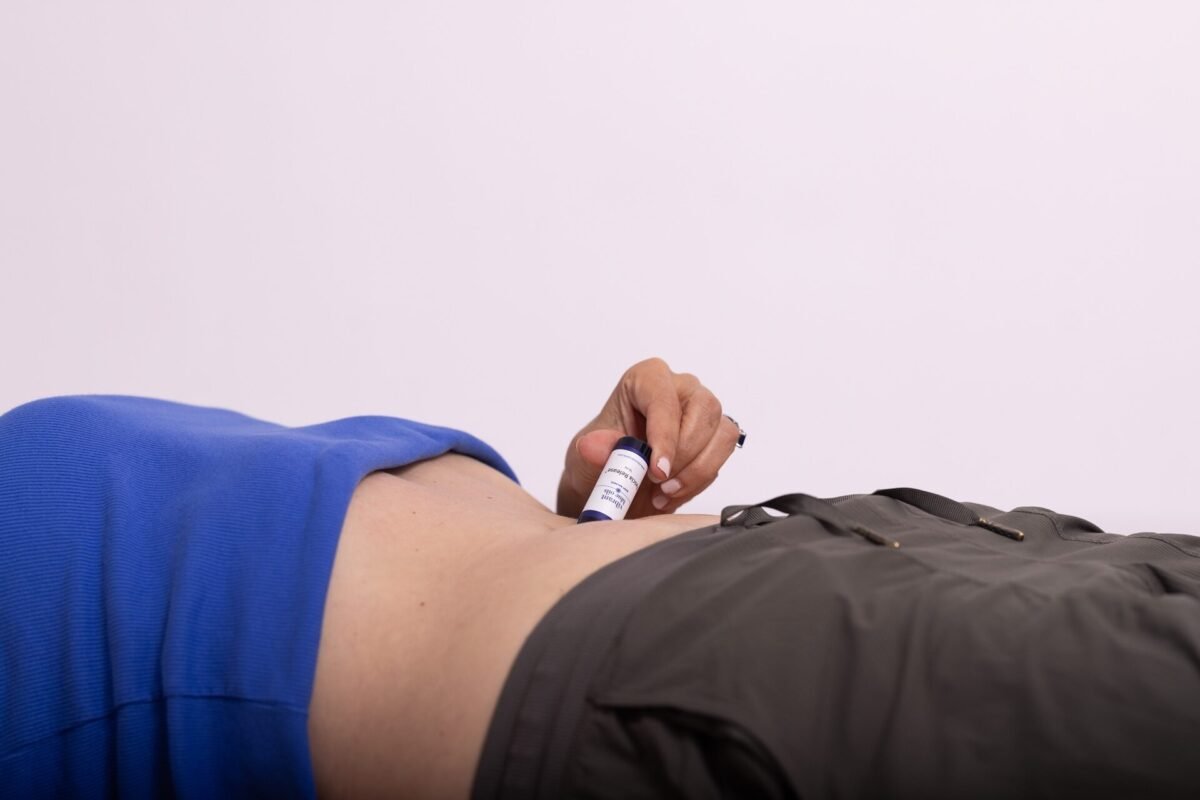
Apply 2-3 drops of Bladder Support™ over the bladder (just above and behind the pubic bone), directly over areas of trauma or abuse, or around the outside of earlobes.

Featured Oils:

Ready to get started? Click the links below to order today:


References:


Del desequilibrio al 'estoy equilibrado': 6 formas sencillas de equilibrar las hormonas | Blog de vida joven

¿Las hormonas vuelven a ser dramáticas? Aunque la TRH es una vía, también existen muchas opciones no hormonales. En esta publicación, veremos cómo hábitos diarios simples como un sueño reparador, aliviar el estrés, comer alimentos nutritivos y moverse suavemente pueden marcar una gran diferencia. También encontrarás ayudantes de YL como el suero Progessence® Plus, el suplemento Daily Hormone Essentials™ y aceites esenciales que te ayudarán a superar cada etapa hormonal.*

Tus hormonas se construyen a partir de los alimentos que consumes, literalmente. Los alimentos integrales ricos en nutrientes respaldan la capacidad del cuerpo para desintoxicar el exceso de hormonas, regular el azúcar en la sangre y reducir la inflamación. Por otro lado, saltarse comidas, no comer lo suficiente o vivir a base de cafeína puede desincronizar completamente las hormonas.

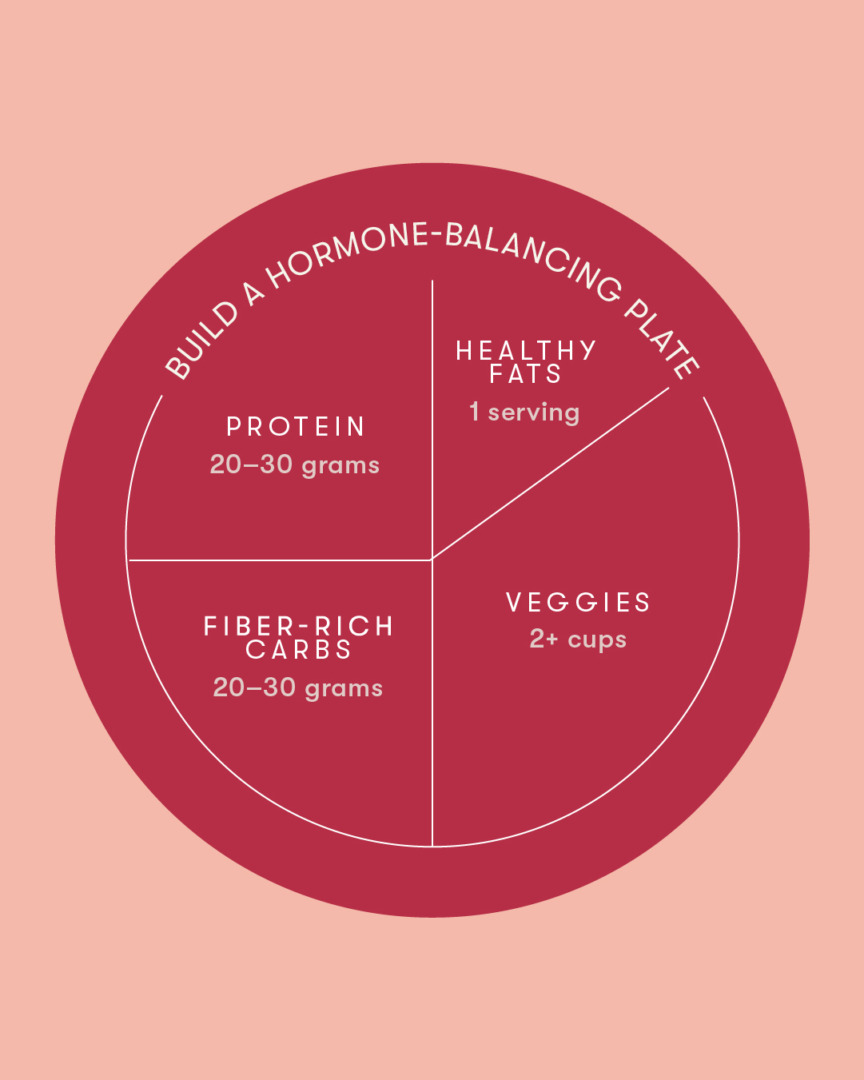
Utilice el siguiente cuadro para ayudarle a crear una placa de equilibrio hormonal.

El equilibrio hormonal comienza en la cocina. Las comidas nutritivas y equilibradas respaldan la capacidad del hígado para desintoxicar el exceso de hormonas, ayudar a regular el azúcar en la sangre y reducir la inflamación, tres factores clave para mantener niveles hormonales, estado de ánimo y energía saludables.

  • Proteína: huevos, salmón silvestre, carne de res alimentada con pasto, lentejas, pollo o pavo orgánico, caldo de huesos.
  • Carbohidratos ricos en fibra: quinua, batatas, calabaza, arroz integral, avena, garbanzos, frijoles negros, remolacha, zanahoria.
  • Grasas saludables: aguacate, aceite de oliva, aceite de coco sin refinar, semillas de chía, linaza.
  • Verduras sin almidón: brócoli, coliflor, coles de Bruselas, verduras de hojas verdes, calabacines, pepinos, repollo, espárragos, pimientos.

Consumir muchas proteínas, vegetales coloridos, carbohidratos ricos en fibra y grasas saludables es un gran comienzo. Pero aquí hay algunas formas más sencillas de mantener felices a tus hormonas.

  • Coma entre 30 y 60 minutos después de despertarse. El desayuno es realmente la comida más importante del día. Ayuda a mantener un ritmo estable de cortisol. Si lo saltas, las hormonas del estrés de tu cuerpo pueden volverse locas.1
  • Evite la cafeína con el estómago vacío. Aún puedes disfrutar de tu taza de café de la mañana, pero bébela después de una comida para evitar un aumento de cortisol y un desequilibrio de insulina. Para un comienzo más suave, opte por un sobre de NingXia Red®: esta opción sin cafeína está repleta de superfrutas y aceites esenciales que respaldan la energía natural y la salud en general.*
  • Un montón de verduras crucíferas. El brócoli, las coles de Bruselas, la coliflor y el repollo son los mejores ingredientes para ayudar a la desintoxicación de estrógenos.
  • Mantente hidratado. Trate de beber la mitad de su peso corporal en onzas de agua al día. Tus hormonas (y tu piel) te lo agradecerán. Consejo profesional: use agua filtrada para una opción más limpia.
  • Adapta tus comidas a tu ciclo. Durante las fases folicular y ovulatoria, ingiera comidas ligeras y crudas con más frutas y verduras. Y durante las fases lútea y menstrual, elija comidas calientes y digeribles como guisos, verduras asadas y sopas.

Dormir es cuando tus hormonas se reinician. Mientras sueñas despierto con volar un avión o presentarte a trabajar en ropa interior, tu cuerpo está ocupado regulando el cortisol, la melatonina, la insulina, el estrógeno e incluso las hormonas del crecimiento. La falta de descanso puede provocar un efecto dominó de desequilibrio hormonal, apetito y fatiga.

  • Trate de dormir entre 7 y 9 horas cada noche. Incluso una noche difícil puede reducir tus niveles de insulina.2
  • Apague las pantallas entre 60 y 90 minutos antes de acostarse. La luz azul ralentiza la melatonina, así que reemplaza Netflix con un buen libro u otra actividad relajante.
  • Siga un horario regular para acostarse. Su ritmo circadiano y su producción de melatonina mejoran con la consistencia, así que trate de acostarse en la almohada aproximadamente a la misma hora todas las noches (lo ideal son las 10 p.m. o antes).
  • Crea una rutina nocturna relajante. Ya sea que estés estirando, escribiendo un diario, tomando un baño o usando aceites esenciales, este pequeño ritual le permite a tu cuerpo saber que es hora de descansar. Intente difundir el aroma floral de ensueño del aceite esencial de lavanda para obtener vibraciones de calma instantáneas.

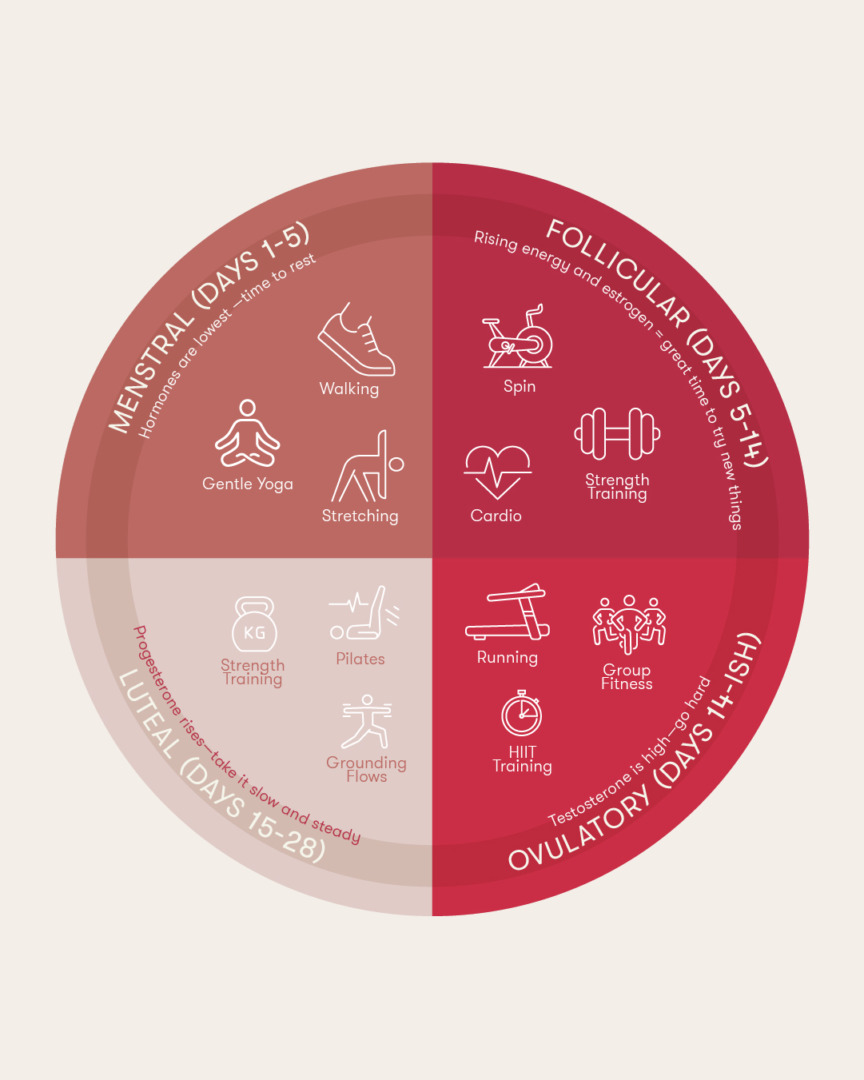
Mover el cuerpo a diario es clave para la salud general, pero demasiada intensidad puede resultar contraproducente al aumentar el cortisol. El truco consiste en sincronizar tus entrenamientos con tu ciclo.

Tu ciclo redirige naturalmente tu energía y fuerza a lo largo del mes: durante la ovulación es posible que te sientas como la Mujer Maravilla, mientras que durante tu período es posible que simplemente quieras acurrucarte con una almohadilla caliente. Combinar el movimiento con tus fases hormonales puede ayudarte a mantenerte motivado, acelerar tu metabolismo y evitar el agotamiento.

Utilice esta tabla para encontrar los mejores ejercicios para hacer durante cada fase de su ciclo.

Por qué el movimiento es importante para las hormonas:

  • Aumenta la serotonina y la dopamina (tus hormonas de la felicidad).
  • Reduce el exceso de cortisol y mejora la sensibilidad a la insulina.
  • Mejora el drenaje linfático y la desintoxicación de estrógenos.
  • Ayuda a regular el ciclo menstrual y alivia los síntomas del síndrome premenstrual.

Participar en formas conscientes de movimiento a lo largo de su ciclo es una excelente manera de mantener el equilibrio hormonal y respetar las necesidades de su cuerpo. Entrenar demasiado o esforzarse en días de poca energía puede aumentar el cortisol, alterar su ciclo y provocar agotamiento. Pero sincronizar tus entrenamientos con tus fases hormonales te ayuda a entrenar de manera más inteligente, no más intensa, para que puedas aprovechar las ventanas naturales de alto rendimiento de tu cuerpo.

Consejo YL: ¡Mejora tu rutina de ejercicios con el poder de los aceites esenciales! Antes de un entrenamiento intenso, aplique la mezcla de aceites esenciales Valor® en sus muñecas para obtener un aroma vigorizante y reconfortante mientras canaliza su fuerza interior. Después de hacer ejercicio, aplique aceite esencial de menta diluido para refrescar los músculos cansados.

No puedes curarte si estás atrapado en el modo de lucha o huida. El estrés es básicamente un secuestrador de hormonas; Demasiado cortisol desplaza a la progesterona, altera la digestión y altera las vías de desintoxicación hormonal. Es por eso que el manejo diario del estrés es esencial, no opcional, para mantener el equilibrio hormonal.

  • Prueba la respiración de boxeo. Coloque una gota de aceite de incienso o mezcla Valor® en sus palmas, luego inhale contando cuatro, sostenga por cuatro, exhale por cuatro y sostenga nuevamente por cuatro.
  • Regístralo en un diario. Saca el desorden de tu cabeza y ponlo en papel.
  • Muévete a diario. No tiene por qué ser nada intenso. Incluso una caminata corta entre recados ayuda a reducir el cortisol.
  • Toma un baño tibio con sal de Epsom. No hay nada tan relajante como sumergirse en la bañera. Agregue aceite esencial de lavanda para obtener un aroma relajante de spa.

Consejo YL: Para respaldo adicional, considere las cápsulas CortiStop®. Especialmente formulados para mujeres, ayudan a mantener un equilibrio saludable del cortisol y los sistemas glandulares.*

Muchos productos cotidianos, desde detergentes para ropa hasta lápices labiales, contienen químicos disruptores endocrinos (EDC) que imitan o bloquean las hormonas naturales. Estos ingredientes sintéticos pueden afectar su ciclo menstrual, estado de ánimo, sueño, peso y fertilidad.

Pero he aquí la buena noticia: no es necesario que vivas en una burbuja, simplemente empieza a cambiar. Poco a poco, reemplace los elementos dañinos con alternativas suaves a base de plantas.

  • Fragancia sintética (en velas, perfumes, ambientadores, aerosoles corporales)
  • Ftalatos (en plásticos, cuidado de la piel y esmaltes de uñas)
  • Parabenos (en lociones, desodorantes, maquillaje)
  • BPA/BPS (en envases de plástico, botellas de agua, recibos)
  • Triclosán (en pastas dentales y jabones antibacterianos)
  • SLS/SLES (en champú, gel corporal)
  • Ingredientes a base de petróleo (en bálsamos labiales, cremas)
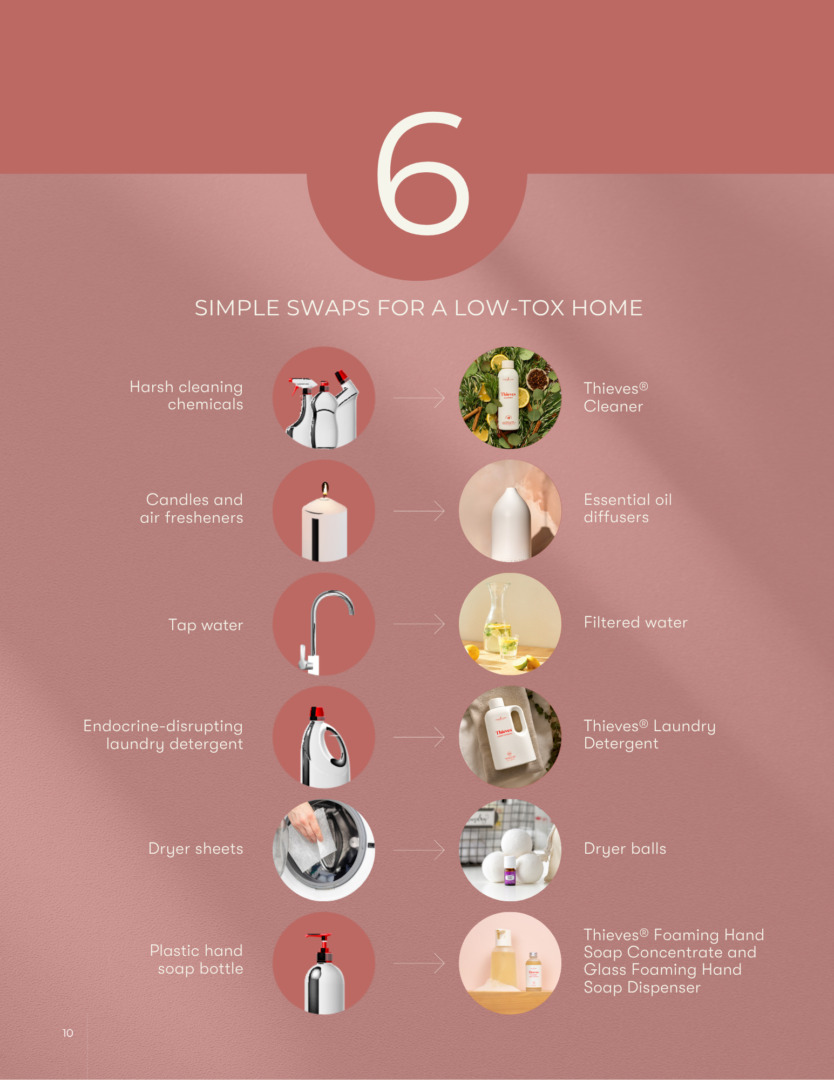
  • Línea Thieves®: Desde pasta de dientes hasta productos de limpieza, esta gama con aceites esenciales cubre todos los rincones de su hogar, sin amoníaco, cloro, fragancias sintéticas ni químicos que alteren el sistema endocrino.
  • Mezclas simplificadas por Jacob + Kait™: Estos aromas herbales simples brindan vibraciones divertidas y estacionales sin los ftalatos ni almizcles sintéticos que pueden comprometer sus hormonas.

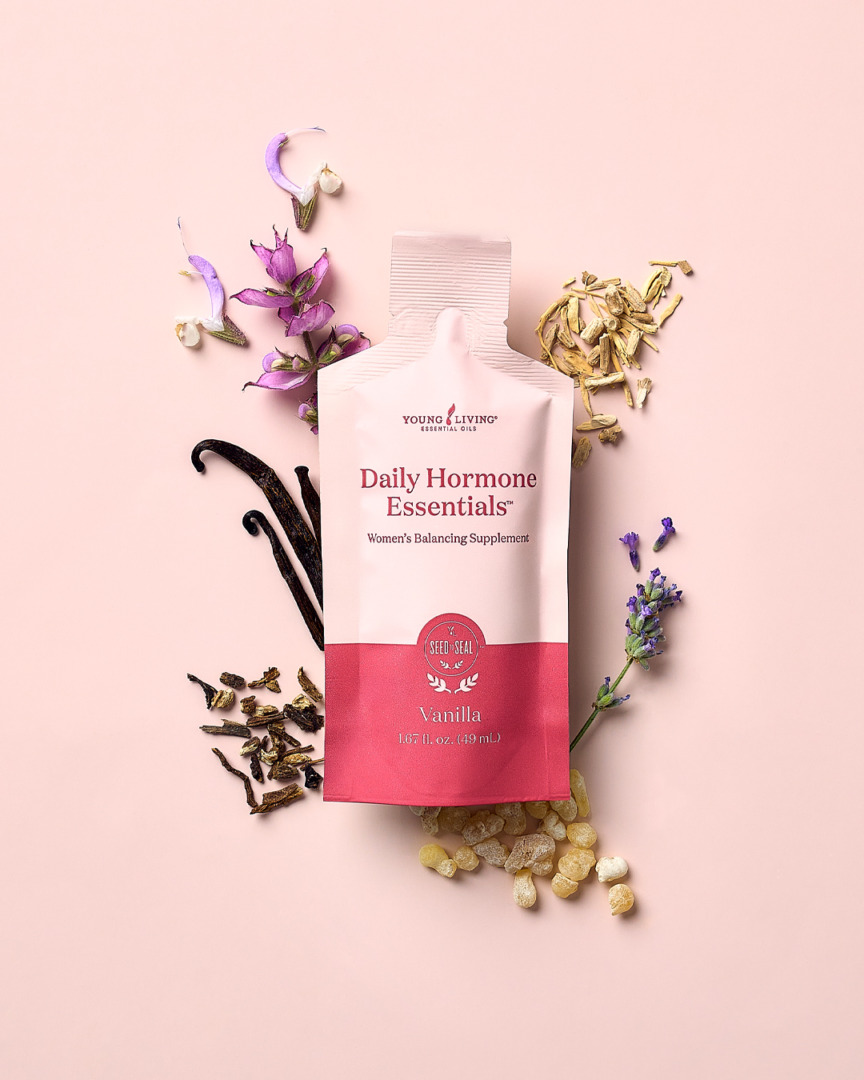
Los cambios en el estilo de vida marcan una gran diferencia, pero a veces tu cuerpo necesita un poco de apoyo adicional. Conozca el suplemento Daily Hormone Essentials™: su mujer hormonal durante el síndrome premenstrual, la perimenopausia y la menopausia.*

Este suplemento sin hormonas combina ingredientes botánicos, adaptógenos y aceites esenciales clínicamente investigados en una simple bebida diaria. Apoya la energía saludable, la libido, el estado de ánimo, el sueño reparador, el equilibrio del cortisol y el manejo diario del estrés, al tiempo que promueve la comodidad para los sofocos, los sudores nocturnos, el insomnio y la fatiga. ¡Todo sin azúcar agregada ni los efectos secundarios de la terapia hormonal típica!*

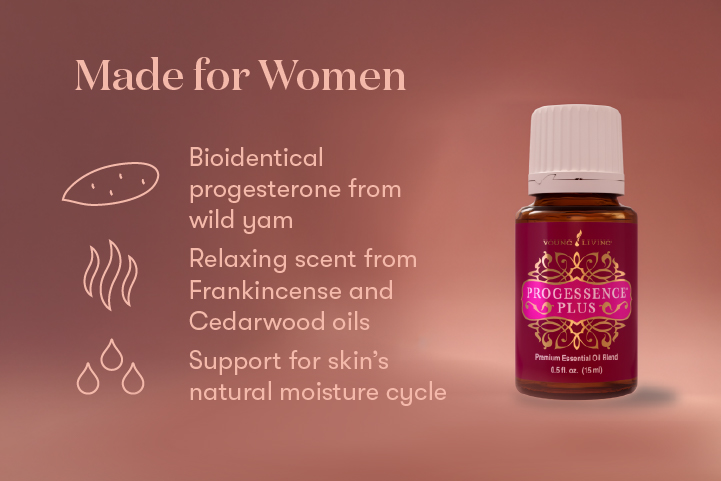
¿Busca soporte actualizado? Progessence® Plus Serum es una opción suave con progesterona natural y bioidéntica de ñame silvestre, ideal para usar durante la menstruación o la perimenopausia.* Está especialmente formulado para mujeres con aromas relajantes de aceites esenciales e ingredientes nutritivos para la piel. Aplique de 2 a 4 gotas en el abdomen, las piernas o la parte interna de los muslos según sea necesario.

Equilibrar tus hormonas no requiere perfección. Comienza con decisiones pequeñas e intencionales, como cambiar a productos de origen vegetal, comer alimentos reales, seguir tu ciclo y tomar suplementos cuando sea necesario.

Cada pequeño cambio suma. Escuche a su cuerpo, confíe en sus síntomas y sepa que no está solo en este viaje.

¡Descargue nuestra Guía Happy Hormone para realizar un seguimiento de sus síntomas hoy!

1. Witbracht, M.; Keim, NL.; Lesovod, S.; Widaman, A.; Laugero, K. (1 de marzo de 2015). «Las mujeres que se saltan el desayuno muestran un ritmo alterado de cortisol y una presión arterial elevada». Fisiología y comportamiento.

2. Viñal, M. (1 de septiembre de 2021). «Cómo el sueño puede afectar tus niveles hormonales, además de 12 formas de dormir profundamente». Línea de salud.

*Estas afirmaciones no han sido evaluadas por la Administración de Alimentos y Medicamentos. Este producto no está destinado a diagnosticar, tratar, curar o prevenir ninguna enfermedad.

Essential Oils as Prebiotics – Vibrant Blue Oils

Prebiotics are critical for gut healing. 

They serve as food for beneficial gut bacteria, which help promote a healthy, balanced microbiome.

Research has found that essential oils exhibit prebiotic-like effects, making them an ideal choice for anyone who struggles to heal the gut.

What are Prebiotics?

Prebiotics are types of non-digestible fiber naturally found in plants—including herbs, spices, fruits, and vegetables—that feed the beneficial bacteria (probiotics) in your gut.

As you may know, the lining of your gut is covered in microscopic organisms and up to 1,000 different species of bacteria that create a micro-ecosystem called a microbiome. These bacteria help you digest food and absorb nutrients.

Prebiotics feed this beneficial gut bacteria, stimulating their proliferation. By nourishing different types of bacteria, you can keep your microbiome in balance. When your gut microbiome is healthy and balanced, you feel healthy and balanced, and able to function at your best. However, when this balance is off (gut dysbiosis), that well-oiled machine starts to break down.

Since your intestines can’t fully digest high-fiber plants, prebiotics bypass the digestive system and travel to your colon largely intact. There, they feed the microbes in your gut and stimulate the growth of healthy bacteria, which, in turn, promote the development of beneficial gut bacteria and influence gut microbiota composition, leading to improved digestive health and other benefits, such as enhanced mineral absorption and immune function.

When prebiotics are broken down, they create different short-chain fatty acids. These short-chain fatty acids improve your metabolic and overall health by providing energy to your colon cells, producing essential mucus, reducing inflammation, and promoting immunity. In short, think of prebiotics as fertilizer that helps good bacteria grow.

How do Prebiotics Work with Probiotics?

Prebiotics work in tandem with probiotics, laying the groundwork for their success. You might think of prebiotics like fertilizer that helps to nourish and promote the growth of probiotics. More specifically:

Prebiotics: Prebiotics “feed” the probiotics, triggering the growth of the “good” germs and enhancing the metabolism of beneficial bacteria. While not living organisms themselves (as they naturally occur in plants), prebiotics cannot be digested by the host but can be used and fermented by probiotics, helping the microbes already in your microbiome grow, survive, and thrive by providing the foods they like. When bacteria are fed what they need to stay healthy, microbial diversity can be restored.

Probiotics: Probiotics are specific living microorganisms—most often bacteria or yeast, typically certain strains of bacteria and yeasts—that are found in certain foods that may help maintain or improve the balance of good to harmful bacteria already living in your gut. Probiotics are naturally found in fermented foods and can help repopulate beneficial gut bacteria. Demonstrated efficacy in microbiome restoration.

Research shows that higher intakes of prebiotic foods can increase numerous probiotic microorganisms, including Lactobacillus rhamnosus GGL. reuteri, bifidobacteria, and certain strains of L. casei or the L. acidophilus group.

READ THIS NEXT: How Intestinal Mucosa Supports Probiotic Absorption

What are the Benefits of Prebiotics?

Prebiotics boost gut health and contribute to wide-ranging benefits, including:

  • Digestive health: Prebiotics promote a healthy gut microbiome and can improve metabolism and elimination.
  • Mineral absorption: Prebiotics may help the body absorb essential minerals like calcium.
  • Lower Inflammation: Prebiotics enhance the production of short-chain fatty acids (SCFAs), which benefit gut health and reduce inflammation. 
  • Enhanced Immune Function: Prebiotic foods can result in significant changes in the composition of the gut microbiome that help improve immunity. Prebiotics also help boost immunity by improving nutrient absorption and lowering gut pH, thereby blocking the growth of potential pathogens and harmful bacteria.
  • Reduced risk of heart disease: Prebiotics can reduce glycation, which increases free radicals, triggers inflammation, and lowers insulin resistance, all of which can contribute to heart disease.
  • Electrolyte Balance: Prebiotics can balance your electrolyte and mineral levels, including potassium and sodium.
  • Blood Sugar Control: Prebiotics can help reduce blood glucose levels and increase insulin sensitivity.
  • Balanced Hormones: Prebiotics may lower cortisol levels and the body’s stress response (study)
  • Regulate Mood: Prebiotics can help enhance gut health and mood.
  • Lower Stress Response: Prebiotics can help lower stress responses by feeding the beneficial gut bacteria linked to improved mood and reduced anxiety.
  • Aid in Weight Loss: Prebiotics may help increase energy and weight loss.
  • Hormonal Balance: Stimulate the production of hormones that aid in appetite suppression.

Essential Oils as Prebiotics

Essential oils have prebiotic-like effects. 

Plants and their derivatives, such as essential oils, have been found to promote the growth of beneficial gut bacteria and improve the gut microbiota composition, leading to improved gut health.

In nature, essential oils play an important role in protecting plants. Essential oils contain a wide variety of secondary metabolites that can inhibit or slow the growth of bacteria, yeasts, and molds.

Some essential oils, such as those from herbs like oregano and thyme, have been shown to increase beneficial bacteria, including Lactobacillus and Bifidobacterium. They can stimulate the production of valuable metabolites, such as short-chain fatty acids (SCFAs), by promoting the growth of SCFA-producing bacteria.

Essential oils also act as antimicrobial agents, inhibiting the growth of harmful bacteria while having a less severe impact on beneficial bacteria. Research on the Effect of Essential Oils on Pathogenic Bacteria found that “essential oils possess noticeable antimicrobial, antifungal and antiviral activity.” The study further noted that “many of the antimicrobial compounds are constitutively expressed by the plants, and others can be synthesized as a mechanism of self-defense in response to pathogens.”

Research found essential oils sourced from herbs commonly used in the Mediterranean diet “demonstrated advantageous attributes as prebiotics”, finding that essential oils “serve as prebiotic agents, antioxidants, immunomodulators, and anti-inflammatory mediators”, noting in particular the “prebiotic effects of essential oils extracted from savory, parsley, and rosemary on gut microbiota, increasing commensal bacteria.”

Similarly, research on Lactobacillus-derived exopolysaccharide nanoemulsions for essential oils Delivery: Improving bioaccessibility, gastrointestinal stability, and prebiotic function found that essential oils offer prebiotic benefits, including prebiotic, antimicrobial, and antioxidant properties, actively supporting gut microbiota.” The research observed a substantial increase in the relative abundance of the Lactobacillus genus in the gut microbiota, accompanied by higher levels of short-chain fatty acids and a reduction in trimethylamine N-oxide levels and protein oxidation in the plasma

Intestinal Mucosa Blend as a Prebiotic

Your intestinal mucosa lines your intestinal tract and works in tandem with prebiotics to help maintain the balance of your intestinal flora by nourishing beneficial bacteria. Intestinal Mucosa™ blend is comprised of essential oils derived from herbs and spices with known prebiotic qualities that help maintain an ideal environment for probiotic absorption.

Like a well-tended garden, a healthy gut lining is essential for nurturing the probiotics you introduce into your body. When consumed, probiotics can adhere to the mucosal surface, triggering local immune responses that enhance their survival and efficacy. This interaction not only supports the absorption of probiotics but also helps protect the intestines from pathogens, enzymes, toxins, dehydration, and abrasion.

When you ingest probiotics, they attach to the intestinal mucosa, prolonging the time they can interact with the gastrointestinal, immune, and microbiota systems, thereby maximizing their benefits. The ability of probiotics to adhere to the intestinal surface is a measure of their efficacy. Studies have shown that a healthy intestinal barrier is essential for effectively absorbing probiotics—the “good” bacteria known to keep your gut healthy.

Intestinal Mucosa™ blend is formulated from the following plants known for their prebiotic properties:

Cypress: This evergreen fibrous plant supports gut infections, stimulates sluggish intestines, and helps relieve intestinal spasms. Cypress oil has antibacterial, antimicrobial, and antifungal properties. Cypress essential oil is high in the compound α-pinene. It exhibits anti-inflammatory activity in research, which helps improve circulation and blood vessel contraction, making it easier to stimulate blood flow and reduce gut inflammation.

Tarragon: This hardyherbaceous perennial plant contains polyphenol compounds that may have prebiotic-like effects that support the gut microbiome. Tarragon is known for its digestive benefits, as it can stimulate the secretion of digestive fluids. Tarragon also eases digestive spasms and discomfort while promoting healthy peristalsis and calm throughout the intestines. Tarragon is also a good source of antioxidants, which can help protect the body from oxidative stress.

Nagarmotha: This perennial herb has narrow leaves and fibrous roots that contain polysaccharides, which are believed to have prebiotic properties. Nagarmotha is traditionally used in Ayurveda to support gut balance, reduce inflammation, and enhance microbial harmony. Nargarmotha supports stomach and intestinal issues. It is known for its calming properties and may help alleviate gut inflammation, discomfort, and digestive issues when applied around the abdomen.

Marjoram: An aromatic herbaceous plant belonging to the mint family, and is closely related to oregano, which is known for its prebiotic properties.

Marjoram contains phenolic compounds such as terpinene, terpineol, borneol, camphor, and pinene, which are known to support the gut microbiome. Historically, marjoram has been used to aid digestion, and some studies suggest it can positively influence intestinal health.

Cardamom: A spice derived from the seeds of a perennial, aromatic, herbaceous plant from the ginger family. This fibrous plant is a clumping species with leafy shoots that can grow up to 16 feet tall. Research on the Prebiotic potential of rambutan peel with cardamom oil found cardamom to have prebiotic properties. The study found that “Cardamom may exert multifunctional effects against inflammation, including a possible prebiotic effect as well as by reducing LPS-induced inflammation in the intestinal epithelium due to diet-induced gut microbiota dysbiosis.” Cardamom has potent anti-inflammatory and antimicrobial properties, which help support gut health, alleviate digestive issues such as indigestion, gas, and bloating, and fight specific bacteria and fungi. Due to its warming nature, Cardamom can help with blood circulation, relieve pain, and ease gut inflammation.

Elemi: A tree resin derived from the bark of a large, evergreen tree native to the Philippines. Known for its rejuvenating effects on tissue and cellular function, it helps protect and repair the delicate mucosal lining. Elemi contains a combination of sesquiterpenes, which possess calming properties. They can also support the immune system, protect you from harmful microbes, act as antioxidants, and assist in cellular repair. Elemi also contains monoterpenes with antifungal, antibacterial, antioxidant, anti-inflammatory, and antihistamine properties.

Wintergreen: Contains natural methyl salicylate to ease inflammation and soothe irritation in the gut wall tissues. While primarily known for its effects on muscle relaxation, it is also touted for its impact on gut health, particularly for reducing IBS symptoms such as bloating and pain. 

Topically apply 2-3 drops in a clockwise circle around the belly button. 

Topical application is a powerful tool for anyone with impaired digestion who may struggle to digest, absorb, and assimilate nutrients. Highly sensitive people who often cannot tolerate dietary supplements can use essential oils without adverse reaction.

Featured Oils:

Ready to get started? Click the links below to order today:


References:


Pulse Points for Essential Oils

Where you apply essential oils can be more critical than the oils you apply.

Why? Because the method of application can impact the effectiveness of the oil. The faster it gets into your system, the quicker you feel the benefits.

Topically applying essential oils to pulse points—also known as pressure points—can enhance and expedite absorption into the bloodstream. This results in a more targeted therapeutic effect, especially for emotional or localized issues. 

The proximity of blood flood to the pulse points enhances the effectiveness of this application point. As blood is flowing close to the surface of the skin, applying essential oils to these points means they can filter into the bloodstream more quickly than topical application in other areas of the body.

What are Pulse Points?

Pulse points are the specific locations on the body—like the wrists, temples, and neck – where blood vessels run closest to the surface of the skin. This provides a direct route for essential oils to access your bloodstream and, in turn, your brain.

Pulse points are ideal application points for essential oils as they are:

Close to the Surface: Pulse points have blood vessels that lie just under the skin. This allows essential oils to absorb quickly, as there’s less distance for the oil’s active ingredients to travel to enter the bloodstream. When applied to these areas, essential oil can penetrate deeply and act faster than they can when applied to other areas of the body.

Heat Emission: Since blood vessels lie just beneath the skin on pulse points, these areas emit more warmth than others which allows the body to absorb oils faster. Warmer skin increases blood flow to the surface, which speeds up absorption of essential oils. This heat also “activates” the essential oil, helping to unlock the oil’s therapeutic properties more quickly and spread the oil throughout the system more effectively.

This warmth also intensifies the scent, so the essential oil aroma is enhanced and longer-lasting, contributing to a more intense sensory experience.

Benefits of Applying Essential Oils to Pulse Points

The application of essential oils on specific pulse points may support enhanced mental and physical well-being:

Enhanced Therapeutic Effects: The application of essential oils to pulse points, allows them to enter the bloodstream more quickly which helps deliver the oils’ therapeutic effects almost immediately. This can provide immediate relief from stress, tension, or discomfort.

Accelerated Absorption: Pulse points enhance absorption, allowing the active ingredients to penetrate more effectively than on other areas of the skin. This means you can experience the oils’ benefits—like relaxation, mood enhancement, or focus—almost right away.

Direct Impact on Emotions: Essential oils applied to pulse points also exert a powerful effect on the limbic system, which is the emotional center of the brain. When using essential oils on your pulse points, you trigger a direct response from this part of your brain, so using them at these pressure points will have an immediate emotional effect on you. Applying oils to pulse points offers a fast, natural way to impact your mood and emotional state.

Proximity to organs: Topical application onreflex points associated with organ systems—such as application on neck points that correlate with the vagus nerve, fascia and lymphatic systems enhance absorption and therapeutic effects, working directly on the area they’re nearest to.

The Most Powerful Pulse Points for Essential Oils

The key pulse points that are particularly effective for using essential oils topically include:

1. Behind the Ears

The skin behind the ears is more absorbent compared to other surface points across the body, making it easier for essential oils to permeate the layers of skin for fast relief. The mastoid pressure point can also be found behind the ear.

Essential oils applied on the pulse point behind the ear can be used to naturally stimulate your vagus nerve and activate your parasympathetic nervous system, which helps you feel more calm and centered. A neural anatomy study showed the vagus nerve is most accessible for stimulation via the lower half of the back ear. Research on “acupuncture and vagus nerve stimulation (VNS) found that acupuncture points produce clinical benefits through stimulation of the vagus nerve and/or its branches in the head and neck region that are anatomically proximate to vagus nerve pathways there, where the VNS electrode is surgically implanted.”

Topically applying stimulatory essential oils, like Parasympathetic®, on the pulse point behind the earlobe on the mastoid bone can stimulate the vagus nerve where it is most accessible to the surface of the skin. Research has shown a substantial decrease in inflammatory symptoms from stimulation of three minutes a day, indicating that less might be more. We recommend applying Parasympathetic® to the vagus nerve three times daily, ideally before meals.

READ THIS NEXT: How to Stimulate Your Vagus Nerve with Essential Oils

2. Other Ear Points

In addition to the pulse point behind the ear, your ears contain physical and emotional reflexology points corresponding to all of the meridians, internal organs, and the musculoskeletal system.

Just as you often find repeating geometrical patterns in nature, the ears serve as a microcosm of the body. If you look closely, you can identify an upside-down human fetus in the ear, with the earlobe representing the head. There are over 200 acupuncture points on the ear correspond to the body parts of the fetus shape.

Almost every organ and tissue has corresponding reflexive point on the ear. Ear reflexology, acupuncture and acupressure techniques stimulate these points on the ear which often stimulates the corresponding organs and systems.

It is believed that the entire physical and emotional body can be effectively treated by applying stimulation on the surface of the ear. Just apply essential oils to the reflexology points listed here to aid in removing emotional and physical blocks and help restore balance to the body.

3. Neck

The sides of your neck contain several easily accessible pulse points. 

Essential oils can be topically applied to these points to help relieve anxiety, tension and pain and promote relaxation. For example, applying oils like Fascia Release™ to the side of the neck, near the carotid artery, can help soothe muscle tension and reduce pain. 

Fascia Release™ helps release adhesions and fascial restriction, increase circulation, and decrease swelling in the tissue. By supporting the fluid dynamics of the fascial system, this blend may help ease inflammation and reduce swelling.

As you may know, the fascia lies just below the skin, so topically applying essential oils to the skin allows for easy and immediate access to the fascia. The skin is your largest organ and is relatively permeable to fat-soluble substances like essential oils. The essential oils in the Fascia Release™ blend are uniquely formulated to unravel deeply held tensions, constrictions, and energetic blockages in your tissues to reduce pain, improve blood and lymphatic circulation, and release fear, repressed emotions, and tension held in the body (organs, muscles, tendons, bones, and joints) or the mind.

Similarly, topically applying Lymph™ on the point where your collar bone joins your sternum and the sides of the neck will help clear lymphatic congestion. 

Your lymphatic system carries toxins out of the brain down the neck channel. If there is congestion in the lymphatic system in the neck or downstream in the body, it will impair drainage from the brain. To enhance lymphatic flow and drainage, generously apply Lymph™ around the sides of the neck to relieve congestion, improve drainage, and reduce brain inflammation.

READ THIS NEXT: Fascia and the Lymphatic System

4. Base of the Skull

The pulse point at the base of the skull is known to increase circulation and improve relaxation. It can be found at the “hollow” or “dip” at the base of your skull.

Applying oils, like Circulation™, to the base of the skull can be particularly helpful for enhancing mental stamina and relieving tension related to stress. It is believed that essential oils on your neck will quickly permeate your brain. Circulation™ blend may help improve circulation by relaxing and improving the health of the blood vessels. This allows more blood circulate through them, improving circulation in the process. Essential oils can also help the veins contract, stimulating blood flow. Apply 2-3 drops of Circulation™ on the sides or back of the neck, over the left clavicle, to help support circulation.

READ THIS NEXT: Top 5 Essential Oils For Circulation

5. Temples

When you are trying to concentrate, rubbing your temples might seem like an automatic response. It is believed that massaging the pressure points on your temples can promote blood circulation and help eases tension and promotes calm, concentration and focus. 

Your temples are located on the side of the head, near the hairline, just between the forehead and ears. This pressure point is most commonly known for headache and tension relief, and many people will massage temples to ease pain associated with tension. Before massaging temples for pressure relief, try topically applying essential oil like Focus™. The temporal artery is close to the skin’s surface.

Topically applying essential oils to the temples is believed to draw energy and increase flow of blood to the area and to the prefrontal cortex. Your prefrontal cortex contains several reflex points that can be stimulated with essential oils to help with emotional release. Research shows that increasing blood flow to the prefrontal cortex can prevent the reduction of brain function in elderly people, especially in attention and working memory.

It’s hypothesized that when we are under stress, blood goes to the back of our brain, where the past is stored. Placing a hand, or appropriate essential oils, over the temples or others areas of the forehead, helps shift the energy and blood flow from the more emotional mid‐brain regions to the area just below the forehead known as the prefrontal cortex which is associated with a calmer mind and rational, logical thinking.

Focus™ has been formulated to enhance concentration and alertness, especially when applied over the forehead to the prefrontal lobe. Focus includes several individual oils that help keep the mind thinking clearly and focused on the task at hand. For example, research shows that 1.8-cineole, one of the main compounds in Rosemary essential oil, results in improved speed and accuracy on cognitive tests. Similarly, research from the University of Cincinnati found that inhaling peppermint oil increases the mental accuracy by 28%.

Apply 1-2 drops across brow, back of neck, collar bone or on temples and wrists to increase mental focus.

READ THIS NEXT: Applying Essential Oils to the Forehead

6. Third Eye

The “third eye” reflex point is located between the eyebrows straight above the bridge of the nose and is believed to help with stress or anxiety.

The third eye is found in the front part of the brain, the region known as the prefrontal lobe, and is said to be connected to the pineal gland, eyes, and nervous system. The prefrontal lobe is the part of the brain that controls thoughts, actions, emotions, critical thinking, and behavior.

The pineal gland is located outside the blood-brain barrier between the cerebral hemispheres, in the brain’s midline. The pineal gland works with the pituitary, the hypothalamus, and the thalamus glands to regulate the body’s hormonal system.

Essential Oils—like Hypothalamus—may help support the healthy function of the Third Eye.

Your hypothalamus is a pearl-sized region of the brain located just above the brain stem, serving as the control center for neural and hormonal messages received from/sent to the body. Topically applying Hypothalamus™ to the Third Eye may help restore the ability of the hypothalamus to receive clear messages from the body.

Formulated with Mandarin, Patchouli, Frankincense, Bay Rum, and Pine, Hypothalamus™ helps return your hormonal control center—the hypothalamus—to its original blueprint to ensure that it sends and receives healthy signals. Frankincense in particular contains compounds known as sesquiterpenes that cross the blood-brain barrier and increase oxygen around receptor sites in the emotional centers of your brain, like your hypothalamus and amygdala, helping to calm anxiety. Sesquiterpenes are C15 carbon chains that do not contain oxygen molecules, but seem to pull oxygen in. This is one reason oxygen levels seem to increase when essential oils high in sesquiterpenes are topically applied to the brain or inhaled through the nose.

To help return the hypothalamus to balance, apply one drop of Vibrant Blue Oils Hypothalamus™ to the forehead right above the third eye (right above the nose between eyebrows and hairline) up to 6 times daily.

7. Bottom of the Feet

The bottom of the feet contains numerous reflex points mapped to corresponding areas of the body, with points for major organs in the arches and the pelvis in the heel region. The toes correspond to the head and neck, the ball of the foot to the chest, and the arch to the abdomen. Stimulating these points through with the topical application of essential oils is believed to promote relaxation, improve systemic circulation, stimulate muscles, reduce tension, and ease pain throughout the entire body.

Oils absorb faster through the feet as the pores on the bottom of your feet are the largest on your body, making them exceptionally absorbent as they can quickly pull the essential oils into the bloodstream.

When essential oils are applied to the feet, traces of the oil can be found throughout the entire body in less than 20 minutes, according to research on the chemical constituents of Lavender essential oil. The book Clinical Aromatherapy also found that essential oils rubbed on the feet affected the autonomic nervous system within minutes.

Your feet are also free from hair follicles—which produce sebum oil that lubricates your skin and acts as a barrier that can hinder or slow down the application or absorption of the essential oil.

The skin on your feet is also thicker and much less sensitive to “hot” oils (More Here) than other areas of your body, making it safer to be applied safely and directly without dilution and less likely to trigger an adverse reaction. This means that many people who might experience irritation when they apply specific essential oils to other parts of their body often don’t have any issues when they apply the same oils to their feet. The lower sensitivity of the skin on your soles means you can usually apply essential oils undiluted. It also makes a great location to apply “hot” oils like Breathe™ or Immune Support, which can sometimes cause issues for people elsewhere.

Topically applying the Anti-Inflammatory™ blend to the bottom of the feet before bed can calm inflammation in the body and the skin. Users rave that it calms acne and other skin issues while you sleep.

Anti-Inflammatory™ is designed to reduce inflammation and encourage regeneration of damaged or stressed connective tissues. Anti-Inflammatory™ is especially helpful for calming inflammation in protective tissues around nerves, reducing the inflammatory compression that contributes to nerve pain. Anti-Inflammatory™ contains Ylang-ylang which has healing properties that repair nerve damage.

It also includes Frankincense™ which is known for its anti-inflammatory, analgesic, and sedative properties. Frankincense™ has been shown to improve the accurate transmission and communication of messages between the nerves and the brain. Incorrect sensory messages can result in nerve pain, so improving the accuracy of signals can eliminate pain.

The Journal of Ethnopharmacology in 2016 published a study showing how Frankincense™ has pain-reducing qualities. The oil works to block COX-2 (an enzyme connected with inflammation) and “exhibits significant anti-inflammatory and analgesic effects.”

In a 2003 study, patients with osteoarthritis knee pain were given either frankincense essential oil or a placebo. The group that was given the frankincense essential oil reported improved knee movement, better range of motion, increased ability to walk for longer distances, and an overall significant decrease in knee pain.

Anti-Inflammatory™ also contains ginger, an excellent antioxidant that helps reduce inflammation and kill bacteria to heal infectious areas. Ginger oil is a rubefacient which means it is warming in nature, which helps dilate your capillaries and increase blood circulation.

It’s perfect for chronic joint pain, stiff muscles, and tendons and ligaments that need softening. Ginger works by directly inhibiting vanilloid receptors to soothe nerve pain, increase blood flow, bring down inflammation, and relieve achy types of pain when applied topically. Apply 2-3 drops of Anti-Inflammatory™ to the bottom of the feet before bed.

You can find a detailed foot chart to help with oil application here.

READ THIS NEXT: The Benefit of Applying Essential Oils to the Feet

6. Wrists

The inner and outer sides of your wrists are one of the most powerful pulse points in your body. This is because the arteries and veins are so close to the surface of your skin in this area, that essential oils can be easily absorbed into your bloodstream.

Your radial artery can be found near the inner wrist, which allows for the oils to cross into the bloodstream faster.

My favorite wrist point is known as the “heart point” in traditional Chinese medicine or the Shen Men (HT7) acupoint, located on the palm-side of the wrist crease, towards the pinky finger side. It is found in a small hollow between a tendon and the wrist bone. 

To find the Shen Men (HT7) point, turn your palm up to face you. Find the crease at the base of your palm where it meets your wrist. On the side of your wrist with your pinky finger, find a slight hollow. This is just inside the thick tendon you can feel there. This point is said to help with stress, anxiety, and insomnia. 

Topically apply Heart™ on to the wrists, then massage gently with your thumb or rub wrists together. Heart™ balances the heart that enhance compassion and support, integrate and reset all the systems of the body, including supporting feelings of open-heartedness, expansiveness, receptivity while mitigating loneliness, sadness and grief.

The heart integrates and balances the physical, emotional, and mental body, providing blood to every cell and every organ. It also serves as a complex information processing center, influencing brain function, the nervous system, hormonal system and most of the body’s major organs.

When any part of the body isn’t functioning at an optimal level, the heart has to work harder. For example, when the body is in a state of stress, it needs more oxygen which increases the heart rate. The heart is our body’s reset button, but a state of constant stress can fatigue the heart and compromise our ability to reset, leading to inflammation, infections, toxicity and heart disease. 

By returning the heart to balance, we support the cardiovascular and circulatory system, regenerate the structure of the heart and helping to reset the homeostatic mechanism for the entire body.

Featured Oils:

Ready to get started? Click the links below to order today:


References:


How Smell Healed My Broken Heart

As you may know, I lost my 12-year-old son, Max, in a car accident seven years ago.

In the aftermath of the accident, I relied on several essential oils to help me process the trauma, heartbreak, and grief.

I often share that I believe that necessity is the mother of invention.

What I have not yet shared are some of the deepest, darkest moments that forced me to experiment with everything—essential oils, talk therapy, and yoga, to name a few—in the hopes of finding a modality that helped me ease the intense pain of loss.

The most vivid and intense moment of this pain hit that first evening after I learned that Max had died. Well-intentioned friends dropped off pharmaceutical drug prescriptions, CBD oil, and flower essences that they all insisted I take for sleep. It must have worked, as I did drift off to sleep.

But not for long.

Around 1 a.m., I was jolted awake by the deepest, most intense physical pain I’d ever experienced radiating through my chest. Similar to a charley horse, but over the heart. I had never felt pain like that before. I literally felt like I was splitting in two.

I knew that with a charley horse, it helps to stand up. This allows the muscle to release its involuntary spasm by stretching the cramped muscle and lengthening its fibers, which interrupts the tightening signal and forces it to relax.

I suspected there must be some similar action I could take to relax the muscles of my heart. 

I recalled that Rose Essential oil could help with grief. I kept some in Max’s room, so I crawled into his now vacant bed, tears streaming down my face, reached for the bottle, and inhaled deeply.

In addition to inhaling, I applied the blend topically over the heart, the combination of which provided immediate relief.

I had no idea at the time, but my reaction was based on science. Nobel-prize-winning researcher Linda Buck calls rose a “safety-signaling scent.” A smell that can override your fear response and suppress stress, even in the midst of what I now understand to be the intense pain of broken heart syndrome.

What is Broken Heart Syndrome?

My experience of intense physical heart pain following intense and unexpected grief is known as broken heart syndrome.

It turns out that an intense or sudden emotional experience that hurts your heart on an emotional level can also have a physical impact on your heart. 

Intense or sudden emotional or physical stress—like the loss of a child—shocks the heart and puts the body under severe stress, which can lead to chest pain and other symptoms that mimic a heart attack.

When you react to physical or emotional stress, your body releases a surge of stress hormones—such as adrenaline and cortisol—into your bloodstream to help you cope with the stress. These excess hormones can then “stun” or overstimulate the heart, triggering temporary changes in heart muscle cells or coronary blood vessels (or both) that prevent the left ventricle from contracting effectively.

More specifically, the heart muscle may be overwhelmed by the massive amount of adrenaline suddenly released in response to stress. It is speculated that excess adrenaline may cause narrowing of the small arteries that supply the heart with blood, resulting in a temporary disruption in the blood being pumped to the heart and a weakening of the left ventricle, the heart’s primary pumping chamber.

Alternatively, adrenaline may bind directly to the heart cells, causing large amounts of calcium to enter the cells. This large intake of calcium can prevent the heart cells from beating properly.

While the chest pain is real, the underlying cause is the body’s reaction to emotional stress, which has come to be known as stress-induced cardiomyopathy, or broken-heart syndrome.

What are the Symptoms of Broken Heart Syndrome?

You may experience broken heart syndrome symptoms within minutes to hours after a traumatic emotional event. Signs and symptoms of broken heart syndrome include:

  • Sudden, severe chest pain
  • Chest tightness or pressure
  • Nausea
  • Shortness of breath
  • Irregular heartbeats or heart palpitations
  • Dizziness or Fainting
  • Fatigue

What causes Broken Heart Syndrome?

Severe emotional or physical stress can cause broken heart syndrome, including:

  • Grief from the death of a loved one – family, friend, or pet
  • Any significant or unexpected loss – romantic breakup or divorce, job loss, financial loss
  • Sudden illness
  • Car or other accident
  • Traumatic events like natural disasters or earthquakes
  • Receiving bad news
  • Intense fear
  • Extreme anger
  • Severe pain
  • An exhausting physical event

Women are more prone to broken heart syndrome, especially those who experience anxiety. It is thought that, because estrogen helps protect the heart from adrenaline, reduced levels of estrogen during menopause may make the heart more susceptible to extreme emotional stress. 

Essential Oils for Heartbreak

Sadness and heartbreak are natural responses to the loss of something or someone to which you have formed a bond or an attachment, like the loss of my son.

Essential oils can help you process and shift feelings of heartbreak, along with the emotions of sadness, loss, grief, overwhelm, and disempowerment often associated with grief. Research on Broken Heart Syndrome found that essential oils like Lavender and Rose “proved very effective” for helping to heal Broken Heart Syndrome, noting that “lavender flowers relax the nerves and help calm and relax” the heart, calming broken heart syndrome.

The benefit of essential oils has to do, in part, with your sense of smell.

You have a direct link between your sense of smell and the areas of the brain responsible for moderating your emotions and behaviors. When you inhale essential oils, airborne substances stimulate receptor cells in the roof of the nasal cavities. The olfactory receptors carry signals to the olfactory bulb in the brain. The information is then sent to the limbic system of your brain, which is responsible for memory, behavior, emotion, and your mood.

On a physical level, only two synapses separate your limbic system from your olfactory nerve. No other sensory system has this kind of direct and intense contact with the neural substrates of your brain’s emotional control center. Your other four senses, including sound, sight, taste, and touch, must travel to different regions of the brain first, before reaching your limbic system.

This makes essential oils a potent tool for calming the intensity of some emotions that often accompany heartbreak, such as sadness, fear, and anger.

Your sense of smell can be used to calm your danger response. Nobel prize-winning researcher Linda Buck found that rose essential oil can counteract your brain’s response to predator odor and fear. Her research found that inhaling rose essential oil in the presence of other fear stimuli can suppress your brain’s stress responses and hormonal signals.

By triggering specific memories or emotions, the aroma from an essential oil may help release heartache, improve your mood, and promote relaxation. In fact, research suggests that essential oils may help in the treatment of depression, which is one of several emotions that people tend to experience when dealing with heartbreak.

Oils allow you to gently release these intense emotions, much like you would slowly and carefully unscrew the top of a carbonated beverage to release excess carbonation without causing an explosion.

My Favorite Essential Oils for Heartbreak

Certain plants can aid in the grieving or transition period. Essential oils are the concentrated essence of these plants that provide support in times of sudden loss, shock, or grief, as they can help ease your body’s fight-or-flight response and calm the all-systems alert that contributes to broken heart syndrome.

I have found the blends below to help comfort, strengthen, and regulate the heart, encouraging healthy heart function and gently releasing heartbreak and sadness.

Heart™

Heart™ Blend was formulated to balance the heart, supporting, integrating, and resetting all the body’s systems, including mental clarity, physical health, and emotional balance.

The heart integrates and balances the physical, emotional, and mental aspects of the body, providing blood to every cell and organ. It also serves as a complex information processing center, influencing brain function, the nervous system, the hormonal system, and most of the body’s major organs.

The heart is our body’s reset button, but a state of constant stress can fatigue the heart and compromise our ability to reset, leading to inflammation, infections, toxicity, and heart disease. By returning the heart to balance, we support the cardiovascular and circulatory systems, regenerate the heart’s structure, and help to reset the homeostatic mechanism for the entire body.

Heart™ balances the heart to enhance compassion and support, integrating and resetting all bodily systems, including supporting feelings of open-heartedness, expansiveness, and receptivity, while mitigating loneliness, sadness, and grief.

Heart™ blend contains a proprietary blend of organic and/or wildcrafted essential oils of Neroli, Spruce, Roman Chamomile, Blue Tansy, and Jasmine that help you show love to others and yourself. Each essential oil possesses multiple properties that can support emotional processing and release. Research has shown that sweet smells, such as those found in the Heart™ blend, may help reduce pain and balance heart energy, promoting feelings of safety that allow your subconscious mind to release negative, stored memories and emotions, and replace them with positive beliefs.

READ THIS NEXT: Heart Centering

Lung Support™

Lung Support™ was designed to help overcome grief and let go of negative experiences, including heartbreak.

Feelings of grief, bereavement, regret, loss, and remorse are often associated with the lungs. The lungs are sponge-like organs located near the backbone on either side of the heart. They function as a fundamental source of life energy, transporting oxygen from the atmosphere into the capillaries to oxygenate the blood, as well as an essential channel of elimination, releasing carbon dioxide from the bloodstream into the atmosphere.

Grief can obstruct the ability of the lungs to accept and relinquish, impeding their function of “taking in” and “letting go”. Grief that remains unresolved can become chronic, creating disharmony in the lungs and weakening the lungs’ ability to circulate oxygen throughout the body. When lung function is impaired, it leads to shortness of breath, fatigue, and feelings of melancholy, similar to those experienced with grief. Sadly, many chronic respiratory diseases and conditions develop after a significant loss or bereavement.

Lung contains flower oils, like Rose, which can be powerful when you need to get out of a dark place. Rose oil is also known to evoke a sense of love, promote well-being, and help release past hurts, such as grief. Its benefits were documented in studies that found breathing and blood pressure relaxed after Rose oil was applied to the skin. 

Lung Support™ blend works best when applied topically over the heart, lungs, or around the ears. It can also be deeply inhaled and allowed to gently release intense emotions with your exhale, making it a powerful strategy for allowing micro-dosing of emotional release.

Rose™ Blend

Grief can have a profoundly negative impact and shut down the heart. Often cited as the top oil for grief, Rose™ essential oil is considered “heart-healing” and can be comforting during times of crisis. Studies indicate that its scent can help act as a heart tonic, helping to lower blood pressure and slow breathing, which can increase your ability to cope with stress and anxiety.

Rose™ essential oil has also been found to override this fear response, according to promising research. Nobel Prize-winning researcher Linda Buck investigated how different odors elicit distinct responses in the brain.

For example, Buck found that rose essential oil can counteract your brain’s fear response to predator odor. Her research found that smelling rose essential oil in the presence of predator odors (or other fear stimuli) can suppress your brain’s stress responses and hormonal signals. More specifically, the research found that “rose oil can block stress hormone responses to a predator odor; it is also conceivable that some transmit signals that suppress rather than activate hormonal responses associated with fear.”

Rose™ – when inhaled or topically applied over the heart – may help unlock a shut-down heart, heal feelings of despair, and allow feelings of love, forgiveness, compassion, and gratitude to flow.

READ THIS NEXT: How Smell Signals Safety


Featured Oils:

Ready to get started? Click the links below to order today:


References:


Pasos simples para invitar a la abundancia en tu vida Blog Young Live

Al igual que todas nuestras mezclas, la abundancia está destinada a emparejarse con experiencia. Aquí hay una manera simple de poner en práctica una abundancia:

Mueve tus pensamientos
Reemplace los pensamientos de escasez de abundancia. Insección de «No tengo suficiente», intente «Tengo todo lo que tengo que hacer el siguiente paso».

Tomar pequeñas medidas
Busque opciones diarias que estén alineadas con sus objetivos. Haga esta llamada telefónica, inicie el proyecto o comuníquese con una nueva conexión.

Practica la generosidad
La abundancia es dar tanto como la presidencia. Sugerir aliento, compartir sus conocimientos o pasar voluntariamente su tiempo; se sorprenderá de cómo se remonta.

Celebrar victorias, grandes o pequeñas
Observe y evalúe cada paso adelante. Reconocer EFFSS mantiene su enfoque en el crecimiento, no en el límite.

Crear un ritual diario

Haga abundancia de su rutina diaria. Aplique una mezcla de Abundance ™, hable su intención, aplicando nuevamente para anclar este intento en el aroma. Cada vez que use la mezcla, se superpondrá por la intención que establezca.

Essential Oils to Purify the Air and Kill Mold

I am super sensitive to mold.

I often smell it in stores, buildings, and most concerning, hotel rooms.

Even the nicest hotels often have mold in their air ducts, especially those located near water sources. As I frequently travel with only carry-on luggage for work and prefer to stay in the hotel near the event, I have had to figure out a low-cost, portable solution to help mitigate mold on the go.

This past weekend at an event in Scottsdale, I shared my mold mitigation secret with mold-sensitive friends and colleagues who told me this solution “literally saved their life”.

Today, I am excited to share my favorite mold mitigation secret with you!

How Essential Oils Purify Air and Kill Mold

Essential oil vapors have been found to neutralize the respiratory impact of airborne mycotoxins from mold.

When I travel for business, I bring a small bottle of Histamine Balance oil, which I disperse into the air to help improve indoor air quality and combat mold spores.

It does not require expensive air purifiers or diffusers. Just a few drops of Histamine Balance oil in a small bowl of salt, which acts like a diffuser. 

I keep the salt on the nightstand, and it literally helps neutralize and purify the air.

Research supports this, noting that essential oils possess antifungal properties that help purify the air and mitigate the effects of airborne mold spores. According to research on the Ability of Essential Oil Vapors to Reduce Numbers of Culturable Aerosolized Coronavirus, Bacteria and Fungi, essential oil vapors reduced the number of viable spores by 72% AND they start reducing mold spores as quickly as 10 minutes!

Essential oils release volatile compounds into the air that have been shown to reduce the presence of airborne mold and bacteria. A 2021 study on the antimicrobial activity of volatile substances from essential oils found that airborne vapors from antimicrobial essential oils, such as rosemary, tea tree, and thyme, demonstrated significant antimicrobial activity, which may help purify the air and inhibit or kill certain types of mold. Essential oils can also help prevent, reduce, and halt the further spread of mold growth.

Many essential oils can also act as natural air fresheners, helping to mask unpleasant odors without introducing the synthetic chemicals found in many commercial air fresheners. I often carry oils with me to counteract the smell of commercial air fresheners in Ubers and other enclosed environments, such as office spaces, airplanes, and hotels. 

What’s more, essential oils with expectorant properties, such as Peppermint and Eucalyptus, may act as a natural decongestant, providing respiratory support and helping to maintain clear airways.

How Airborne Mold Spores Can Impact Your Health

Airborne mold spores are often inhaled through your nose and throat, impacting your sinuses, eyes, throat, lungs, and gut.

The toxic byproduct of mold, known as mycotoxins, are known neurotoxins that can damage your brain and your nervous system, contributing to symptoms like:

  • Brain fog
  • Fatigue and lethargy that don’t otherwise make sense 
  • Unexplained mood changes, anxiety, or depression
  • Trouble sleeping
  • Unsettled feeling, unquieted mind, overwhelm
  • Frequent or intense static shocks
  • Itchy or burning skin
  • Histamine intolerance
  • Sensitivity to EMFs
  • Chronic sinusitis, nasal and sinus inflammation or congestion, runny nose
  • Ear ringing, feeling itchy, plugged, clogged, or in pain
  • Persistent coughing or difficulty breathing
  • Eye irritation; red, itchy, and watery eyes
  • Sneezing / Sneezing fits
  • Skin irritation or rash
  • Headaches
  • Chemical sensitivities
  • Acute sense of smell for mold
  • Shortness of breath, air hunger, or yawn/sigh often
  • Easy bruising

Essential Oils to Purify the Air and Kill Mold

Mold starts in the nose, where the inhalation of tiny fungi, known as mycotoxins, through the nasal passages contributes to sinus inflammation and congestion.

The inhalation and intranasal application of antifungal essential oils can help ensure that mold also ends in the nose by helping to reset your nasal microbiome. 

Your olfactory system—the neural pathway for the sense of smell—directly communicates with your brain. This means that when you inhale toxins—like mold—they can travel directly into your brain through the olfactory neurons.

Similarly, natural remedies like essential oils—complex aromatic chemical products extracted from a diverse range of plants—also travel directly into the brain via the olfactory system, with antibacterial and antifungal constituents that help neutralize the impact of and offer relief from mold spores.

Essential oils serve as part of the plant’s immune system and contain therapeutic properties that protect plants from fungus, including mold, bacteria, and viruses. Essential oils are comprised of different chemical structures, including aldehydes, phenolics, and terpenes, some of which are believed to disrupt the fungal cell membranes of mold and destroy mold spores. Essential oils are believed to be effective against a diverse range of pathogens.

This is why blends of different essential oils are more effective for combating mold. Blends combine the antifungal, antibacterial, antiparasitic, antiviral, and antimicrobial properties of several individual oils, making them more effective than single oils used in isolation to combat mold.

The antimicrobial compounds in some essential oils are believed to disrupt the membranes and cell walls of mold spores, leading to the rupture and death of the mold cells. Research on Antifungal activity of essential oils against fungi isolated from air found “Essential oils have been demonstrated to have antifungal capabilities” that inhibit fungal growth. Clove oil was found to be most efficacious, performing better than traditional cleaning compounds such as vinegar.

How to use Essential Oils for Mold?

Essential oils can be used as intranasal treatments to clear nasal passages and relieve symptoms of sinus pressure and congestion. The best way to relieve sinus congestion and alleviate nasal mold exposure is through inhalation. 

You can inhale oils in several ways:

  • Inhaling directly from the bottle
  • Applying Intranasally with a Q-Tip
  • Diffusing into the room—I like to drop a few drops into a bowl of salt to naturally diffuse and disperse the essential oils into the air (which accesses the same olfactory neuronal pathway as mold) to clean the air and balance the body. 

The following blends can help neutralize mold.

Histamine Balance™

One of the reasons mold is such a potent toxin is its ability to cross directly into the brain through the olfactory system. Anything you inhale, including essential oils, can travel directly into your brain via your olfactory neurons. I suspect this is one of the reasons that some of us are so sensitive to smells like perfume, cigarette smoke, and gas fumes.

Conversely, inhaling, topically applying, or diffusing Histamine Balance™ seems to help modulate the immune response to mold quickly.

As you may know, Histamine is a chemical compound released by cells in response to injury, allergic, or inflammatory reactions, causing the contraction of smooth muscle and dilation of capillaries. While the release of histamine is a standard defense mechanism, an exaggerated histamine response can bind to cell receptor sites, causing irritation and chronic inflammation. This inflammatory response can cause sneezing, runny nose, watery, red, itchy eyes, rashes, breathing troubles such as wheezing, severe coughs, asthma, or hiccups.

Histamine levels are designed to be kept in balance by two enzymes that break down excess histamine and prevent allergic reactions. One of these enzymes resides in the lining of our intestines and is necessary to maintain balanced histamine levels in the gut. A damaged gut lining compromises the production and secretion of this enzyme, allowing histamine to accumulate and cause harm throughout the body.

The goal is to balance, not block, the histamine response as histamine performs critical functions in the body, contributing to HCL production and neurotransmitter signals. The essential oils in the Histamine Balance™ blend are uniquely suited to help modulate excess histamine excretion, balancing histamine levels and helping to reset the immune response and reduce allergic reactions. Blue Tansy, in particular, is known for neutralizing histamine and helping to control allergic reactions.

Histamine Balance™ may help modulate the immune response to mold.

The research backs this up. In addition to Blue Tansy, which is known to modulate histamine responses, the blend contains Lavender, which is known for its antifungal properties. Lavender oil demonstrated inhibitory effects on mold growth and sporulation in several studies. The primary active components in lavender oil are linalool and linalyl acetate, which have demonstrated antibacterial and antiviral properties that may be beneficial for purifying the air.

The blend also contains Manuka oil, which is derived from the powerful antimicrobial and antifungal tea tree plant native to New Zealand. This oil is more potent and has stronger, broader-spectrum antimicrobial properties than conventional tea tree oil due to its higher concentration of triketones. Research on the effects of evaporating essential oils on indoor air quality found that evaporating tea tree oil in a room can temporarily decrease the concentration of airborne mold. The primary active compounds in tea tree oil are alpha-terpineol and terpinen-4-ol, which kill mold spores by disrupting the cell wall and causing cells to rupture and leak. Rosemary oil is also known for its antifungal properties, making it an excellent choice for halting mold growth. Similarly, Peppermint and Ravensara are beneficial in preventing the effects of some mycotoxins.

For intranasal application, coat two cotton swabs in Histamine Balance™ blend, and either swab or gently insert the cotton swabs into your nose. You can also apply 1-2 drops topically to the bottom of the feet. For allergic reactions, smell or apply 1-2 drops behind your ears, on the back of your neck, or on your sternum to open airways. For the gut and food intolerance support, apply in a clockwise direction around the belly button. For brain congestion, apply 1-2 drops at the base of the skull on the back of the head. For Aromatic Usage, hold the bottle under your nose for 3 or 4 breaths.

To learn more about balancing the Histamine Reaction to mold, CLICK HERE.

Parasympathetic®

Mold exposure can induce a state of chronic stress that overstimulates the sympathetic “fight-or-flight” nervous system, resulting in a suppressed parasympathetic “rest-and-digest” response. Parasympathetic® can help activate and strengthen the parasympathetic system, supporting the body’s ability to heal and recover.

This blend contains clove and lime, which significant research supports using to help eradicate or prevent surface-level mold. Clove oil is known for its antibacterial, antiseptic, antifungal, insecticidal, and antioxidant properties and has been found to inhibit the growth of molds, yeasts, and bacteria. In fact, clove oil was observed to be the essential oil with the greatest broad-spectrum inhibitory effect to suppress mold growth. Evidence suggests that clove oil can kill mold and fungal spores almost as effectively as commercial disinfectants.

These antimicrobial properties may be attributed to high levels of eugenol, a principal constituent of clove oil. Eugenol possesses a chemical structure known as a hydroxyphenyl propene, which enables it to alter and damage the permeability of a fungus’s cell membrane, causing its cell contents to leak out and ultimately destroying the fungus itself. This is the reason that eugenol is associated with antioxidant, antimicrobial, and anti-inflammatory activities. It protects your cells against fungi and bacteria.

One study found clove oil to be powerful against Aspergillus, the most dangerous form of black mold.

Citrus oils, such as lime, are also known to be antifungal, as they are able to break down mold spores at a molecular level. Parasympathetic blends a combination of clove and lime and may help eradicate surface mold and prevent mold from forming on surfaces like shower grout and bathtub caulking.

To stimulate the parasympathetic response, apply Vibrant Blue Parasympathetic blend to the vagal nerve (behind the earlobe on the mastoid bone) throughout the day and before meals.

You can also support detoxification through the skin by adding 2-3 drops of Parasympathetic oil to a Healing Bath (2 cups of Epsom salt, 1 cup of baking soda). For more tips on healing baths, read this article and download this FREE guide.

Sinus Support™

Mold is often a root cause of chronic sinus issues. When mold enters the sinus cavity, a suppressed immune system is likely to have a strong adverse reaction, resulting in fungal sinusitis. Since fungi thrive in damp, dark conditions, the sinus cavity provides an ideal environment for growth, making it challenging to eliminate them once they are established.

Your sinuses are a connected system of hollow cavities in the skull that drain into your nose. Typically, the sinuses are empty except for a thin layer of mucus. When your sinuses are inflamed due to mold exposure, thick mucus fills the nasal cavity, causing your tissue to swell and blocking the drainage openings into your nose, so fluid can no longer escape. This then leads to the common symptoms of sinusitis: headaches, facial pressure, and even toothaches resulting from nerve impingement in the surrounding area.

Essential oils can easily penetrate the small holes to loosen mucus and promote drainage. Sinus Support™ works as a local decongestant that breaks up mucus, stimulates drainage of the nose and sinuses, and relieves head pressure. Essential oils are also antimicrobial, helping to resolve infections caused by organisms such as bacteria, viruses, and fungi in the sinuses and nasal cavity.

Sinus Support™ is designed to help clear and open the nasal passages and relieve sinus pressure from chronic sinus infections and/or sinus issues related to allergies. Formulated with essential oils with known antifungal, anti-inflammatory, antibacterial, and antiseptic properties that penetrate the nasal lining for rapid relief when inhaled—like Peppermint™, which is high in the constituent Menthol which is known to relieve sinus congestion and pressure and Eucalyptus which is high in antibacterial, antispasmodic, and antiviral properties (including 1,8 cineole) which help open airways and relieve congestion naturally.

Sinus Support™ can be inhaled or applied topically. Apply 2-3 drops to a cotton swab and swab the inside of the nasal passages 2-6 times daily. For optimal effectiveness, you can leave the cotton swab in the nasal passage for up to 20 minutes. Try to relax and focus on breathing through the nose.


Featured Oils:

Ready to get started? Click the links below to order today:


References:


Използване на миризма в подкрепа на емоционалната регулация

Отдавна искам да бъда по -търпелив.

По -малко реактивни.

По -емоционално регулиран.

И все пак, в онези моменти, когато бях прекалено гладен, твърде уморен или просто твърде настроен, щях да си проправя хладно.

Дълбоко избухна дъщеря ми до степен, в която тя отказа да пътува с мен, освен ако не мога да разбера как да запазя моя sh*t заедно.

Така се наведех.

И го разбрах.

Успях до момента, в който заедно се върнахме от епично пътуване до Хърватия и тя сподели: „Нормално след пътуване с теб, имам нужда от време на разстояние от теб, но ти

Няма да възнамерявам, че това е новото ми естествено по подразбиране.

Не е така. Все още имам онези моменти, когато се чувствам разочарован и изкушен да изпадна обратно в стария си модел на свръхреагиране.

В тези моменти се научих да си поема дълбоко въздух – е, всъщност дълбоко вдишване на лимбично нулиране – това ми позволява да пауза и да седя в собствения си вътрешен дискомфорт, вместо да изразя този дискомфорт външно.

Това е процесът на използване на миризма за подпомагане на емоционалната регулация.

Какво е емоционалното регулиране?

Емоционалната регулация е способността да упражнявате контрол върху емоционалното си състояние. Тя ви позволява да управлявате или регулирате силни емоции, когато се чувстват интензивни или завладяващи.

Емоционалната регулация ви позволява да реагирате на външни и вътрешни предизвикателства и стимули с достатъчен гъвкав набор от емоции, което ви позволява да почивате по начини, които вие – и тези около вас – се чувствате добре, а не да отговаряте по начини, за които по -късно можете да съжалявате.

Всички ние изпитваме емоти, както положителни, така и отрицателни, ежедневно. Тези емоти могат да включват чувство на вина, тъга, претоварване, безсилие, гняв, самообвинение или ниска собствена стойност.

Когато се чувствате регулирани, може да сте способни да управлявате, изразявате и се справите с утола на емои в здравословен, социално приемлив социално. Когато се почувствате дигулирани, може да изпитвате интензивни чувства и емоции по -често и за по -дълги дълготрайни, което прави по -предизвикателно да наблюдавате и контролирате реакцията си към интензивни чувства.

Колкото повече можете да регулирате себе си и способността си да се чувствате в безопасност в света, толкова по -добре сте да регулирате отговора си на интензивни емоционални стимули и преживявания.

Симптоми на лоша емоционална регулация

Емоционалната лоша регулация – известна още като емоционална дисрегулация – може да повлияе на това, което казвате и как действате, включително:

  • Да стане лесно разочарован от незначителни неудобства или досади
  • Трудност при контролиране на температурата и избухването
  • Прекомерно реагиране на незначителни събития, проследили светлини или критики
  • Затруднено успокояване след емоционален изблик
  • Настроени промени или бързи промени между различни настроения (от щастливи до ядосани, тъжни до тревожни)
  • Впечатляващо: Действайте, без да се замисля
  • Чувството като емоции са интензивни, предвидими или неконтролируеми
  • Вербални изблици (вика, крещи, крещи или плаче).
  • Устойчива раздразнителност или Ager между изблик.
  • Агресивно или дори насилствено поведение (към предмети, животни или хора).
  • Трудност с взаимоотношенията: висок конфликт или струпвания към основни здрави и стабилни отношения
  • Високи нива на безпокойство, срам или гняв

Използване на миризма в подкрепа на емоционалната регулация

Вашето обоняние има директен достъп до частта от мозъка ви, която ви помага да управлявате и регулирате интензивни емоции, когато те се чувстват завладяващи.

Помиришете на директен път към емоционалния център на мозъка ви, известен като лимбичната система. Тази система контролира вашите хормони и влияе на вашите емоции и настроение, като ви дава мощен инструмент за инструмент за подпомагане на емоционалната регулация.

На физическо ниво само два синапса отделят вашия обонятелен нерв от вашата амигдала – част от лимбичната система в мозъка, която спомага за обработката и повторното нанасяне на емоционалната енергия и засилва копаенето на вашето емоционално и физиологично състояние. Никоя друга сензорна система няма този пряк и интензивен контакт с невронните сублити от центъра за емоционален контрол на мозъка ви. Останалите ви четири сенса, включително звук, въздишка, вкус и докосване, трябва да пътуват до различни мозъчни региони, преди да достигнат лимбичната си система.

Това прави миризмата уникална сред петте сенси, тъй като представя вашия таламус и се проектира директно в регионите на вашия мозък, свързани с емоционалната регулация. Този директен път позволява миризмите да предизвикат подсъзнателен емоционален отговор, преди да достигнат съзнателното осъзнаване на мозъка.

Изследванията показват, че „обонятелната стимулация може директно да се амигдала неврони, за да помогне за изместване на емотите“. Миризмата често провокира емоционални или памет реакции, преди да можете да осъзнаете да го идентифицирате или етикетирате.

Този пряк физиологичен достъп може да пренасочи вашата физиология и да ви помогне да подобрите способността ви за емоционална регулация.

Вдишването и локалното приложение на етеричните масла работят с вашата естествена физиология, за да подкрепят емоционалния баланс и благополучието!

Етеричните масла също могат да изпращат сигнали за безопасност, за да помогнат за успокояване на реакцията на оцеляването на Subconscio. Химическите съставки в етеричните масла, известни като сескцититерпени в етеричните масла от ладан и сандалово дърво в лимбичната смес за нулиране, проникват в кръвно-мозъчната бариера. Тези молекули имат значителен оксигениращ ефект върху лимбичната система на мозъка. Комбинацията от оксигенация в мозъка и стимулирането от ароматни молекули изглежда подпомага амигдалата при улесняване на отношението на емоционалните блокажи.

И накрая, локалното прилагане на етеричните масла може да помогне за подобряване на емоционалната регулация чрез осъзнаване на осъзнаването на телесните усещания за препредаване на напрежението, засилване на релаксацията и улесняване на емоционалното изцеление. Това ви дава възможност да насърчавате по -дълбока връзка с тялото и облекчението си, като сте наясно с телесните усещания. Докосването може да помогне за достъп и обработка на емоции, държани в тялото, и да помогне за освобождаване на физическо напрежение и стрес, съхранявани в мускулите и тъканите.

Как използвах миризма, за да подкрепя емоционалната регулация

Бях активен, използвайки следната комбинация от смеси от етерично масло, за да подобря емоционалната ми регулация.

Parasympathetic®:

Вашата автономна нервна система е отговорна за получаването на информация, обработката й и задействане на необходимата отговорност, включително координация и регулиране на функцията на всички други телесни системи. За съжаление, когато нервната система усеща физически, заплахи за мен.

Въпреки че това състояние на нервната система може да подкрепи оцеляването, те могат да доведат до свръхреактивен емоционален отговор. Подкрепата на парасимпатиковата активност ви помага да подобрите способността си за емоционална регулация.

Ключът към емоционалната регулация е сигнализирането на безопасността на тялото.

Вашият вагусов нерв е вътрешният сигнал за безопасност на тялото ви. Като основен път на парасимпатиковата система „почивка и усвояване“, той помага да се успокои тялото, намалява хормоните на стреса, забавя сърдечната честота и поддържа храносмилането и изцелението. Когато активирате вагусния нерв – като прилагате PARASYMPATHETIC® масло зад ушната мида – казвате на тялото си: «Сега сте в безопасност. Добре е да се отпуснете и да лекувате.»

Parasympathetic® Успокоява нервната система за подпомагане на емоционалната регулация. Кандидатствайте Parasympathetic® Над вагусния нерв (разположен зад ушната мида върху мастоидната кост), за да активирате вагусния нерв, за да изпращате сигнали за безопасност до тялото ви. Това помага да се успокои емоционалната реактивност и да успокои усещанията за битка или полет.

Прочетете това следващо: освобождаване на травма с парасимпатикови

Hypothalamus ™

Вашият хипоталамус служи като команден център за регулиране на хормоните и управление на реакцията на вашия стрес, като по този начин помага за поддържане на емоционалната стабилност и подравняване на физическите реакции с емоционално състояние.

Той действа като термостат, като постоянно оценява и коригира вътрешния баланс на тялото ви – включително как регулирате емоциите – чрез свързване на чувства от други мозъчни области с физиологичния отговор на тялото, като повишен сърдечен ритъм и освобождаване на хормони на стреса като кортизол.

Когато изпитвате стрес, хипоталамусът инициира хормоналната каскада през HPA (хипоталамус-хипофиза-надбъбречна) оста, казвайки на тялото си как да реагира. Хроничният стрес, травмата, възпалението или дори лош сън могат да нарушат този процес, което води до емоционална дисрегулация – неща като промени в настроението, тревожност, претоварване или чувство на „забиване“ емоционално.

The Hypothalamus ™ Blend помага за рестартиране и нулиране на хипоталамуса, за да може да възстанови оптималната сигнализация на хормоните. Тъй като хипоталамусът е част от лимбичната система – емоционалният център на мозъка ви – ароматно приложение чрез обонятелния нерв (точно под носа) на theinc сигналите направо в този регион. Той заобикаля бариерата в кръвта и работи почти незабавно, за да модулира настроението и възприятието и да подкрепи емоционалната регулация.

Нанесете 1-2 капки от Hypothalamus ™ Локално на челото (точно над третото око) или вдишвайте дълбоко от бутилката за 3–5 вдишвания, за да върнете емоционалния си „термимостат“ обратно онлайн, така че можете да реагирате, а не да реагирате – и да се чувствате като себе си отново.

Лимбично нулиране ™

Вашата лимбична система работи за регулиране на вашите емоции и реагиране на физически, психически и емоционални заплахи в комбинация с вашата парасимпатикова нервна система.

Всъщност вашата лимбична система се предлага насочване към „емоционалната нервна система“, тъй като ви помага да интерпретирате сензорната информация и да определите дали външните стимули са заплашителни или доброкачествени. Ако заплахата е просветена, вашата лимбична система ще подтикне вашата нервна система да активира реакцията на симпатиковата нервна система „борба или полет“. Този отговор на заплаха може да стане недобросъвестен и прекалено реактивен, което води до лоша емоционална регулация и прекалено емоционална реактивна отговорна отговорна.

Възстановяването на правилната функция на лимбичната система може да помогне за изключването на алармата във вашата лимбична система в ефект на балансиране на инхибиране и активиране и да включите механизмите за самолечение на тялото си, като регулирате реакцията на „борба или полет“ и пренасочване на реакцията ви на емоционални задействания.

Тъй като вашето обоняние е от решаващо значение за вашето чувство за безопасност и обонятелната ви крушка е физически разположена в близост до вашата лимбична система, етеричните масла могат да бъдат мощен инструмент за инструмент, който да помогне за възстановяване на правилната функция на вашата лимбична система.

Ароматът има директен достъп до емоционалния център на вашия мозък, който контролира вашите хормони и влияе на емоциите и настроението ви, известни като лимбичната система. На физическо ниво само два синапса отделят вашата амигдала от вашия обонятелен нерв. Не друга сензорна система има този вид директен и интензивен контакт с невронните субтрати на центъра за емоционален контрол на мозъка ви. Останалите ви четири сенси, включително звук, въздишка, вкус и допир, първо трябва да пътуват до различни региони на мозъка, преди да достигнете лимбичната си система.

Това прави етеричните масла инструмент за пот за успокояване на интензивността на емотите, което ви позволява да забиете релето, така че да се чувства по -управляемо.

Вдишването на Esential масла е най-бързият и най-ефикасен начин за нулиране на обема на възприятието на заплахата и да помогнете за успокояване на прекаленото изстрелване на вашата лимбична система. Това е миризмата, може да има достъп до лимбичната система на мозъка, за да допусне активиране на лимбичната система, което не засилва тялото ви да влезе в парасимпатиковото състояние „почивка, усвояване и поправяне на“.

Лимбично нулиране ™ Съдържа смелост на приличие от етерични масла, предназначени да успокоят заплахата Aroual и да изпращат безопасност Cuest, за да помогнат за нулиране на вашата лимбична система и да поддържат здравословно емоционално регулиране. Лимбично нулиране ™ беше проверка, формулирана с етерични масла като ладан и сандалово дърво, които съдържат химически съставни сесквитерпени, за които се смята, че спомага за увеличаване на кислорода в лимбичната система, което от своя страна „отключва“ ДНК и позволява емоционалният багаж да се освобождава от клетъчната памет. Цитрусовите масла в Лимбично нулиране ™ Помогнете да повдигнете настроението си и изчистете енергията си, така че да не поемате или носите отрицателни емоти или писмично мислене за другите. Например, Мелиса е известна като антидепресант, който притежава повдигащи и емоционално балансиращи съединения.

Лимбично нулиране ™ Също така съдържа масла Helichrysum, които се рекламират за техните ползи от мозъчната функция и е известно, че преминават в кръвта бариера, пренасяйки кислород към лимбичната система, за да помогне за пренасочване на невронната верига и успокояване на свръхактивен стрес.

Прочетете това следващо: Нулирайте лимбичната си система

Препоръчани масла:

Готови ли сте да започнете? Щракнете върху връзките по -долу, за да поръчате днес:

Референции:


El brillo comercial que no sabía que necesitaba | Blog Young Live

Corrirse para un negocio no debe significar lidiar con Ragged. En este blog, compartimos la historia real antes y una mayor historia de vida con Oleo ™, desde seguimiento miserable y caos pegajoso de notas hasta claridad, confidencial y estructura que realmente funciona. Si alguna vez ha sentido que su negocio lo está administrando en lugar de lo contrario, esta es su signo.

Tiempo de confesión: antes de Oleeo ™, mi negocio era una pesadilla gigante para una nota pegajosa. Hablo notas codificadas coloridas sobre el refrigerador, en el automóvil, en mi escritorio, en la parte posterior de los recibos. Agregue la pestaña 40 o 50 abrir a mi computadora portátil y docenas de etiquetas en las alarmas telefónicas

¿Promociones? Omitido. ¿Acción posterior? Olvidado. Recolectando un equipo? Para siempre en el quemador de atrás. Lo peor es que la sensación de hundimiento de que siempre te falta un objeto o ese destello de horror cuando lo haces, deja comisiones sentadas sobre la mesa.

En resumen, si usted y el caos están demasiado cerca, es hora de conocer a un nuevo mejor amigo de negocios: la aplicación Oleeo.

La primera vez que abres Oleeo, es como entrar en una habitación que acabas de limpiar y organizar más allá de la fe. ¿Sabes que la visión profunda y satisfecha cuando las cosas finalmente son así, exactamente cómo lo quieres?

OLeo es una herramienta de negocio de socios de marca que recopila sus notas, recordatorios y medios sistemas en una aplicación simple. InterAd para preguntarse: «¿Qué olvido hoy?» Existe este plan claro y estratégico que le espera exactamente en su teléfono.

Oleo tiene una claridad comercial sobre los socios de la marca: tareas diarias, actualizaciones de promociones, seguimiento de todo en un solo lugar. No hay más cuadernos malabares, listas interminables y múltiples aplicaciones para mover la aguja todos los días, solo un entrenador de gestión de tiempo simple con bajo estrés y rendimiento en su esquina y tan cerca como su bolsillo.

¿Es tu talón de Aquiles? O los olvidas por completo, o te golpean como una tormenta eléctrica a las 10:30 p.m., dejándote una discusión en la que es tarde para enviar el texto o si te arriesgas a olvidarlo si espera hasta mañana.

Ahora OLeo te tienes de espaldas. Esta herramienta comercial para el aceite esencial aprende los modelos de su organización. Le recuerda cuándo subone está en riesgo de salir cuando es hora de celebrar los logros del compañero de equipo y cuándo registrarse en un cliente que puede necesitar su apoyo.

¿Cómo es esto? La vida, sin estos incómodos «Ups, olvidé», los mensajes que odias envías. ¿Sabes lo que se siente mejor? Relaciones oportunas y deliberadas que se relacionan con sus relaciones y mantienen sin problemas a su joven negocio comercial.

¿Levanta la mano si alguna vez aprendiste sobre la promoción cuando el promoto ya estaba a medio camino?

Oleeo lo mantiene en la parte superior de las promociones para que pueda convertirlos en sus planes a largo plazo. En la forma directa, puede compartir y estrategias con la intención. Esta herramienta comercial de baja presión, nunca vuelve a perder una comisión.*

Lo mejor? Cuando el pánico se ha ido, su confidencial regresa.

Oleo es esa herramienta comercial que va más allá de solo ayudarlo a organizar sus esfuerzos: Tor también es ayudarlo a convertirse en un líder que se está esforzando por ser.

Con Oleeo, puede romper los desafíos del equipo, comenzar los gráficos personalizados y recompensar a estos beetters sin hojas de cálculo o aplicaciones adicionales. Y seamos honestos, gran parte de su talento se está reuniendo. Oleeo permite una colección de tiempo real para que su equipo se sienta visto, valioso y motivado.

Por lo tanto, OLeo es más que otra aplicación de rendimiento. Es una herramienta para organizar socios de marca que pueda dar lugar al crecimiento de su negocio y construir una comunidad. Ya sea que esté a bordo de una nueva marca o socio de agua, Oleeo ofrece claridad y confianza para dirigirlos a nuevas alturas.

El mayor regalo de Oleeo que tiene para ofrecer es el espacio del cerebro y la respiración. Verás a qué me refiero a once para descargarlo; Describirá su vida como «antes de Oleeo» y «después de Oleeo».

Antes de eso, tenía que llevar todo su negocio en su cabeza, muchos nombres, tareas y fecha límite. ¿Qué tan agotador es esto? Encontrar que un equilibrio esquivo entre profesional y privacidad para empresarios es un desafío suficiente. ¿Por qué no dejar que OOO haga un gran impulso para que sea libre de estar allí para su equipo, sus clientes y su familia?

Los descansos pueden ser difíciles, pero esta vez no habrá lágrimas. Deje el caos en el mundo de la visión trasera y no mire hacia atrás. ¡Deje que Oleeo regrese su tiempo, energía y fuerza! Si su negocio con aceite esencial para animales vivos jóvenes siente como si administrara su instituto desde lo contrario, considere su signo.

Descargue la aplicación de negocios de Oleeo hoy y elija su mentor, entrenador y asistente personalizado en su teléfono y en su esquina.

*Las ganancias cubiertas de las ventas de los socios de la marca son ganancias brutas potenciales, no otras exhibiciones comerciales en lugar de representantes negativamente de la actual inome actual, si hay una que el socio de la marca pueda o ganará el plan para compensar las ventas de ventas en vivo jóvenes. Los ingresos del socio de la marca dependerán de la diligencia individual, los esfuerzos de trabajo, las habilidades de ventas y las condiciones del mercado. La vida joven no garantiza ningún éxito de éxito o rango. Consulte el informe de divulgación de información detallada sobre las ganancias de rango

Mantenimiento de fertilidad: aceites azules vivos

La fertilidad es la capacidad natural para la concepción y el nacimiento de los niños. Se basa en numerosos sistemas corporales que trabajan en armonía para apoyar la producción de caballos reproductivos que controlan la creación de huevos sanos y Sper, la fertilización exitosa y la capacidad de molestarse en el embarazo para el límite de tiempo.

Esto dijo que aparece cuando el cuerpo está en la fertilidad del desequilibrio. Los aceites esenciales se pueden utilizar para apoyar el equilibrio saludable de los sistemas de órganos involucrados en la capacidad de su cuerpo para descomponer y llevar a un niño a un término.

Síntomas de invertición

El signo principal de UBLTH no es poder quedar embarazada después de seis meses o un año de sexo ordinario y no protector. SM Las mujeres experimentan otros síntomas físicos como:

  • Períodos irregulares o períodos perdidos
  • Medidores pesados ​​o dolorosos
  • Columpios de humor (irritabilidad, depresión, ansiedad)
  • Libido
  • Pelvis o dolor abdominal.
  • Fatiga
  • Ansiedad o depresión.
  • Eyección vaginal con un color inusual del orden
  • Sequedad vaginal o dificultad para alcanzar el orgasmo
  • Problemas de acné o piel
  • Pérdida de cabello o adelgazamiento
  • Licitación no remunerada o pérdida de peso

Aceites esenciales para la fertilidad

Los aceites esenciales pueden ayudar a lidiar con los desequilibrios básicos que pueden mejorar Equilibrar la hormonaS Este equilibrio es crucial para la fertilidad y el concepto.

Se cree que los aceites esenciales funcionan interactuando con el sistema endocrino del cuerpo. Se cree que estimulan la producción de hormonas o inhiben la liberación de exceso de hormona. Esta acción puede crear una envidia favorable para el bien reproductivo. Por ejemplo, los aceites esenciales pueden ayudar a ajustar los niveles de estrógeno, lo que puede ayudar a mantener los ciclos menstruales regulares y la ovulación, lo que puede ayudar a aumentar la salud reproductiva.

El equilibrio hormonal requiere la eliminación de hormonas viejas. Sus caminos de drenaje son las rutas que usa su cuerpo Sacar las cosasS Si alguno de estos caminos está condensado, lento, cargado o disfuncional, el equilibrio de las hormonas es imperdonable. Los aceites esenciales pueden soportar las vías de drenaje del cuerpo, incluido el hígado y la vesícula biliar, que ayudan a eliminar las hormonas viejas, mejorando la circulación, la inflamación de la reducción y estimulando el proceso de desintoxicación

El estrés también puede interrumpir el equilibrio hormonal y reducir las posibilidades de embarazo. Los aceites esenciales pueden ayudar a reducir el estrés y mejorar el estado de ánimo. Los aceites esenciales como la lavanda y el ylang-yglang son conocidos por sus propiedades calmantes, lo que puede ayudar a crear un entorno de concepción positivo.

La fertilidad no se trata solo de cuerpos reproductivos, esto es para múltiples sistemas corporales que funcionan en armonía. Cuando sus hormonas están equilibradas, su reacción de estrés es tranquila y sus caminos de desintoxicación están abiertos, su cuerpo es mejor para mantener el concepto y el bien reproductivo.

Esto es exactamente lo que Kit ™ Está diseñado para hacerlo. Esta colección única de cinco mezclas de aceite esencial –Parasymphetic®, Adrenal®, Hypothalamus ™, Gillbladder ™ y Liver ™ ™ ™ ™– Funciona sinérgicamente para promover el proceso hormonal natural del cuerpo, incluido el equilibrio hormonal, la desintoxicación saludable y el funcionamiento óptimo de su sistema endocrino.

Parasimphetic®: Incluyendo «descansar y moler»

La fertilidad saludable depende de la capacidad de su cuerpo para transferirse a un estado parasimpático, también conocido como el sistema de «descanso y absorción»: el engranaje del sistema nervioso, que promueve una condición de relajación, que combina el estrés, que afecta negativamente los efectos reproductivos y el flujo sanguíneo a la PELVI. Cuando está en modo de estrés, su cuerpo está ridículamente lejos de funciones vitales como digestión, desintoxicación y reparación.

Parasimphetic® Ayuda a activar su nervio vago para mantener su «descanso y absorción» parasimpática del sistema nervioso para incluir las vías naturales para la eliminación y la función hepática saludable. El sistema nervioso parasimpático inicia la ola de digestión del hogar, lo que permite que el intestino se mueva y elimine las toxinas. Si sufre de Constance, las toxinas del hígado y la vesícula biliar no dejan el cuerpo, sino que inserte nuevamente.

Esto es especialmente importante si ha eliminado la vesícula biliar, ya que mantiene un flujo biliar saludable. Para activar el sistema de fertilidad parasimpática, simplemente aplique una gota detrás del mejillón del oído (detrás del mejillón del oído) antes de comer para ayudar a su cuerpo a entrar en un estado de calma, restauración y absorción.

Adrenal®: Estrés relajante para proteger la progesterona

Sus glándulas suprarrenales son sus reguladores de estrés. Cuando el estrés es alto, el cuerpo da prioridad a la producción de cortisol sobre otras hormonas, incluida la progesterona, que es esencial para la fertilidad.

Adrenal® Blend mantiene una función suprarrenal óptima y promueve la producción de hormonas equilibradas. Sus glándulas suprarrenales ayudan a determinar y regular la respuesta al estrés de su cuerpo secretando el cortisol de la hormona del estrés, que, como la progesterona, requiere el ingrediente del precursor del embarazo. A medida que el cuerpo prioriza la reacción de estrés sobre todas las demás funciones corporales, es importante retirar la necesidad de que el cortisol aumente el suministro de progesterona y equilibre sus hormonas.

Adrenal® Ayuda a cambiar esta respuesta al estrés para que su cuerpo no robe recursos de la progesterona. Aplíquelo a las glándulas suprarrenales (en la mitad de la parte posterior, un puño sobre la costilla 12) para mantener la estabilidad y el equilibrio de la restauración.

Hipothalamus ™: El centro de comando de la hormona del cerebro

Considere el hipotálamo como un «conductor» de su orquesta hormonal. Esta glándula perla en su cerebro sirve como centro de control para todo el sistema endocrino, cubriendo todas sus hormonas, glándulas suprarrenales y un sistema reproductivo. El hipotálamo determina cuánto cortisol en la sangre es, por lo que equilibrar el hipotálamo puede ayudar a controlar las picos de cortisol.

Cuando está fuera de balance, todo su sistema endocrino puede luchar. Hipothalamus ™ Ayuda a la calibración de este centro de control para que los mensajes entre su cerebro y su cuerpo fluyan suavemente. Thehe Hipothalamus ™ Blend mantiene una función hipotalámica óptima, aumentando que el cerebro puede enviar y recitar los mensajes necesitados del cuerpo para facilitar la respuesta hormonal hormonal. High -Hot, Hipothalamus ™ Contiene Ladan, que es una relajación conocida de Topromote y ayuda a equilibrar los Coranes.

Aplique una pequeña caída al «tercer ojo» (en el centro de los extranjeros) para apoyar la comunicación hormonal clara.

Hígado ™: Balancing y compensación de hormonas

Su hígado no solo descompone las hormonas viejas, especialmente el estrógeno, después de servir a su objetivo en el cuerpo. También produce colesterol, el bloque de construcción para crear hormonas. Las filas hepáticas que funcionan de manera óptima, que también hormonas, no se acumulan a niveles poco saludables.

Cuando el hígado es confiscado, tanto la producción de hormonas como la desintoxicación pueden sufrir.

Hígado ™ Ayuda a la principal vitalidad hepática óptima y mantiene su capacidad natural para mantener el equilibrio hormonal para que su cuerpo equilibre naturalmente el estrógeno, la progesterona y otras hormonas.

Hígado ™ Contiene lavanda, que se usa ampliamente para aliviar el estrés y promover la relajación. Debido a que el estrés puede afectar negativamente la fertilidad, crear una condición más relajada con lavanda puede ser útil. Hígado ™ También contiene ylag ylang, que se cree que equilibra las hormonas y actúa como un afrodisíaco, potencialmente ayuda a reducir el estrés y mejorar la libido.

Para ayudar a mantener las vías de drenaje del cuerpo y eliminar las hormonas antiguas, para mejorar el equilibrio hormonal de la fertilidad, aplique directamente al hígado (en el lado derecho del cuerpo, debajo del seno).

Vesícula biliar ™: Mantener la desintoxicación de la hormona

Su vesícula biliar juega un papel vital en la fertilidad. Ayuda a eliminar el exceso de hormonas, especialmente el estrógenoy sustancias que no están equilibrando la hormona del cuerpoS Cuando la bilis se vuelve demasiado gruesa, la hormona de la desintoxicación se ralentiza, lo que lleva a desequilibrios que pueden encontrar la salud del edificio. El sistema de drenaje lento puede conducir a la recirculación de hormonas como el estrógeno, la perturbación del sistema endocrino y causar desequilibrios.

Vesícula biliar ™ Mantiene un flujo saludable de bilis para que su cuerpo pueda limpiar efectivamente las hormonas metabolizadas. Vesícula biliar ™ Blend mantiene la función óptima de la vesícula biliar y promueve el flujo saludable de la bilis para apoyar la eliminación natural de las hormonas metabolizadas.

Aplíquelo al lado derecho del cuerpo, justo debajo del seno, para encontrar el bienestar de la vesícula biliar.

La fertilidad es más que los órganos reproductivos, es para el bienestar de todo el cuerpo. Al apoyar su sistema nervioso, suprarrenal, cerebro, hígado y vesícula biliar, Kit de mantenimiento de fertilidad Ayuda a que su cuerpo vuelva al equilibrio que le permite Priorización de la salud reproductiva.

Si está buscando una forma natural de apoyar su viaje de fertilidad, este conjunto ofrece una práctica diaria simple y efectiva para alinear su cuerpo.

Aceites recomendados:

¿Estás listo para comenzar? Haga clic en los enlaces a continuación para ordenar hoy: