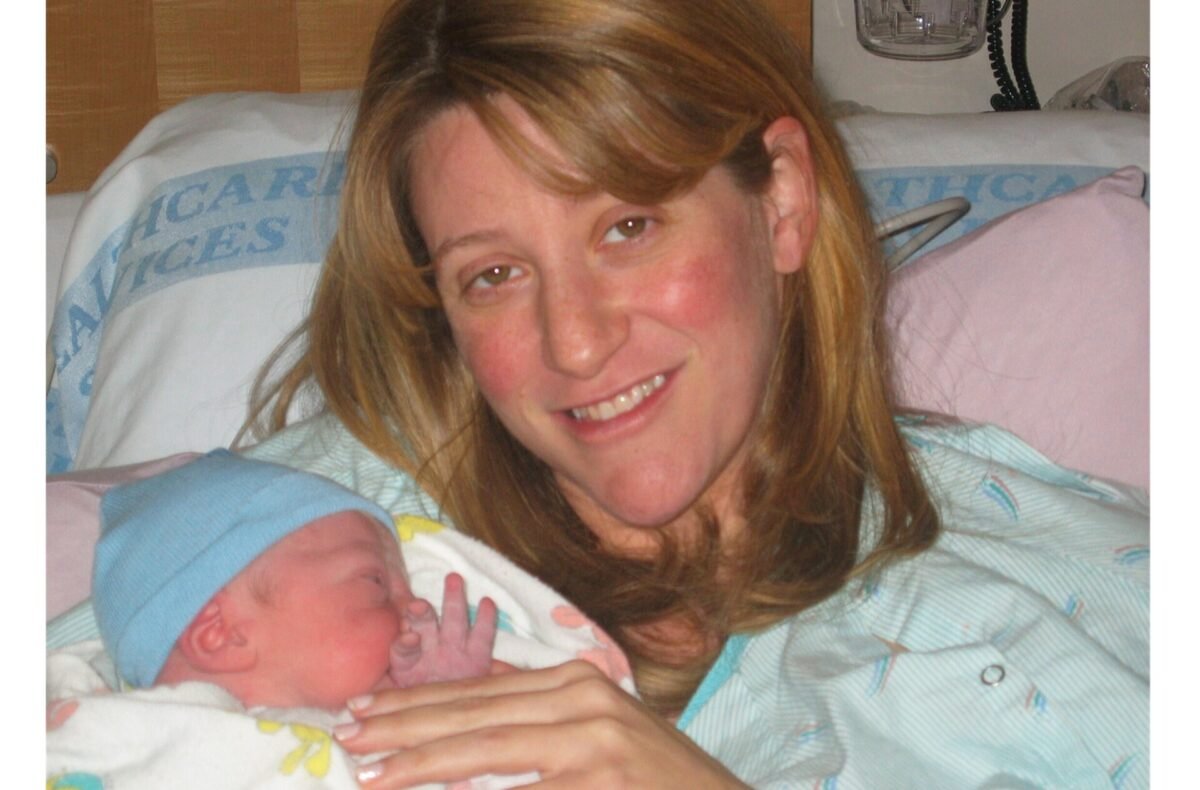
I suffered post-partum depression after the birth of my second child, Max.
My doctor immediately recommended pharmaceutical drugs, which were such a negative experience that it kicked off my exploration of natural alternatives, like essential oils.
It was only recently, during a casual conversation, that I learned of the connection between past sexual trauma and post-partum depression.
The more I think about it, the more it makes sense that childbirth could re-activate trauma in the pelvic region and trigger the trauma response of a “freeze” response—the symptoms of which significantly overlap with the symptoms of post-partum depression.
Birth and Trauma
I was so ill-prepared for the actual births of my children. No one told me how painful it was going to be and how quickly doctors can recommend surgical interventions that fall outside of the scope of your birth plan.
My first experience of childbirth was with my daughter Carly. Things seemed to be progressing really well until suddenly they weren’t. The doctor announced that the baby had been crowning for too long and that she would need to perform an episiotomy. Everything in my body screamed “Noooooo!”
I pushed back aggressively—which mortified my mother—but the doctor agreed to grant me three more pushes before intervening surgically. Carly came out on the third push with her hand on her face.
In early baby groups, it was common to share your birth story, and mine was among the more positive. Many of my friends experienced unexpected surgical interventions—including C-sections—that felt unexpected and traumatic. Many fell into post-partum depression and—like me—were offered pharmaceutical drugs and a healthy dose of shame and blame without any explanation as to why they might be feeling these symptoms.
It only recently occurred to me that the terror, helplessness, and pain in the pelvis that you may experience during childbirth could trigger your body’s trauma response—sending you into a protective freeze response that has been labeled as post-partum depression due to the post-partum timing of the onset.
What is Post-Partum Depression?
Postpartum depression is a mood disorder that postpartum women may experience.
Diagnosis of postpartum depression is based on the presence of symptoms—including emotional highs and lows, frequent crying, fatigue, guilt, and anxiety—that persist for at least two weeks.
It’s interesting to note that no medical experts seem able to identify the exact cause of postpartum depression. It is often attributed to:
- Hormonal Changes: A rapid drop in estrogen and progesterone levels after childbirth can lead to hormonal imbalances that affect mood.
- Stress and Sleep Deprivation: Caring for a newborn can be stressful and lead to sleep deprivation, which can exacerbate mood symptoms.
I cannot help but wonder if the root cause of postpartum depression might lie in unprocessed trauma—especially sexual trauma—and the hormonal changes and lack of sleep are not the root cause, but instead exasperating factors that significantly exacerbate the unprocessed trauma and its associated symptoms.
For example, we know that restful sleep, particularly REM sleep, is vital for processing emotional memories and reducing their intensity. Sleep deprivation can intensify the fight, flight, and freeze response that may present as symptoms of postpartum depression.
Similarly, fluctuations in sex hormones are known to influence the expression and severity of trauma-related symptoms. Just ask any woman or anyone who lives with her about her experience of anger and irritability, and how those emotions appear to worsen during phases of the menstrual cycle when estradiol and progesterone levels are lower.
Symptoms of Post-Partum Depression
Postpartum depression can present as the following emotional, physical, and psychological symptoms:
Emotional and Mood Symptoms
- Emotional numbness or detachment, even from your newborn child
- Persistent sadness, anxiety, or an empty mood
- Severe mood swings, irritability, or anger
- Feelings of guilt, shame, or worthlessness
- Feelings of hopelessness or helplessness
- Crying spells, sometimes for no apparent reason
- Feeling hopeless, worthlessness, ashamed, guilt, or inadequate
- Inability to be comforted
Physical symptoms
- Extreme fatigue or a significant loss of energy
- Changes in sleep patterns, such as insomnia or sleeping too much
- Changes in appetite, such as eating too little or too much
- Physical aches and pains, headaches, or stomach problems
- Decreased motivation or lethargy
- Low libido
Behavioral and cognitive symptoms
- Loss of interest or pleasure in activities you once enjoyed
- Procrastination and distractibility
- Social withdrawal
- Difficulty concentrating, making decisions, or processing information
- Doubting your ability to care for your baby
- Feeling overwhelmed by small tasks
- Restlessness or being unable to sit still
- Poor self-care
- Mentally “checking out”
- Continuing to function but lacking motivation or joy
Overlap Between Symptoms of Post-Partum Depression and Symptoms of Functional Freeze
The overlap between postpartum depression and functional freeze is significant, as both can involve a lack of energy, difficulty concentrating, and a sense of being overwhelmed.
Functional freeze refers to a survival response state of emotional and physiological shutdown that occurs in response to overwhelming stress, exhaustion, or unresolved trauma. It is a protective mechanism that may allow you to cope with difficult situations by temporarily becoming emotionally and physically numb to disconnect from your feelings and environment.
Chronic and prolonged stress can keep your nervous system locked in an ongoing state of “fight or flight”, known as sympathetic dominance. This prolonged stress, coupled with the re-emergence of unresolved trauma (like the pelvic trauma of birth that may stir up the unresolved emotions of sexual assault), can tip you over the edge from sympathetic dominance into dorsal vagal shutdown, a stress response initiated by the parasympathetic nervous system that redirects your limited energy towards essential functions such as conservation and self-preservation.
In other words, trauma can shift the two branches of the autonomic nervous system from functioning harmoniously—pendulating between arousal and relaxation—into over-activation of your parasympathetic branch, causing you to freeze rather than simply slow down.
In his ground-breaking book, The Polyvagal Theory, Dr. Stephen Porges explains how your vagus nerve consists of three distinct branches: ventral vagal (safety), sympathetic, and dorsal vagal (shut down). The dorsal side of the vagus nerve responds to cues of extreme danger. When it is too aroused, the dorsal vagus nerve can shut down the entire system, pulling you away from connection, out of awareness, and into a state of self-protection. You may experience this as a functional freeze, responding to fear or trauma by becoming immobile, frozen, numb, shutting down, dissociating, or feeling unable to think clearly or access words or emotions.
Postpartum depression could be an expression of the functional freeze state.
Essential Oils for Postpartum Depression
Essential oils can both reduce and PREVENT postpartum depression in at-risk women.
Research on “Aromatherapy for Postpartum Depression” found “that aromatherapy reduces depression levels among postpartum women”. The study further noted that “essential oils such as lavender, jasmine, ylang-ylang, sandalwood, bergamot, and rose… have shown the effective role in overcoming depression and anxiety during pregnancy and postpartum.”
Most interestingly, research on “The Effects of Inhalation Aromatherapy with Rose and Lavender at Week 38 and Postpartum Period on Postpartum Depression in High-risk Women” found that essential oil intervention during the final weeks of pregnancy “significantly decreased” symptoms of depression in at-risk women.
In the study, pregnant women were instructed to inhale either seven drops of lavender oil and one cc of rose water at 100% concentration, a placebo of odorless oil, or nothing at all before sleeping between the 38th week of pregnancy and 6 weeks postpartum. The study found that the mean depression score in the intervention group decreased significantly compared to the placebo and control groups, “providing valid evidence for the effect of aromatherapy on postpartum depression,” to both help prevent and reverse the condition.
Similarly, “The Effectiveness of Aromatherapy for Depressive Symptoms” showed improvement in depressive symptoms. What’s more, “The effects of clinical aromatherapy for anxiety and depression in the high-risk postpartum woman” indicated that aromatherapy had significant improvements greater than the control group.
The research found that “the pilot study indicates positive findings with minimal risk for the use of aromatherapy as a complementary therapy in both anxiety and depression scales with the postpartum woman.” No adverse effects were reported in any of the research. It also noted that essential oils offer a safe alternative to breastfeeding mothers who might be scared of taking medication due to any possible adverse effects.
Inhaling through the Left Nostril
A depressed brain shows differences in structure, activity, and chemistry compared to a healthy brain.
Research on “Postpartum depression-associated localized neural dysfunction” indicates differences in brain activity between mothers with postpartum depression and those without. Mothers diagnosed with postpartum depression tend to have less activity in the left frontal lobe and increased activity in the right frontal lobe when compared with healthy controls.
As I shared my “Panic Attack Hack,” different regions and hemispheres of the brain impact your mood and cognitive function, with the prefrontal cortex—a significant part of the frontal lobe—playing the most critical role in mood by regulating emotions, influencing emotional responses, and connecting feelings with thoughts and actions.
Specifically, different parts of the prefrontal cortex are involved in processing positive and negative emotions, and damage or dysfunction can lead to mood disorders like postpartum depression and anxiety. For example, the left dorsolateral prefrontal cortex may be associated with positive feelings. In contrast, the right prefrontal cortex is implicated in impulse regulation and is often underactive during depressive or manic states.
Further research finds that “Imbalance between left and right dorsolateral prefrontal cortex in major depression is linked to negative emotional judgment.” The fact that “Mothers diagnosed with postpartum depression tend to have less activity in the left frontal lobe and increased activity in the right frontal lobe” allows for the strategic use of essential oils to help balance the two hemispheres of the brain.
The two hemispheres of the brain perform different functions:
The Lighthearted Left Lobby (Left PFC Lobe) – The left side of the prefrontal cortex is filled with lighthearted, pleasant thoughts. The L in the Left prefrontal cortex stands for “Lighthearted.”
The Ruminating Right Lobby (Right PFC Lobe) – The right side of the prefrontal cortex tends to ruminate or overthink, contributing to feelings of overwhelm, anxiety, and panic. The R in the Right prefrontal cortex stands for “Ruminating.
Anxiety and depression are linked to over-activation of the right frontal lobe of the brain, located behind the forehead.
Inhaling an essential oil through the left nostril (which travels directly to your left forehead) helps stimulate the left frontal lobe and balance the left and right hemispheres of the brain, thereby reducing the overactivity of the right frontal lobe and leading to feelings of calm.
We recommend inhaling Rose or Lavender essential oil through the left nostril to help balance the two hemispheres of the brain.
Limbic Reset™
Emotional dysregulation—which is mainly influenced by the limbic system and the amygdala—is considered to be one of the core features of postpartum depression. Mothers with postpartum depression show altered brain activity, particularly in areas related to emotion processing and connectivity, like the amygdala, compared to mothers without the condition.
The amygdala is thought to play a pivotal role in recognizing emotionally salient stimuli and subsequently cooperate to control emotions and enhance the overall emotional state voluntarily.
Research on “Structural, functional, and metabolic signatures of postpartum depression”
found altered information flow patterns in the amygdala of women with postpartum depression compared to non-depressed postpartum controls. The preferred information flow direction from the amygdala to the temporal and frontal lobes significantly correlated with depression severity.
Your limbic system—often referred to as the “emotional nervous system”—is your “threat-detection & response” mechanism wired to respond to sensory information—especially the sense of smell—to help keep you safe.
The limbic system triggers the functional freeze response as a survival mechanism when it perceives a threat that cannot be fought or fled, like the reactivation of suppressed sexual trauma through childbirth. If the limbic system’s amygdala detects danger, it can take the thinking brain offline, leading to immobilization and a suppressed emotional response to conserve energy and survive a stressful situation. This response suppresses other body systems to conserve energy. This may present as symptoms of postpartum depression, like numbness, sadness, or detachment.
Your limbic system helps you interpret sensory information and determine whether external stimuli are threatening or benign. To do so, it learns from past events to help protect you in the future. In this capacity, it can overreact. For example, if you experienced significant psychological or emotional stress, a “conditioning effect” may take place in which the limbic system “wires in” an association between the situation and the stress response. Once a conditioning event occurs, your limbic system can become stuck in a state of high alert, and sensory stimuli can be misclassified as threatening when they are actually benign.
This leads to chronic elevation of your stress response. Restoring proper function to the limbic system can help TURN OFF the alarm in your limbic system—in effect rebalancing inhibition and activation—and TURN ON your body’s self-healing mechanisms by regulating your “fight or flight” response, and controlling the freeze response.
As your sense of smell is critical to your sense of safety and your olfactory bulb is physically located near your limbic system, essential oils can be a powerful tool to help restore the proper function of your limbic system. Inhaling essential oils is the fastest and most efficient way to create physiological or psychological balance in your limbic system. Your sense of smell has direct anatomical and functional access to the amygdala in the limbic lobe of the brain, which is physically located near the olfactory bulb. In fact, on a physical level, only two synapses separate your amygdala from your olfactory nerve.
Smell travels through your olfactory system to your hypothalamus by way of your amygdala. When you smell an essential oil, it stimulates your hypothalamus to release hormones that trigger a rapid emotional response, directly impacting how you feel and how you function. In particular, the chemical constituent Sesquiterpenes, found in high levels in essential oils such as Frankincense and Sandalwood, are thought to help increase the oxygen in the limbic system, which in turn “unlocks” the DNA and allows emotional baggage to be released from cellular memory.
Limbic Reset™ can be used to reset the volume of threat perception, help rewire neural circuits in your limbic system, and calm its over-firing.
Limbic Reset™ can be topically applied over Emotional Points located on the forehead (above the eyes and on the temples), an emotional release point situated at the base of the skull at the back of the neck, on the bottom of the feet, and especially on the amygdala reflex point on the big toe. You can also apply over Filter points located on both sides of the back of the skull, which are used to filter energies that could pull you back into the old pattern.
My most exciting discovery is a set of acupressure points that help release emotional patterns.

Emotional Points are located above the eyes on the forehead. You can also lay your hand over your forehead. I write more about the forehead points for healing emotional trauma HERE.

The release point is located at the spinal cord at the base of the skull
Filter points are located on both sides of the back of the skull. They are used to filter energies that could pull you back into the old pattern.
Parasympathetic™
Postpartum depression is associated with autonomic nervous system dysregulation, particularly with a reduction in parasympathetic activity and an increase in sympathetic activity.
Your nervous system’s primary job is to keep you alive. When your nervous system perceives overwhelming stress or trauma that it is unable to fight or flee, your vagus nerve—specifically the dorsal vagal pathway—triggers a deep shutdown, numbness, and dissociation to conserve energy and numbs itself to the pain of the experience. This is the nervous system’s most extreme survival tactic.
During the intensity of childbirth, the “fight” response might be triggered. Since you can’t physically run out of the room during childbirth, the “flight” response often turns inward. It can manifest as dissociation, or the feeling of “checking out,” “freezing,” or feeling numb or disconnected from what is happening. When a threat is too overwhelming to fight or escape, your nervous system may drop into a “freeze” state, a function of the dorsal vagal nerve.
Unfortunately, even after the baby has been delivered, the nervous system can get stuck in the survival state it used to get through the trauma. If your nervous system is stuck in a “fight/flight” state, your postpartum experience will be defined by perinatal anxiety. You may feel constantly on edge, irritable, panicked, and hypervigilant, as your body continues to scan for threats.
If your nervous system is stuck in a “freeze” state, your postpartum experience will be defined by postpartum depression. You may feel numb, hopeless, exhausted, and disconnected from your baby and the world.
Regulating the nervous system can help you shift out of the freeze response. Activating the ventral vagal nerve tells your body that you are safe.
Stimulating the vagus nerve by inhaling or topically applying the Parasympathetic™ blend can help activate the ventral vagal parasympathetic nervous system. This enables you to regulate your nervous system, signaling safety and relaxation to the body, which may help counteract functional freeze mode and induce a state of calm and openness, helping you process underlying emotions and traumas. The Parasympathetic™ blend can help calm the nervous system and ground you in the moment. This sense of embodiment and safety can prevent future Freeze Responses.
Apply Parasympathetic™ over the vagus nerve (behind the earlobe on the mastoid bone) to activate the vagus nerve. This helps discharge energy and shift out of the frozen state into the healing Parasympathetic.
Bladder Support™
Pregnancy and childbirth can be triggering and potentially re-traumatizing for survivors of sexual trauma.
Research on “The Effects of Rape Trauma and PTSD on the Childbirth Process” revealed that women who have a history of sexual trauma may have a more difficult time physically and emotionally during childbirth and have an increased chance of retraumatization. The research noted that “sexual trauma, including rape and childhood sexual abuse, takes a toll on the survivor emotionally and physically. With the invasive procedures, physical exposure, and feelings of loss of control related to childbirth, the survivor may become triggered and retraumatized. “
Similarly, research on “(Re)activation of survival strategies during pregnancy and childbirth following experiences of childhood sexual abuse found “Pregnancy and birth can be triggering for women-survivors of childhood sexual assault. Survival strategies learnt during experiences of CSA can be (re)activated as a way of not only coping, but surviving (the sometimes unconsented) procedures, such as monitoring and physical examinations, as well as the feelings of lack of control and bodily agency.
In Traditional Chinese Medicine, the bladder’s function is closely linked to the Kidneys and the emotion of fear, and sexual trauma is considered to have a direct impact on these systems. Your bladder, in particular, is known to be correlated with emotional traumas.
Residual emotional debris is thought to be stored in the bladder, helping manage emotional reserves and overflow. When you feel internally empty of reserves, everything seems to be too much to handle, uncertain, and frightening. Similarly, when emotions are overflowing, you can feel awash in an internal torrent, drowning, out of control, and driven to desperation.
Often, these overwhelming emotions feel too much to handle in the moment, so you store them in the bladder until you can process and move through them.
Bladder Support™ blend allows you to let go of the negative past and release the emotional trauma from the body. It helps overcome feelings of despair and the sense of being pushed over the edge. It can also balance the right and left hemispheres of the brain.
Apply 2-3 drops of Bladder Support™ over the bladder (just above and behind the pubic bone), directly over areas of trauma or abuse, or around the outside of earlobes.
Featured Oils:
Ready to get started? Click the links below to order today:
References: